
ToolMage
Sign in

Best 2 Tool Aggregator AI tools for Business

Popular Tool Aggregator AI tools in Business include startupaitools and tyy.ai, helping you work more efficiently.

startupaitools
Freemium

startupaitools

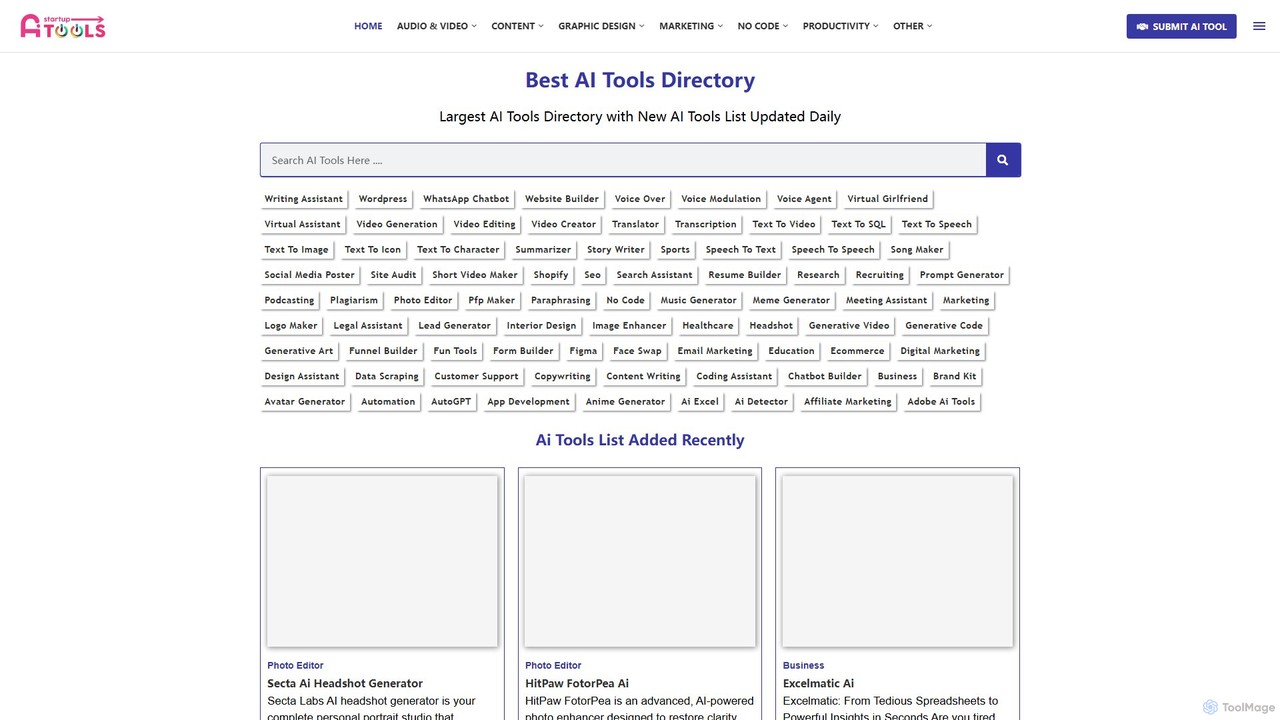
startupaitools is a comprehensive AI tools directory and aggregator, featuring a daily updated list of the latest AI applications. It serves as a central hub for discovering, searching, and comparing AI tools across hundreds of categories for business, productivity, and creative needs.

Tool Aggregator
Visits 9.8KFavorites 137Likes 129
tyy.ai
Free

tyy.ai

tyy.ai is a comprehensive AI tools directory and discovery platform. It features a massive, curated list of over 16,000 AI applications, websites, and software, meticulously categorized to help users find the perfect tool for any personal or business need. From productivity and marketing to creative arts and development, tyy.ai simplifies the process of exploring, comparing, and accessing the latest advancements in artificial intelligence.

Tool Aggregator
Visits 5.5KFavorites 127Likes 121

About Tool Aggregator

Tool Aggregators are platforms that centralize information about numerous software tools, providing a single interface for discovery, comparison, and selection. They operate by systematically collecting and organizing data such as features, pricing, and user reviews from various sources. This enables users, from individual creators to enterprise teams, to efficiently find the most suitable tools for their specific business needs without researching dozens of individual websites. Their primary value lies in saving significant time and providing a structured, comprehensive overview of a fragmented software market.

Core Features

  • Unified Search and Filtering: Search across a vast database of tools using advanced filters like category, features, pricing model, and integration capabilities.
  • Side-by-Side Comparison: View key attributes of multiple tools on a single screen to directly evaluate their strengths and weaknesses.
  • Aggregated User Reviews: Access consolidated ratings and feedback from real users to gauge a tool's performance and reliability.
  • Curated Collections: Discover tools grouped into lists based on specific use cases, industries, or expert recommendations, simplifying discovery for particular tasks.

Use Cases

These platforms are frequently used by marketing teams researching new automation software, startup founders building their technology stack, and operations managers comparing solutions for process optimization. They streamline the procurement process for businesses and help freelancers quickly identify the best tool for a specific project.

How to Choose

When selecting a Tool Aggregator, consider the breadth and depth of its tool database—does it cover your niche? Evaluate the quality and granularity of its filtering and comparison features. Check the recency of the information, as the tool landscape changes rapidly. Finally, assess the user interface for ease of navigation and clarity of information.

Tool Aggregator use cases

1

Researching AI Tools for a Marketing Campaign

A marketing manager is tasked with launching a new campaign that requires an AI-powered social media scheduler and a video generator. Instead of spending a full day on search engines, they use a tool aggregator. They apply filters for 'Social Media Management' and 'Video Generation', then use the comparison feature to evaluate the top three results based on team collaboration features, analytics capabilities, and pricing tiers. This process allows them to identify two perfectly suited tools in under an hour, drastically accelerating their campaign planning.

2

Building a Tech Stack for a New Startup

A startup founder needs to select foundational tools for project management, CRM, and customer support. Using a tool aggregator, they explore the 'Business' category and its subcategories. They focus on tools with strong integration capabilities to ensure a seamless workflow. By reading aggregated user reviews and comparing pricing models side-by-side, they create a shortlist of compatible, scalable, and well-regarded tools. This structured approach helps them build a cohesive and cost-effective tech stack from day one, avoiding costly mistakes.

3

Comparing Pricing Models for Budget Planning

An operations manager is tasked with finding a cost-effective team collaboration tool within a strict budget. A tool aggregator is the ideal solution for this. They filter tools by 'Project Management' and immediately focus on the pricing information. The platform allows them to compare different pricing tiers—free, per-user, and enterprise—across multiple vendors in a single view. This direct comparison reveals a tool with a generous free tier that meets 90% of their needs, saving the company a significant monthly expense compared to more well-known, expensive alternatives.

4

Finding Niche Software for a Specific Industry

A financial analyst needs a specialized AI tool for market forecasting that integrates with their existing data platforms. General search engines yield thousands of irrelevant results. By using a tool aggregator, they can apply industry-specific filters like 'FinTech' and technical filters such as 'API Access'. This instantly narrows the search from a sea of generic business tools to a handful of highly relevant, specialized solutions. They discover a niche tool they otherwise would not have found, significantly improving the accuracy of their financial models.

5

Freelancer Seeking Project-Specific Tools

A freelance content creator needs an AI writing assistant for one project and an image upscaler for another. They don't want to commit to expensive, long-term subscriptions. Using a tool aggregator, they filter for tools with 'Pay-as-you-go' or 'Generous Free Tier' pricing models. They also read user reviews that focus on ease of use for non-technical users. This allows them to quickly find and utilize two different, cost-effective tools for their short-term needs without extensive research or significant financial commitment, maximizing their project profitability.

6

Validating a New Software Idea

An entrepreneur is considering developing a new project management tool. Before investing resources, they need to understand the competitive landscape. They use a tool aggregator as a market research platform. By analyzing all major competitors in the 'Project Management' category, they can study common features, identify pricing benchmarks, and read user reviews to find common pain points and feature gaps. This intelligence is crucial for refining their product roadmap and defining a unique value proposition that will stand out in a crowded market.

Tool Aggregator FAQ

What is a Tool Aggregator?

A Tool Aggregator is a digital platform that collects, organizes, and presents information about various software tools in one centralized place. Its primary purpose is to simplify the process of discovering, comparing, and selecting software for business or personal use. Instead of manually searching multiple websites, users can leverage an aggregator's structured database, advanced filters, and side-by-side comparison features to efficiently find the best tool for their specific needs. They often include aggregated user reviews and ratings to provide a comprehensive view of each tool's performance.

How to choose the right Tool Aggregator?

Choosing the right Tool Aggregator depends on your specific needs. Consider these key factors:

  • Database Scope: Does the aggregator cover the industries, categories, and specific niche tools you are interested in? A broader database isn't always better if it lacks depth in your area of focus.
  • Data Quality and Freshness: Check if the information, especially pricing and feature lists, is regularly updated. The software market evolves quickly, so outdated data is unhelpful.
  • Filtering and Comparison Functionality: A good aggregator should have robust and granular filtering options to help you narrow down choices effectively. The comparison feature should be clear and highlight key differences.
  • Trust and Transparency: Look for aggregators that are transparent about their business model and how they rank or feature tools. Unbiased user reviews are also a strong indicator of trustworthiness.
What's the difference between a Tool Aggregator and a blog listicle?

The key difference lies in structure and functionality. A Tool Aggregator is a dynamic, searchable database with structured data. It allows users to actively filter, sort, and compare tools based on specific criteria. A blog listicle (e.g., 'Top 10 Tools for X') is a static piece of content that presents a curated, often subjective, selection of tools. While listicles can be useful for discovery, they lack the interactive comparison features and the comprehensive, objective scope of a well-maintained aggregator. Aggregators aim for breadth and data-driven comparison, whereas listicles offer a specific viewpoint or recommendation.

Who benefits most from using a Tool Aggregator?

A wide range of users benefit from Tool Aggregators. Key groups include:

  • Business Decision-Makers: Managers and executives who need to compare software solutions for procurement and ensure they get the best value.
  • Operations and Marketing Teams: Professionals looking for tools to automate workflows, improve efficiency, and manage campaigns.
  • Startup Founders: Entrepreneurs who need to quickly and cost-effectively build a technology stack from scratch.
  • Developers and IT Professionals: For comparing APIs, development platforms, and infrastructure tools.
  • Freelancers and Creators: Individuals seeking specific, often low-cost, tools for individual projects without extensive research time.
Are the tool recommendations on aggregators trustworthy?

Trustworthiness varies between platforms. Reputable tool aggregators strive for objectivity by presenting factual data (features, pricing) and unfiltered, aggregated user reviews. However, it's important to be a discerning user. Some platforms may use sponsored placements or 'featured' sections that are part of their business model. The most trustworthy aggregators are transparent about this. A good practice is to use the aggregator for discovery and comparison of factual data, but also cross-reference the most highly-rated tools with independent reviews or trials before making a final decision.