
Business Best in category 1 results Toolkit AI Tool

Popular AI tools in the Toolkit field of Business include Prateek Keshari, etc., helping you quickly improve efficiency.

Prateek Keshari

Prateek Keshari

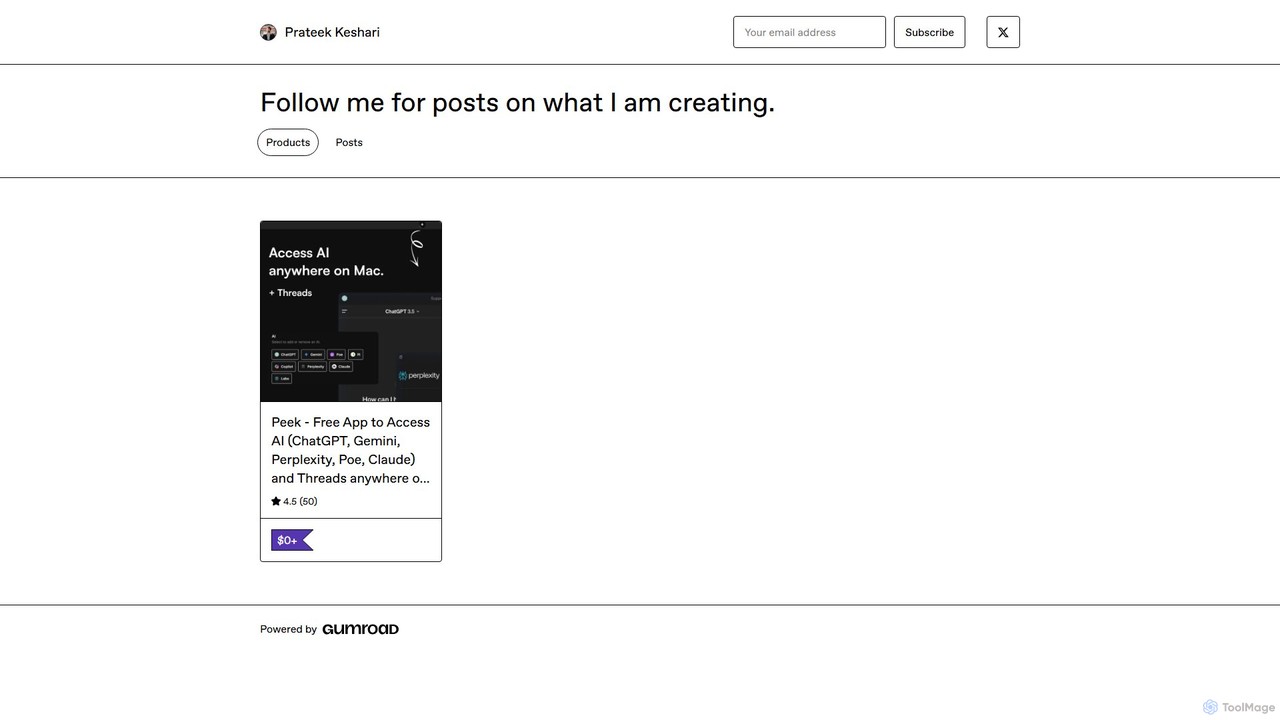
A curated collection of premium AI resources, prompt libraries, and Notion templates by creator Prateek Keshari. Designed for …

3.1K

About Toolkit

AI Toolkits are comprehensive suites of AI-powered applications designed to streamline and enhance various business operations. These integrated platforms leverage advanced machine learning models to automate tasks, analyze data, and facilitate informed decision-making across departments. Functioning as a centralized hub for diverse AI functionalities, they empower businesses to achieve greater efficiency, innovation, and competitive advantage.

Core Features

  • Automated Workflow Integration: Seamlessly connects various AI modules to automate complex business processes, from marketing to customer service.
  • Data-Driven Insights: Utilizes AI to analyze large datasets, providing actionable intelligence for strategic planning and operational optimization.
  • Customizable AI Modules: Offers a range of configurable AI tools that can be adapted and combined to meet specific departmental or industry needs.
  • Predictive Analytics: Employs AI algorithms to forecast trends, identify potential risks, and anticipate future business outcomes.

Applicable Scenarios

Businesses across various sectors utilize AI Toolkits to consolidate their AI initiatives and drive efficiency. Marketing teams deploy them for comprehensive campaign management, from content generation to performance analytics. Operations departments leverage them for supply chain optimization and resource allocation. Customer service centers integrate them to enhance support with intelligent chatbots and sentiment analysis.

How to Choose

When selecting an AI Toolkit, prioritize platforms with strong integration capabilities to ensure compatibility with existing systems. Evaluate scalability and flexibility to accommodate future growth and evolving business needs. Consider the breadth and depth of AI functionalities offered, ensuring they align with your core operational requirements. Finally, assess the vendor's commitment to data security and compliance, which is crucial for protecting sensitive business information.

ToolkitUse Cases

1

Automating Customer Service Operations

Customer service managers can deploy an AI Toolkit that integrates chatbots for instant query resolution, sentiment analysis for understanding customer mood, and automated routing to human agents when needed. This reduces response times, improves customer satisfaction, and frees up human agents for complex issues, handling thousands of inquiries daily.

2

Streamlining Marketing Campaign Management

Marketing teams leverage AI Toolkits to manage end-to-end campaigns. This involves using AI for audience segmentation, generating personalized ad copy and visuals, scheduling multi-channel distribution, and analyzing real-time performance data. The toolkit helps optimize ad spend, increase conversion rates by up to 20%, and deliver highly targeted messages.

3

Enhancing Sales Lead Qualification

Sales professionals utilize AI Toolkits to improve lead quality and conversion. The toolkit can analyze prospect data from various sources, score leads based on their likelihood to convert, and identify key decision-makers. This allows sales teams to focus on high-potential leads, personalize outreach strategies, and shorten the sales cycle by identifying qualified prospects 30% faster.

4

Optimizing HR Recruitment Processes

HR departments can implement an AI Toolkit to automate and enhance recruitment. This includes AI-powered resume screening to identify top candidates, natural language processing for analyzing cover letters, and automated scheduling for initial interviews. The toolkit reduces time-to-hire by streamlining administrative tasks and ensures a more objective candidate selection process.

5

Improving Financial Forecasting and Risk Assessment

Financial analysts employ AI Toolkits for advanced predictive modeling and risk management. The toolkit processes vast amounts of market data, economic indicators, and internal financial records to forecast future performance, detect anomalies, and assess investment risks. This provides more accurate financial projections and helps in making data-driven strategic investment decisions.

6

Centralizing Project Management and Collaboration

Project managers and teams use AI Toolkits to enhance project execution and team collaboration. The toolkit can automate task assignments, optimize resource allocation based on availability and skills, and analyze communication patterns to identify potential bottlenecks. This improves project efficiency, ensures deadlines are met, and fosters better team coordination across distributed teams.

ToolkitFrequently Asked Questions