ToolMage
Sign in

Best 1 Virtual Events AI tools for Business

Popular Virtual Events AI tools in Business include Zuddl, helping you work more efficiently.

Zuddl
Paid

Zuddl

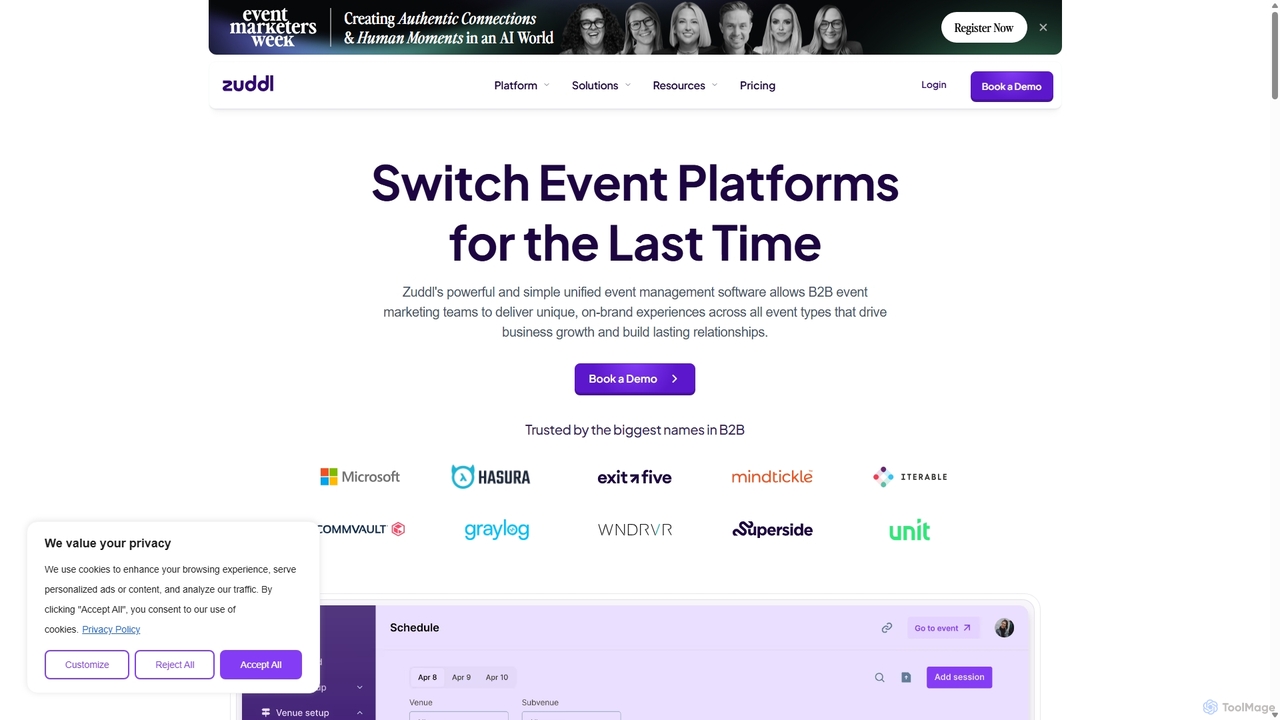
Zuddl is a modular, all-in-one platform for B2B marketers to plan and execute standout virtual and hybrid events. It provides a unified solution for the entire event lifecycle, from customizable registration and branding to interactive engagement tools and in-depth analytics. Zuddl is designed to help businesses deliver immersive experiences, drive audience participation, and measure event ROI effectively.

Virtual Events
Visits 63.4KFavorites 131Likes 147

About Virtual Events

AI Virtual Events tools are platforms that use artificial intelligence to create more engaging, personalized, and insightful online event experiences. These tools leverage AI algorithms for functions like intelligent attendee matchmaking, personalized content recommendations, and real-time engagement analytics. Their primary value is transforming standard webcasts into interactive environments that foster meaningful connections and provide organizers with actionable data. Unlike simple streaming services, they focus on enhancing networking, participation, and measuring event ROI within a business context.

Core Features

  • AI-Powered Matchmaking: Intelligently connects attendees, speakers, and sponsors based on shared interests, professional goals, and interaction data.
  • Personalized Agendas: Recommends relevant sessions and content to each participant, optimizing their event journey.
  • Engagement Analytics: Tracks audience participation, sentiment, and key interaction points in real-time to measure event success.
  • Real-time Translation & Transcription: Automatically translates spoken content and generates captions, making events globally accessible.
  • AI Chatbots & Concierges: Provides instant support to attendees, answering questions about schedules, speakers, or technical issues.

Use Cases

These tools are ideal for corporate event planners, marketing teams, and trade associations. They are frequently used to host large-scale virtual conferences, international trade shows, online product launches, and corporate all-hands meetings where networking and data collection are critical business objectives.

How to Choose

When selecting an AI Virtual Events tool, consider the platform's scalability to handle your expected number of attendees. Evaluate its integration capabilities with your existing CRM and marketing automation software. Also, assess the depth of its analytics and reporting features, and the level of customization available for branding your virtual environment.

Virtual Events use cases

1

Organizing a Global Tech Conference

An event manager for a multinational tech company is tasked with hosting their annual developer conference for over 10,000 virtual attendees. They use an AI Virtual Events platform to create personalized session schedules for each developer based on their registered interests and past activity. The platform's AI matchmaking feature suggests relevant connections between attendees and sponsors, leading to a 30% increase in qualified leads for exhibitors. Real-time translation in five languages makes keynotes accessible to a global audience, significantly boosting international engagement.

2

Hosting a B2B Virtual Trade Show

A trade association for the manufacturing industry hosts a virtual trade show to connect suppliers with buyers. They use an AI platform that creates immersive virtual booths where exhibitors can showcase products. An AI concierge chatbot greets visitors at each booth, answers initial questions, and schedules meetings with sales representatives. The platform's analytics dashboard provides exhibitors with detailed reports on booth traffic, content downloads, and visitor engagement, helping them prioritize follow-ups with the most interested prospects.

3

Enhancing Corporate All-Hands Meetings

A large corporation with a distributed global workforce uses an AI events platform for its quarterly all-hands meetings. The platform provides live transcription and translation, ensuring all employees can follow along regardless of their location or native language. During the Q&A session, an AI tool analyzes incoming questions, groups similar ones together, and highlights the most frequently asked topics for the leadership team to address. This process ensures the most pressing employee concerns are covered efficiently, making the meeting more relevant and inclusive.

4

Facilitating a University Virtual Open Day

A university's admissions department hosts a virtual open day for prospective students worldwide. They employ an AI platform that allows students to create a personalized schedule by selecting their academic interests. The AI then recommends specific faculty Q&A sessions, virtual lab tours, and student panel discussions. An AI chatbot is available 24/7 to answer common admissions questions, freeing up staff to handle more complex inquiries. Post-event, the admissions team receives a report detailing which programs generated the most interest, helping them tailor their follow-up communications.

5

Executing an Interactive Online Product Launch

A marketing team at a consumer electronics company is launching a new flagship product. They use an AI virtual event platform to create a dynamic and interactive launch event. The platform features a 3D virtual environment where attendees can explore the product from all angles. AI-powered sentiment analysis monitors the live chat during the keynote, providing the marketing team with real-time feedback on audience reactions to new features. Gamification elements, like AI-driven quizzes and leaderboards, keep the audience engaged and increase information retention about the product's capabilities.

6

Managing a Hybrid Medical Conference

An organizer of a medical conference needs to cater to both in-person and virtual attendees. They use a hybrid-ready AI event platform that unifies the experience. The platform's mobile app uses AI to help in-person attendees navigate the venue and network with virtual participants. Virtual attendees can watch live-streamed sessions with AI-generated captions and participate in Q&A polls alongside the physical audience. Post-event, the AI consolidates data from both audiences into a single analytics report, providing a holistic view of overall engagement and session popularity.

Virtual Events FAQ

What are AI Virtual Events tools?

AI Virtual Events tools are advanced software platforms designed to host online or hybrid events with enhanced capabilities powered by artificial intelligence. Unlike standard video conferencing, they focus on creating a comprehensive event experience. Key features include AI-powered matchmaking to connect attendees with similar interests, personalized agenda recommendations, and in-depth analytics to measure audience engagement and event ROI. They aim to replicate and often improve upon the networking and data-gathering aspects of physical events.

How do AI Virtual Events tools differ from standard video conferencing platforms?

The primary difference lies in their purpose and feature set. Standard video conferencing platforms (like Zoom or Google Meet) are designed for communication and meetings. AI Virtual Events tools are built for hosting large-scale, interactive experiences. Key differentiators include:

  • Networking: AI tools actively facilitate connections through matchmaking, whereas conferencing tools are passive.
  • Analytics: Event platforms provide deep analytics on attendee behavior, session popularity, and engagement, which are absent in standard tools.
  • Personalization: AI delivers personalized schedules and content recommendations, creating a unique journey for each attendee.
  • Branding & Environment: They offer extensive customization for creating branded virtual venues, unlike the generic interface of meeting tools.

What are the key benefits of using AI for virtual events?

Using AI in virtual events offers significant benefits for both organizers and attendees. For organizers, AI provides deep data analytics for measuring success, identifying popular content, and proving ROI to stakeholders. It also automates tasks like scheduling and support. For attendees, AI enhances the experience by facilitating meaningful networking through intelligent matchmaking, personalizing their journey with relevant content, and increasing accessibility with real-time translation. Ultimately, AI transforms a passive viewing experience into an active, engaging, and more valuable event.

How to choose the right AI Virtual Events platform?

Choosing the right platform depends on your specific event needs. Consider these key factors:

  • Scalability: Can the platform reliably handle your expected number of concurrent attendees, from hundreds to thousands?
  • Integration: Does it integrate with your essential business tools, such as CRM (e.g., Salesforce), marketing automation (e.g., Marketo), and registration systems?
  • Feature Set: Evaluate the quality of its core AI features. Does it offer robust matchmaking, detailed analytics, and high-quality streaming?
  • Customization: How much control do you have over branding the virtual environment to match your corporate identity?
  • Support: What level of technical support is provided before, during, and after the event?

Who should use AI Virtual Events tools?

AI Virtual Events tools are best suited for organizations and professionals who view events as a critical business function, not just a broadcast. This includes:

  • Corporate Event Planners: For organizing large-scale conferences, sales kick-offs, and internal all-hands meetings where engagement and data are key.
  • Marketing Managers: For hosting product launches, user conferences, and lead generation webinars that require deep audience insights.
  • Trade Associations: For creating virtual trade shows and industry networking events that deliver value to members and sponsors.
  • Universities and Educational Institutions: For hosting virtual open days, recruitment fairs, and academic conferences for a global audience.