ToolMage
Sign in

Best 1 Voip AI tools for Business

Popular Voip AI tools in Business include Ringflow, helping you work more efficiently.

Ringflow
Paid

Ringflow

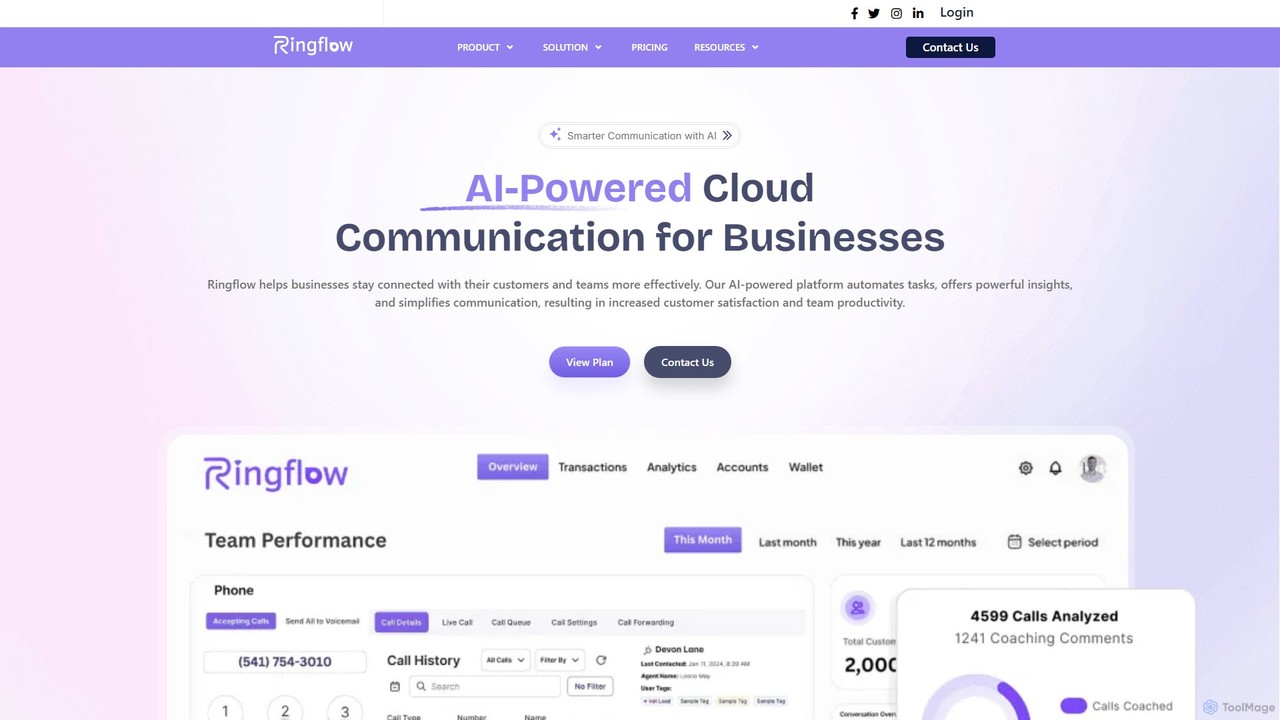
Ringflow is an AI-powered cloud communication platform for businesses, unifying voice, video, and messaging into a single, intelligent system. It enhances team productivity and customer satisfaction with features like a smart dialer, real-time analytics, and AI-driven call summaries.

Voip
Visits 68KFavorites 112Likes 120

About Voip

VoIP (Voice over Internet Protocol) is a technology that enables voice and multimedia communications over internet protocol networks, rather than traditional analog phone lines. As a crucial component within the Business tools category, VoIP systems convert analog audio signals into digital packets, transmitting them efficiently over the internet. This technology offers businesses enhanced flexibility, significant cost savings, and a rich set of communication features, making it ideal for modern work environments.

Core Features

  • High-Definition Voice Quality: Delivers clearer, more natural-sounding calls compared to traditional phone services.
  • Advanced Call Management: Includes features like call forwarding, waiting, recording, voicemail-to-email, and interactive voice response (IVR).
  • Unified Communications Integration: Combines voice calls with video conferencing, instant messaging, and presence indicators into a single platform.
  • Scalability and Flexibility: Easily scales up or down to accommodate changing business needs, supporting remote and mobile workforces.
  • Cost Efficiency: Significantly reduces long-distance and international calling costs, often with lower monthly service fees.

Applicable Scenarios

VoIP is widely adopted by businesses of all sizes, from startups to large enterprises, particularly those with remote teams, multiple office locations, or high volumes of customer interactions. It provides a robust communication backbone for customer service centers, sales teams, and internal collaboration, ensuring seamless connectivity regardless of geographical distance.

How to Choose

When selecting a VoIP solution, consider its scalability to match future growth, integration capabilities with existing CRM or business software, and the quality of service (QoS) for reliable call performance. Evaluate the range of advanced features offered, such as video conferencing and analytics, alongside security protocols and the provider's customer support. Pricing models and ease of deployment are also critical factors for making an informed decision.

Voip use cases

1

Seamless Remote Team Collaboration

For businesses with distributed or remote workforces, VoIP enables seamless communication and collaboration. Employees can make and receive calls from any location using their business number, participate in conference calls, and integrate with video conferencing tools, ensuring consistent connectivity and productivity across different time zones and geographies.

2

Efficient Customer Support Centers

Customer service teams leverage VoIP for efficient inbound and outbound call management. Features like automatic call distribution (ACD), interactive voice response (IVR), and call queuing help route customers to the right agent quickly. Integration with CRM systems allows agents to access customer history during calls, enhancing service quality and resolution times.

3

Professionalism for Small Businesses

Small businesses and startups can establish a professional image without the high costs of traditional phone systems. VoIP offers features like virtual receptionists, multiple extensions, and business-grade voicemail, providing a sophisticated communication setup that can grow with the company, all while keeping operational expenses low.

4

Multi-Location Enterprise Connectivity

Large enterprises with multiple branches or international offices use VoIP to unify their communication infrastructure. A single VoIP system connects all locations, allowing for free inter-office calls, centralized management, and consistent communication policies, streamlining operations and reducing communication overhead across the entire organization.

5

Cost-Effective International Business Calls

Companies conducting international business benefit significantly from VoIP's cost-effectiveness for global calls. Instead of incurring expensive long-distance charges, VoIP routes calls over the internet, drastically reducing communication costs with international clients, partners, and suppliers, facilitating global expansion and collaboration.

6

Sales Team Outreach & CRM Integration

Sales teams utilize VoIP systems integrated with CRM platforms to streamline their outreach efforts. Agents can click-to-dial, automatically log calls, record conversations for training, and track communication history directly within their CRM. This integration enhances sales productivity, improves lead management, and provides valuable insights into sales performance.

Voip FAQ

What is VoIP and how does it work for businesses?

VoIP, or Voice over Internet Protocol, is a technology that allows you to make and receive phone calls over an internet connection instead of traditional phone lines. For businesses, it converts analog voice signals into digital packets, which are then sent over the internet to the recipient. This enables features like lower call costs, advanced call management, and integration with other business tools, making communication more flexible and efficient.

What are the main advantages of using VoIP for businesses?

Businesses gain several key advantages with VoIP, including significant cost savings on calls, especially long-distance and international. It offers enhanced flexibility, allowing employees to work remotely from any location with internet access. VoIP systems also come with a rich suite of advanced features like call forwarding, voicemail-to-email, video conferencing, and unified communications, which improve productivity and collaboration.

What do I need to set up a VoIP system for my business?

To set up a business VoIP system, you primarily need a reliable high-speed internet connection. You'll also need VoIP-compatible hardware, which can include IP phones, softphones (software on computers or mobile devices), or analog telephone adapters (ATAs) to connect traditional phones. Finally, you'll need to subscribe to a VoIP service provider who manages the network infrastructure and provides the calling features.

Is VoIP secure for business communications?

VoIP can be very secure for business communications, but it depends on the provider and the security measures implemented. Reputable VoIP providers use encryption protocols (like SRTP and TLS) to protect call data from eavesdropping. Businesses should also implement their own network security, such as firewalls and VPNs, and ensure strong password policies to safeguard their VoIP system against unauthorized access and cyber threats.

How does VoIP differ from traditional landline phone systems?

The fundamental difference lies in the transmission method: VoIP uses the internet, while traditional landlines use physical copper wires. This leads to several distinctions: VoIP is generally more cost-effective, especially for long-distance calls, and offers greater flexibility for remote work. It also provides a wider array of advanced features like video conferencing and CRM integration, which are typically unavailable or costly with traditional systems. Landlines are often seen as more reliable during power outages, but VoIP can offer battery backups and mobile app failovers.