AI Brother
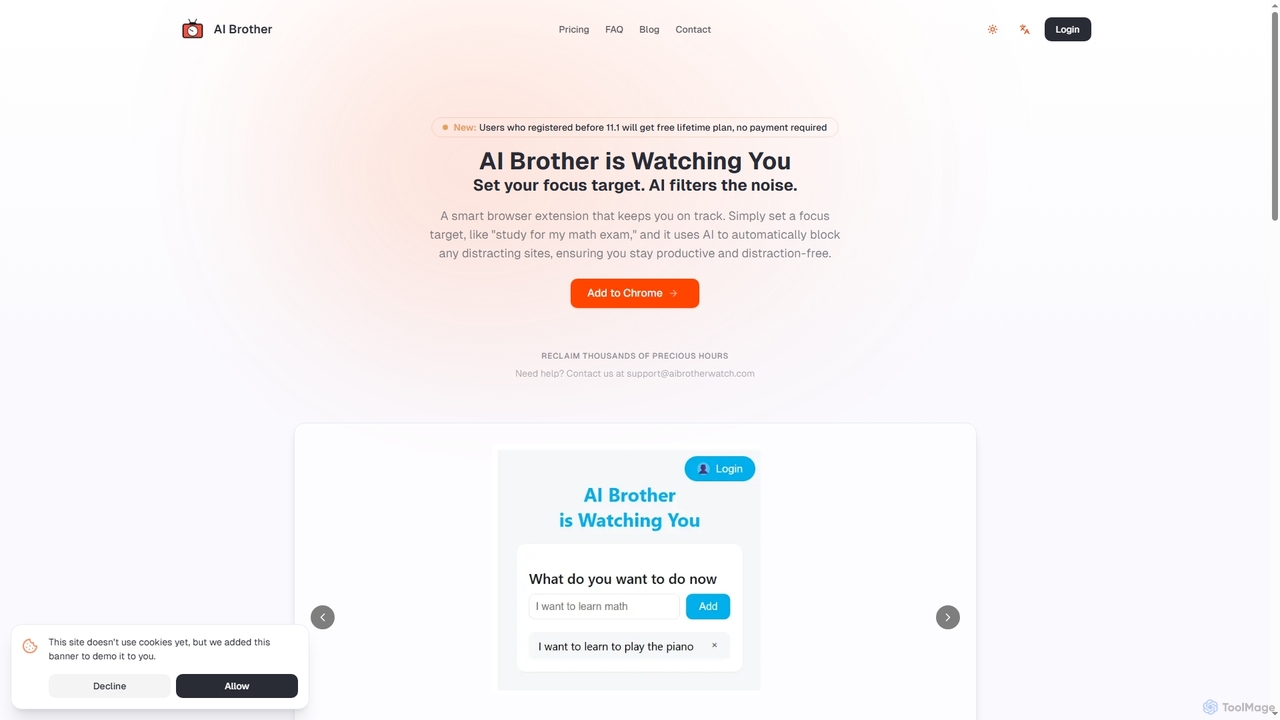
AI Brother is a smart browser extension that leverages artificial intelligence to eliminate online distractions and enhance productivity. …
AI Brother is a smart browser extension that leverages artificial intelligence to eliminate online distractions and enhance productivity. By understanding your specific focus targets, it intelligently blocks irrelevant websites in real-time, ensuring you stay on track whether you're studying, working, or researching.
About Work Management
AI Work Management tools are platforms that use artificial intelligence to automate, optimize, and provide insights into projects and tasks. They leverage machine learning and predictive analytics to intelligently schedule tasks, allocate resources, and forecast project outcomes. This enables teams to move beyond simple tracking, allowing them to proactively identify risks, streamline complex workflows, and make data-driven decisions. Unlike traditional project management software, these tools offer a layer of intelligence that actively assists in managing and executing work.
Core Features
- Intelligent Task Automation: Automatically assigns tasks, sets deadlines, and sends reminders based on team workload, skills, and project priorities.
- Predictive Analytics: Forecasts project timelines, budget adherence, and potential bottlenecks by analyzing historical data and current progress.
- Resource Optimization: Recommends the ideal team members for specific tasks based on their availability, expertise, and past performance.
- Automated Reporting & Insights: Generates real-time progress reports and performance dashboards with AI-driven summaries and actionable insights.
- Risk Detection: Proactively identifies potential risks, such as scope creep or resource conflicts, and suggests mitigation strategies.
Use Cases
These tools are widely used by software development teams for agile sprint planning, marketing agencies for managing multi-channel campaigns, and large enterprises for coordinating complex, cross-departmental projects. They are particularly valuable for any team that needs to manage intricate dependencies, tight deadlines, and dynamic resource allocation.
How to Choose
When selecting an AI Work Management tool, consider its integration capabilities with your existing stack (e.g., Slack, GitHub, Google Workspace). Evaluate the sophistication of its AI features—whether you need basic automation or advanced predictive modeling. Also, assess its scalability to support your team's growth and its data security protocols to protect sensitive project information.

Work ManagementUse Cases
Automate Agile Sprint Planning
For a software development team, AI Work Management tools can transform sprint planning. Instead of manually assigning tasks and estimating timelines, the AI analyzes the backlog, team member capacity, and historical velocity. It then suggests an optimal sprint plan, automatically assigning user stories to developers based on their skills and workload. The system can also flag potential dependencies between tasks that might be missed, reducing bottlenecks and ensuring a smoother development cycle. This frees up the scrum master and product owner to focus on strategic goals rather than administrative overhead.
Optimize Marketing Campaign Execution
Marketing managers use these tools to orchestrate complex campaigns across multiple channels. The AI can create a project timeline by analyzing similar past campaigns, predict the resources needed (budget, personnel), and automate the assignment of tasks like content creation, ad placement, and social media updates. As the campaign runs, the tool provides real-time performance insights, suggesting adjustments to resource allocation to maximize ROI. For example, it might recommend shifting budget from an underperforming channel to a more effective one based on live data.
Proactive Risk Management for Large Projects
In large-scale initiatives like construction or enterprise system rollouts, project managers leverage AI to identify risks before they escalate. The tool continuously analyzes project data, including daily progress reports, resource availability, and communication logs. It uses predictive models to flag potential delays, budget overruns, or quality issues. For instance, it might detect that a critical path task is falling behind and automatically alert the manager, suggesting a revised schedule or resource reallocation to mitigate the impact, turning reactive problem-solving into proactive management.
Streamline Client Project Onboarding
Service-based businesses like consulting firms or creative agencies can automate the entire client onboarding process. When a new project is won, the AI tool can automatically generate a standardized project plan from a template, populate it with key milestones, and assign initial discovery tasks to the relevant team members. It can also set up automated communication workflows to keep the client informed of progress. This ensures consistency across all projects, reduces manual setup time from days to minutes, and creates a professional client experience from day one.
Enhance Remote Team Productivity and Alignment
For globally distributed teams, AI Work Management tools act as a central intelligence hub. The AI can automatically summarize long discussion threads in communication channels, identify action items from meeting transcripts, and track their completion without manual follow-up. It provides a clear, real-time view of who is working on what, regardless of time zones. This reduces meeting overhead, prevents tasks from falling through the cracks, and ensures the entire team stays aligned on priorities and progress.
Intelligent Resource Allocation for Agencies
Creative and consulting agencies constantly juggle multiple projects and resources. An AI Work Management tool helps operations managers optimize resource allocation. By analyzing project requirements, employee skills, current workloads, and even vacation schedules, the AI recommends the best person for each task. This prevents employee burnout by ensuring balanced workloads and improves project outcomes by matching the right expertise to the right challenge. It can also forecast future resource needs, helping with hiring and capacity planning.