ToolMage
Sign in

Best 1 Job Interview AI tools for Career

Popular Job Interview AI tools in Career include Leo, helping you work more efficiently.

Leo
Freemium

Leo

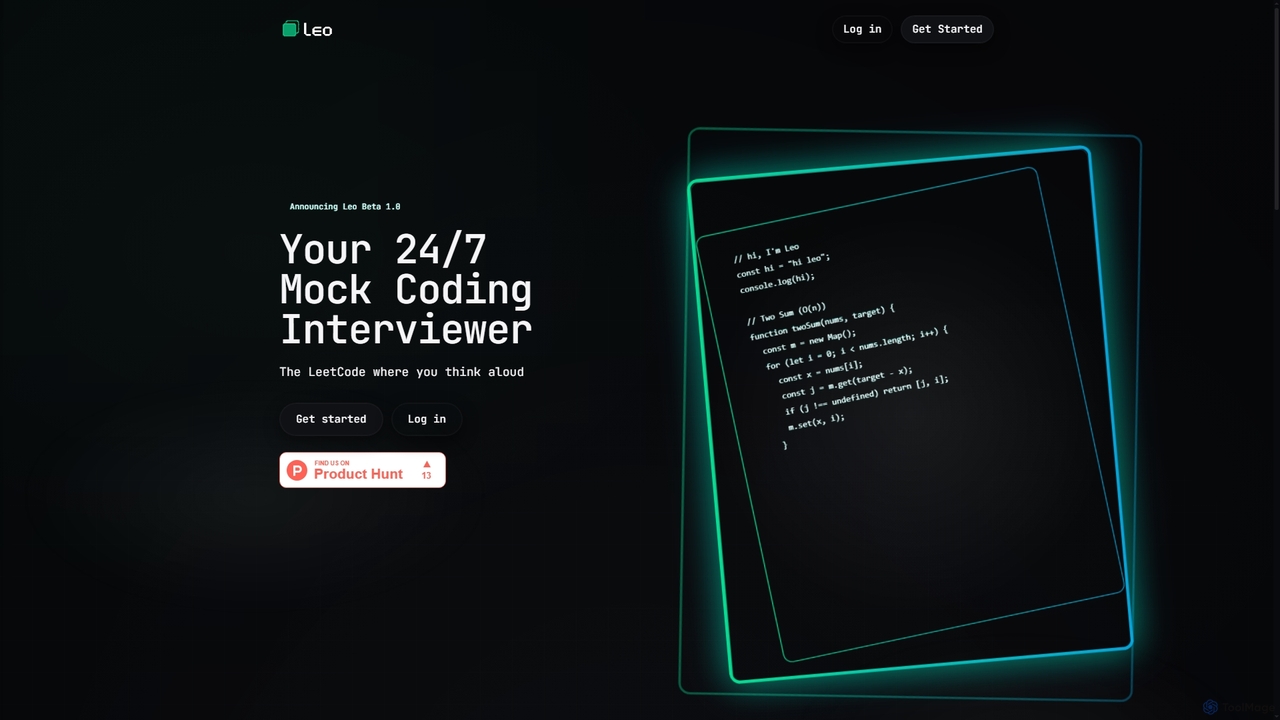
Leo is an AI-powered 24/7 mock coding interviewer designed to simulate real technical interviews. It provides an interactive platform for engineers to practice coding problems, receive instant feedback, and refine their problem-solving and communication skills in multiple programming languages.

Job Interview
Visits 5.4KFavorites 152Likes 172

About Job Interview

Job Interview AI tools are specialized platforms that leverage artificial intelligence to help individuals prepare for job interviews. These tools simulate realistic interview scenarios, provide AI-driven feedback, and offer personalized coaching to enhance a candidate's performance. They are invaluable for job seekers aiming to refine their communication skills, build confidence, and strategically tailor their responses to specific roles, ultimately increasing their chances of securing employment.

Core Features

  • Mock Interview Simulation: Conduct virtual interviews with AI interviewers, practicing common and behavioral questions.
  • AI-Powered Feedback: Receive instant analysis on verbal cues (e.g., filler words, pace), non-verbal cues (e.g., eye contact, facial expressions), and content relevance.
  • Personalized Coaching: Get tailored suggestions for improving answers, body language, and overall presentation based on performance data.
  • Question Bank & Customization: Access a vast library of interview questions and create custom practice sessions for specific job roles or industries.
  • Resume & Job Description Analysis: Tools can analyze your resume and a target job description to suggest relevant talking points and question strategies.

Use Cases

These tools are widely used by recent graduates preparing for their first professional roles, experienced professionals transitioning careers, and individuals seeking to improve their interview technique for competitive positions. They offer a private, repeatable environment to practice and refine responses without the pressure of a real interview, making them ideal for continuous self-improvement.

How to Choose

When selecting an AI job interview tool, consider the depth and specificity of its feedback (e.g., verbal, non-verbal, content), the variety of interview types it supports (e.g., behavioral, technical, case study), and its customization options for different job roles. Evaluate the user interface for ease of use, the quality of its AI models, and whether it offers features like resume analysis or multilingual support to match your specific preparation needs and career goals.

Job Interview use cases

1

Practice behavioral interview questions with AI feedback

Job seekers can simulate realistic interview scenarios, receiving AI-driven feedback on their responses, body language, and tone. This helps identify areas for improvement before real interviews, boosting confidence and refining communication skills for roles requiring strong interpersonal abilities.

2

Receive AI feedback on verbal and non-verbal communication

Individuals can record their interview answers and get detailed analysis from AI on aspects like speaking pace, filler words, eye contact, and facial expressions. This objective assessment helps refine presentation style for a more impactful impression, crucial for roles where clear communication is key.

3

Optimize interview answers based on specific job requirements

Users input a job description and their resume, and AI tools suggest how to frame answers to common interview questions, highlighting relevant skills and experiences. This ensures responses are highly targeted and demonstrate a strong fit for the role, saving time in manual preparation and increasing relevance.

4

Prepare for technical or industry-specific interview challenges

Candidates for specialized roles (e.g., software engineering, data science) can use AI tools to practice technical questions, coding challenges, or case studies. The AI provides immediate feedback on correctness and approach, helping to master complex topics and demonstrate expertise in niche areas.

5

Build confidence and reduce interview anxiety through simulation

For those who experience significant stress during interviews, AI tools offer a safe, low-pressure environment to practice repeatedly. Consistent exposure to simulated questions and constructive feedback helps desensitize anxiety and build mental resilience, leading to calmer and more effective real-world interview performance.

6

Practice interviews in multiple languages for global roles

Job seekers targeting international positions can utilize AI interview platforms that support various languages. This allows them to practice articulating their thoughts clearly and confidently in the required language, ensuring cultural and linguistic fluency for global career opportunities and diverse work environments.

Job Interview FAQ

What are AI Job Interview tools?

AI Job Interview tools are software applications that use artificial intelligence to simulate job interviews and provide feedback. They typically feature mock interview simulations, AI-driven analysis of verbal and non-verbal cues, and personalized coaching. Their primary purpose is to help job seekers practice, refine their responses, and build confidence before real interviews, covering aspects from communication style to content relevance.

How do I choose the best AI tool for job interview preparation?

To choose the best AI interview tool, consider the depth and type of feedback it offers (e.g., verbal, non-verbal, content analysis). Look for customization options that allow you to practice for specific job roles or industries. Evaluate the range of interview questions available, whether it supports different interview formats (e.g., technical, behavioral), and if it provides features like resume analysis. User interface, pricing model, and language support are also key factors to ensure it aligns with your preparation needs.

What specific types of feedback can AI interview tools provide?

AI interview tools can provide a comprehensive range of feedback. This includes verbal analysis, identifying filler words, speaking pace, volume, and clarity. Non-verbal feedback often covers eye contact, facial expressions, body language, and posture. Content-wise, AI can assess the relevance of your answers to the question, adherence to frameworks like STAR method, and the inclusion of keywords from the job description. This multi-faceted feedback helps candidates refine every aspect of their interview delivery.

How do AI interview tools compare to human interview coaches?

AI interview tools offer instant, objective, and repeatable practice at a lower cost, providing consistent feedback without human bias. They excel at identifying patterns in verbal and non-verbal communication. Human coaches, conversely, provide nuanced, empathetic, and highly personalized guidance, offering insights into company culture, specific industry dynamics, and complex behavioral strategies that AI might miss. The most effective approach often involves using AI tools for foundational practice and objective feedback, complemented by human coaching for deeper strategic insights and emotional support.

Are AI job interview tools truly effective in improving interview performance?

Yes, AI job interview tools are highly effective in improving interview performance. By providing consistent, unbiased practice and detailed feedback, they help users identify weaknesses, refine responses, and build confidence in a low-pressure environment. This leads to measurable improvements in communication skills, content delivery, and overall presentation, which directly translates to better performance in real interview scenarios. Their ability to offer unlimited practice and objective analysis makes them a powerful supplement to traditional preparation methods.