ToolMage
Sign in

Best 1 University Application for Career

Popular University Application in Career include LeadAI, helping you work more efficiently.

LeadAI
Free

LeadAI

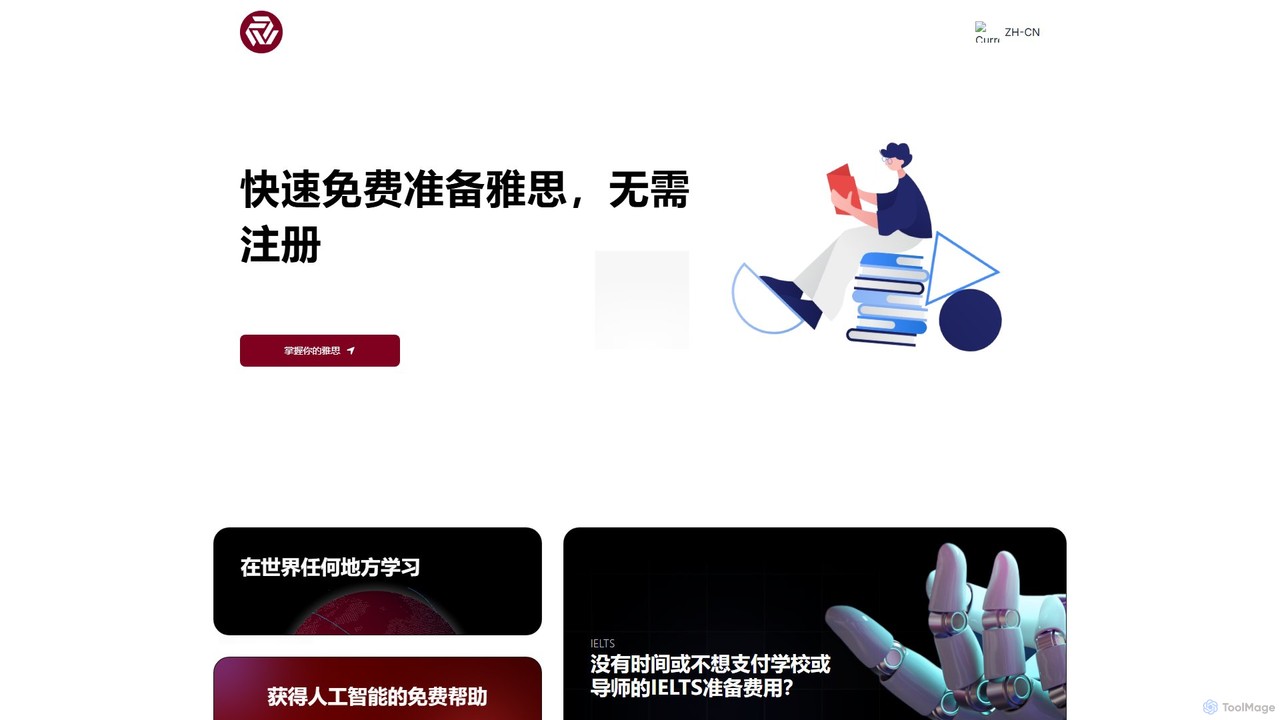
LeadAI is a free, AI-powered assistant designed for comprehensive IELTS preparation. It offers interactive practice for all four test sections—Listening, Reading, Writing, and Speaking—with instant feedback and scoring. Beyond test prep, LeadAI also provides a personalized university matching service and application support, helping students transition from IELTS success to higher education. No registration is required, making quality education accessible to everyone, anytime.

University Application
Visits 5.5KFavorites 178Likes 162

About University Application

AI University Application tools are specialized platforms designed to guide students through the complex process of applying to higher education institutions. Leveraging natural language processing (NLP) and machine learning, these tools analyze application materials, provide personalized feedback, and streamline organizational tasks. They help applicants craft compelling personal statements, refine essays for clarity and impact, and prepare for admissions interviews. Unlike general writing assistants, these tools are specifically trained on successful application essays and understand the nuances of admissions criteria, significantly enhancing a candidate's presentation.

Core Features

  • Essay Analysis & Enhancement: Provides in-depth feedback on essay structure, tone, clarity, and narrative flow, suggesting improvements beyond basic grammar.
  • Personal Statement Crafting: Assists in brainstorming ideas, structuring a compelling personal story, and aligning the narrative with the values of specific universities.
  • AI Interview Simulation: Offers mock interviews with common admissions questions, providing feedback on answers, delivery, and confidence.
  • University Matching: Recommends suitable colleges and programs based on a student's academic profile, test scores, interests, and preferences.
  • Application Management: Features dashboards to track deadlines, submission requirements, and the status of multiple applications in one place.

Use Cases

These tools are primarily used by high school students preparing for undergraduate admissions, current university students applying for graduate or professional schools (e.g., Master's, PhD, Law School), and international students navigating the application systems of foreign countries. Educational consultants and school counselors also use them to support their students more effectively.

How to Choose

When selecting an AI University Application tool, consider its specialization—some focus on specific regions (e.g., US Common App, UK UCAS) or disciplines (e.g., STEM, Arts). Evaluate the depth and quality of the writing feedback. Prioritize platforms with transparent data privacy policies to protect your personal information. Finally, assess the user interface and whether its features align with your specific needs, such as interview prep or school discovery.

University Application use cases

1

Refining a Personal Statement for Impact

A high school senior is applying to competitive universities using the Common App. They've written a draft of their personal statement but feel it lacks a strong narrative. They use an AI University Application tool to analyze the essay. The AI provides feedback on strengthening the introduction, improving the flow between paragraphs, and using more vivid language to showcase their personal growth. The tool highlights weak sentences and suggests alternative phrasing, helping the student transform their draft into a compelling story that stands out to admissions officers.

2

Preparing for a Graduate School Interview

A university student is applying for a competitive Master's program and has been invited for an interview. Feeling nervous, they use an AI tool's interview simulation feature. They practice answering common questions like 'Why this program?' and 'Describe a challenge you've overcome.' The AI records their responses and provides feedback on the clarity of their answers, speaking pace, and use of filler words. After several practice sessions, the student feels more confident and is able to articulate their qualifications and goals clearly during the actual interview.

3

Discovering 'Best Fit' Universities

An international student wants to study computer science in the United States but is overwhelmed by the number of options. They use an AI University Matching tool, inputting their GPA, TOEFL scores, budget, and preferences for campus size and location. The AI algorithm processes this data and generates a categorized list of universities: 'safety,' 'target,' and 'reach' schools. Each recommendation includes key statistics like acceptance rates, average financial aid, and program rankings, allowing the student to build a balanced and realistic application list efficiently.

4

Brainstorming Unique Supplemental Essay Ideas

A student is applying to a university that requires a supplemental essay on the topic 'Why are you interested in our school?'. Instead of writing a generic response, they use an AI tool's brainstorming feature. They input details about their academic interests (e.g., robotics) and extracurricular activities. The AI cross-references this with the university's specific programs, faculty research, and unique clubs. It then generates several unique angles, such as connecting their robotics club experience to a specific professor's lab, helping the student craft a highly personalized and compelling essay.

5

Managing Multiple Application Deadlines

A student is applying to ten different universities, each with its own set of deadlines for applications, financial aid, and scholarship submissions. To avoid confusion, they use an AI application management tool. They input the name of each university, and the tool automatically populates a calendar with all relevant deadlines. It sends reminders for upcoming due dates and provides a checklist for required documents (transcripts, recommendation letters, etc.) for each school. This organizational support prevents missed deadlines and reduces the stress of the application process.

6

Checking Essays for Unintentional Plagiarism

While researching for their application essays, a student gathers information from various sources. To ensure their final submission is entirely original, they use an AI tool with a built-in plagiarism checker. They upload their essay, and the tool scans it against a vast database of academic papers, publications, and web content. It highlights any phrases that are too similar to existing sources, allowing the student to rephrase them properly. This step gives the student confidence that their work is authentic and adheres to academic integrity standards before submission.

University Application FAQ

What are AI University Application tools?

AI University Application tools are specialized software platforms that use artificial intelligence to assist students with the college and graduate school application process. They go beyond simple grammar checking to provide strategic guidance. Key features often include essay analysis for narrative strength, AI-powered mock interviews, personalized university recommendations based on data, and deadline management dashboards. Their primary goal is to help applicants present their best possible selves by enhancing the quality and organization of their application materials.

How do I choose the right AI University Application tool?

Choosing the right tool depends on your specific needs. Consider the following factors:

  • Features Needed: Do you need more help with essay writing, interview preparation, or finding suitable schools? Choose a tool that excels in your area of weakness.
  • Geographic Focus: Some tools are tailored for specific application systems like the US Common App or the UK's UCAS. Ensure the tool supports the system you're using.
  • Data Privacy: You will be sharing sensitive personal information. Check the tool's privacy policy to understand how your data is stored and used.
  • User Reviews and Samples: Look for reviews from other students and, if possible, view sample feedback to gauge the quality and depth of the tool's analysis.
What's the difference between an AI application tool and a general grammar checker?

The primary difference is specialization. A general grammar checker, like Grammarly, focuses on linguistic correctness—spelling, grammar, punctuation, and style. An AI University Application tool does this too, but its main value lies in its strategic, context-aware feedback. It is trained on admissions data and successful essays, so it can analyze the narrative structure, persuasive impact, and alignment with what admissions committees look for. It provides guidance on content and storytelling, not just sentence mechanics, making it a more comprehensive assistant for the specific task of university applications.

Can using an AI tool be considered cheating on my application?

Using AI tools ethically is key. Most universities consider it acceptable to use AI as a writing assistant for brainstorming, proofreading, and getting feedback, similar to working with a tutor or counselor. However, it is considered academic dishonesty to have an AI generate an entire essay for you to submit as your own. The best practice is to use these tools to enhance your own ideas and writing, not to replace them. Always check the specific academic integrity policies of the universities you are applying to.

Who can benefit from AI University Application tools?

A wide range of individuals can benefit from these tools. This includes:

  • High School Students: Especially those applying to many colleges or who lack access to extensive counseling resources.
  • Graduate School Applicants: For crafting specialized statements of purpose and preparing for program-specific interviews.
  • International Students: To navigate unfamiliar application systems and refine their English writing to a high standard.
  • First-Generation Applicants: Who may not have family members with experience in the higher education application process.
  • Educational Counselors: To manage their caseload more efficiently and provide data-driven advice to their students.