Docbot
Docbot is an AI-powered tool that transforms your documents, websites, and texts into interactive chatbots. Upload various file …
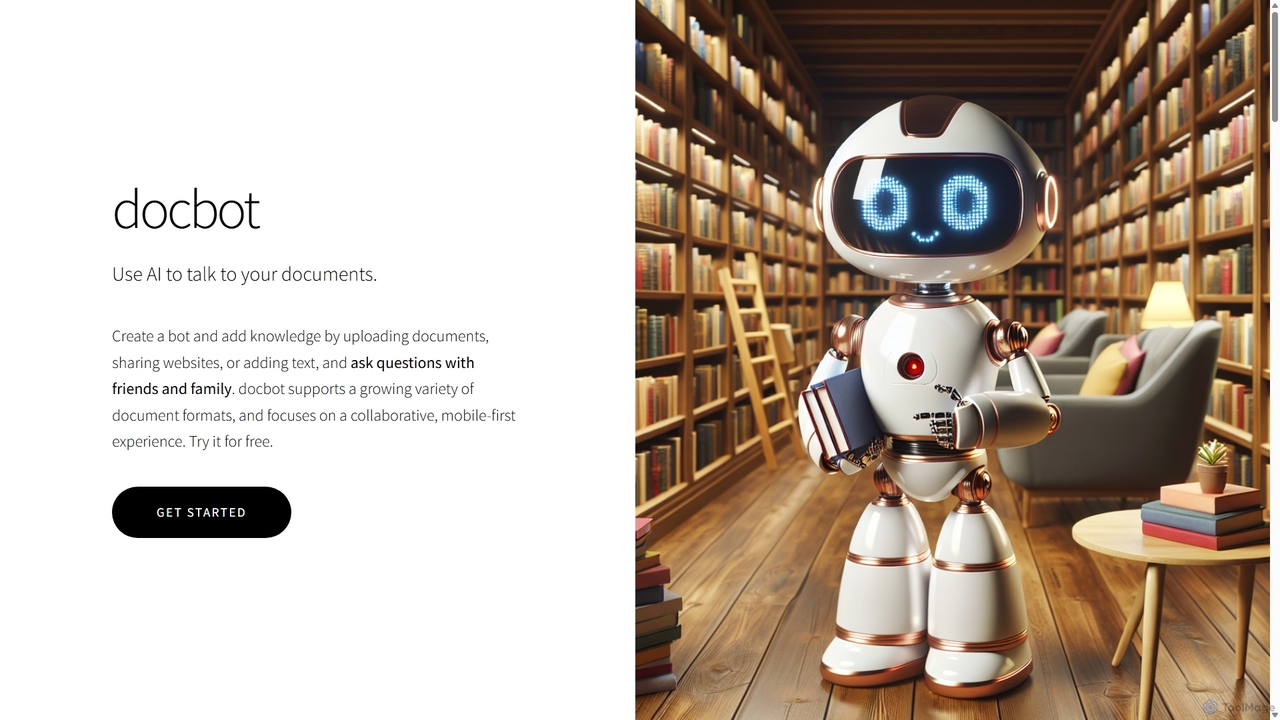
Docbot is an AI-powered tool that transforms your documents, websites, and texts into interactive chatbots. Upload various file formats to create a personalized knowledge base, ask questions in natural language, and collaborate by sharing your bots with friends, family, or teams. It's a mobile-first platform designed for easy information retrieval and sharing.
Islam & AI
Islam & AI is an AI-powered chatbot designed to provide accurate information about Islam. It answers user queries …
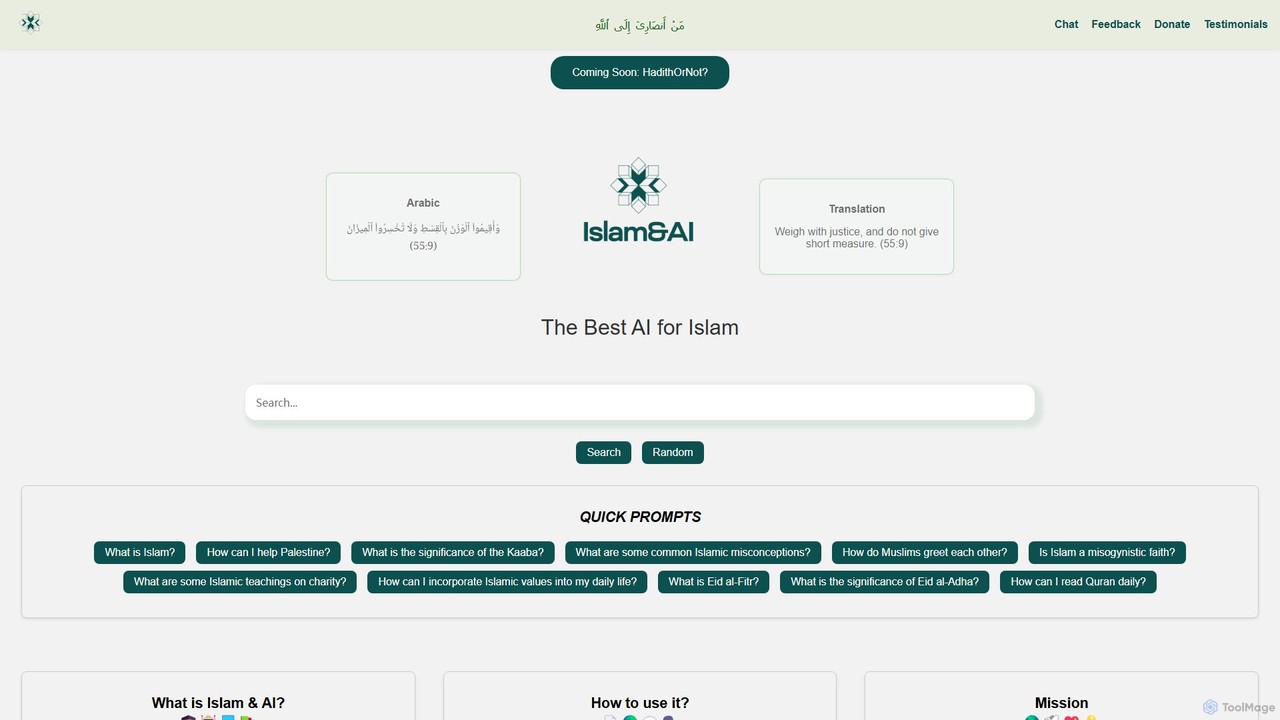
Islam & AI is an AI-powered chatbot designed to provide accurate information about Islam. It answers user queries based on the knowledge of the Quran, Hadith, and Islamic history, aiming to be a free and accessible educational resource for a global audience.
Ask LukeW
An AI-powered chatbot trained on the extensive knowledge and works of Luke Wroblewski, a leading expert in product …
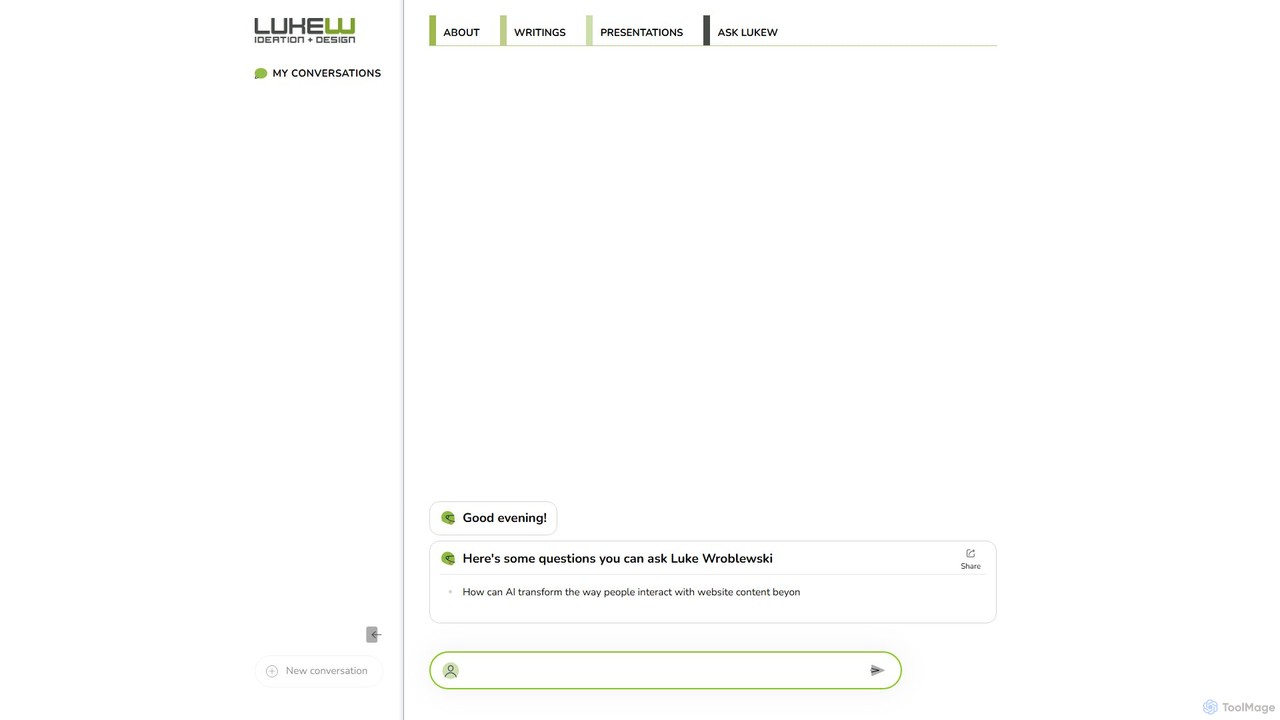
An AI-powered chatbot trained on the extensive knowledge and works of Luke Wroblewski, a leading expert in product design, UX/UI, and mobile-first strategy. Get instant, expert-level answers to your complex questions about design systems, user experience, and product development.
About Knowledge Base
Knowledge Base AI tools are specialized systems designed to store, organize, and retrieve vast amounts of structured and unstructured information, primarily to power AI applications like chatbots. These tools leverage advanced natural language processing (NLP) and semantic search capabilities to understand user queries and provide highly relevant, accurate answers drawn from their curated data. Their core value lies in enabling AI models to access and utilize up-to-date, context-rich information, significantly enhancing the intelligence and reliability of conversational AI and other data-driven applications.
Core Features
- Intelligent Data Ingestion: Automatically imports and processes data from various sources (documents, web pages, databases) into a unified knowledge repository.
- Semantic Search & Retrieval: Understands the meaning and intent behind natural language queries to fetch the most relevant information, rather than just keyword matching.
- Content Organization & Tagging: Structures information with metadata, categories, and tags for efficient management and retrieval.
- Version Control & Update Management: Tracks changes to knowledge articles, ensuring AI applications always access the latest and most accurate information.
- Multi-Source Integration: Connects with CRM, ERP, internal wikis, and other systems to create a comprehensive knowledge base.
Applicable Scenarios
Knowledge Base AI tools are crucial for organizations seeking to enhance their AI-driven customer service, internal support, and information management. They are widely adopted in sectors like tech support, healthcare, finance, and education, where accurate and timely information delivery is paramount. These tools empower chatbots to handle complex inquiries, provide detailed explanations, and guide users through processes, significantly reducing the need for human intervention in routine tasks.
How to Choose
When selecting a Knowledge Base AI tool, prioritize its data ingestion capabilities, ensuring it supports your existing data formats and sources. Evaluate the accuracy and sophistication of its semantic search and retrieval mechanisms, as this directly impacts the quality of AI responses. Consider ease of content management, scalability to accommodate future data growth, and seamless integration with your current AI platforms and business systems. Security features and compliance with data privacy regulations are also critical.
Knowledge BaseUse Cases
Automated Customer Support with Chatbots
Customer service departments utilize Knowledge Base AI tools to feed comprehensive product information, FAQs, and troubleshooting guides to their AI chatbots. When a customer asks a question, the chatbot queries the knowledge base to retrieve the most accurate and up-to-date answer, providing instant support and resolving common issues without human agent intervention. This significantly reduces response times and improves customer satisfaction.
Internal Employee Self-Service Portals
HR and IT departments deploy Knowledge Base AI tools to create intelligent self-service portals for employees. Staff can ask natural language questions about company policies, benefits, IT issues, or onboarding procedures, and the AI-powered system retrieves relevant documents and answers from the knowledge base. This streamlines internal support, reduces help desk tickets, and empowers employees to find information independently.
Enhanced Product Documentation & Technical Support
Software companies and hardware manufacturers use Knowledge Base AI tools to organize vast amounts of technical documentation, user manuals, and troubleshooting articles. AI assistants or chatbots can then leverage this knowledge base to provide users with precise, step-by-step instructions or solutions to complex technical problems, improving user experience and reducing the burden on technical support teams.
Content Creation & Research Assistance
Content creators, researchers, and journalists use Knowledge Base AI tools to quickly access and synthesize information from curated sources. By querying the knowledge base with specific topics or questions, they can retrieve relevant facts, statistics, and background information, accelerating the research process and ensuring accuracy in their articles, reports, or presentations.
Sales Enablement & Product Information Access
Sales teams leverage Knowledge Base AI tools to rapidly access up-to-date product specifications, pricing details, competitor comparisons, and sales playbooks. During client calls or presentations, sales representatives can quickly query an internal AI assistant powered by the knowledge base to get precise answers, helping them address client objections effectively and close deals faster.
Educational Content Delivery & Learning Support
Educational institutions and e-learning platforms integrate Knowledge Base AI tools to provide students with instant access to course materials, lecture notes, academic policies, and FAQs. AI tutors or learning assistants can draw upon this knowledge base to answer student queries, explain complex concepts, and guide them through learning paths, offering personalized and on-demand educational support.