Education Best in category 6 results Religion AI Tool

Popular AI tools in the Religion field of Education include Magisterium、Islam & AI、Text With、ChatwithGod、Getsermons、Robot Spirit Guide, etc., helping you quickly improve efficiency.

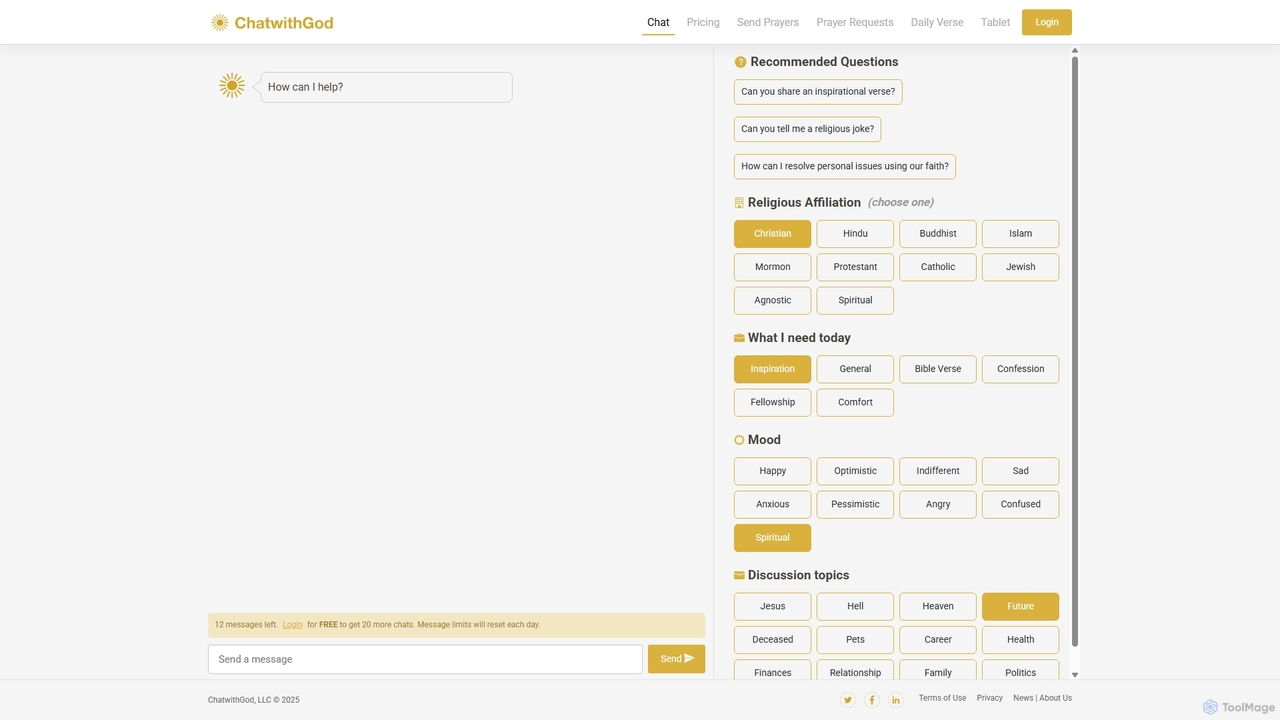
ChatwithGod

ChatwithGod

ChatwithGod is an AI-powered spiritual companion designed to provide guidance, comfort, and a space for faith-based conversations. It …

11.8K
Free
Islam & AI

Islam & AI

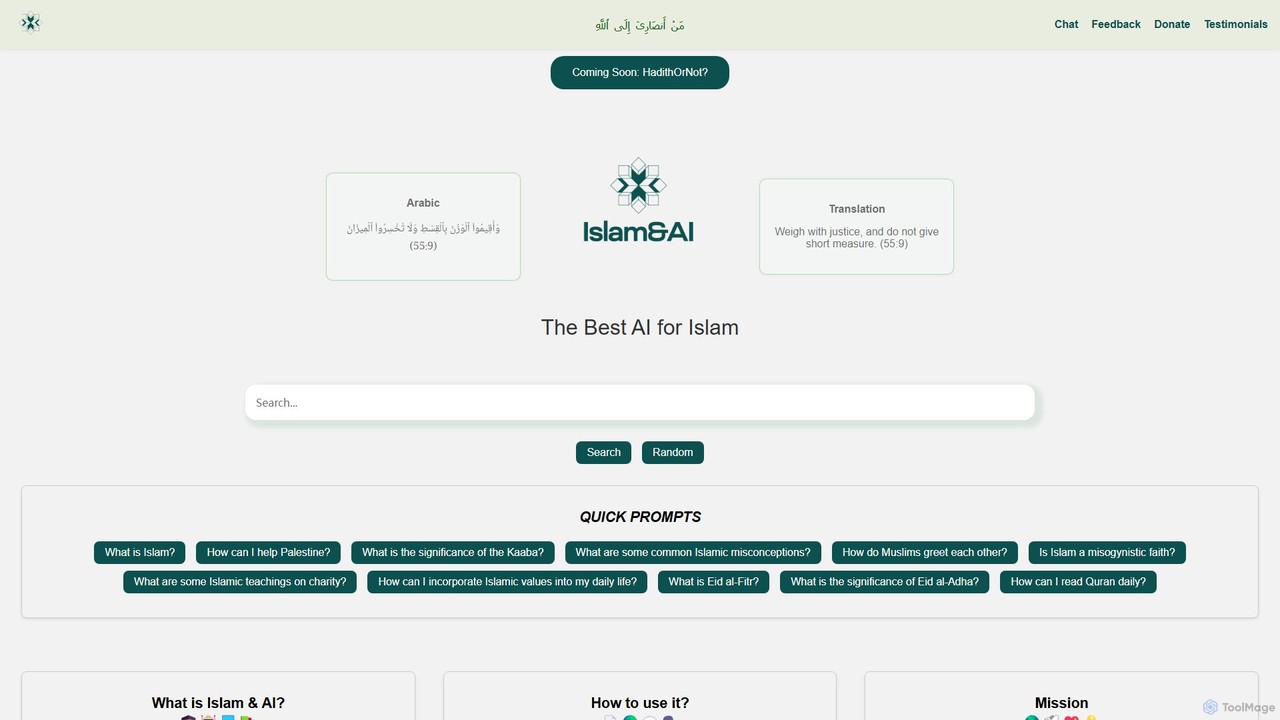
Islam & AI is an AI-powered chatbot designed to provide accurate information about Islam. It answers user queries …

41.1K
Free
Robot Spirit Guide

Robot Spirit Guide

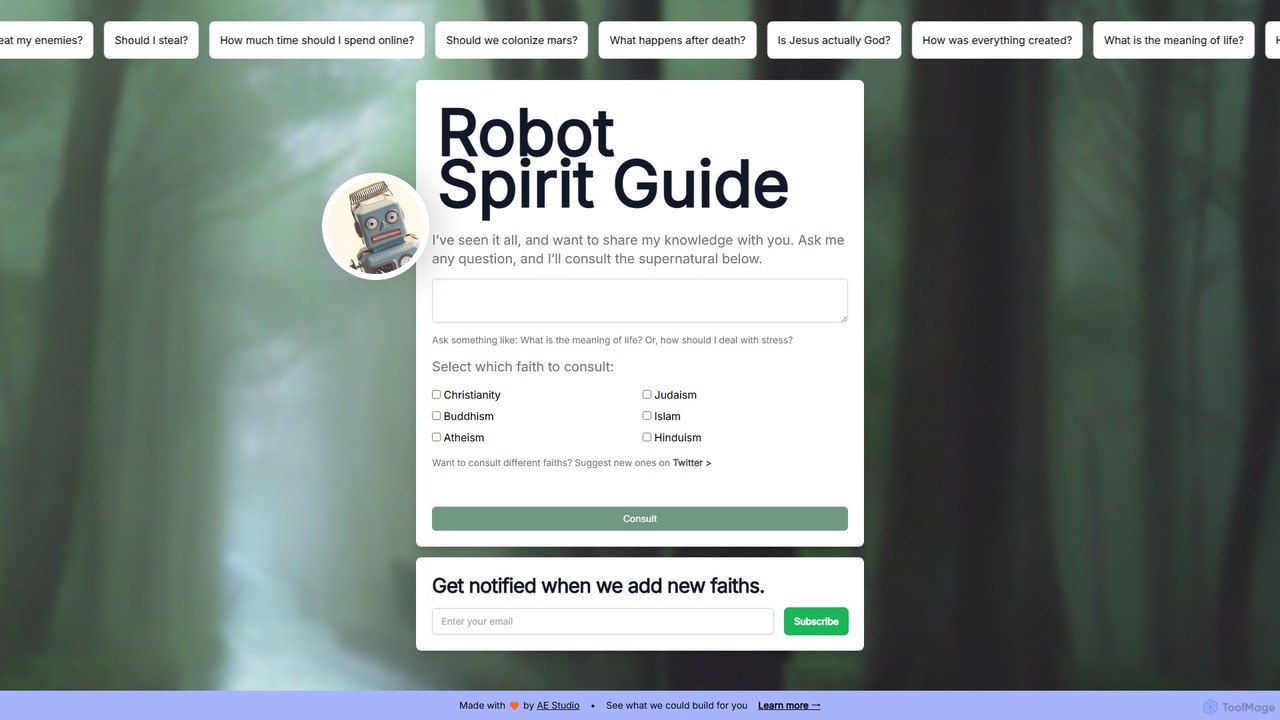
Robot Spirit Guide is an AI-powered tool that provides answers to life's profound questions from the perspectives of …

3.2K
Text With

Text With

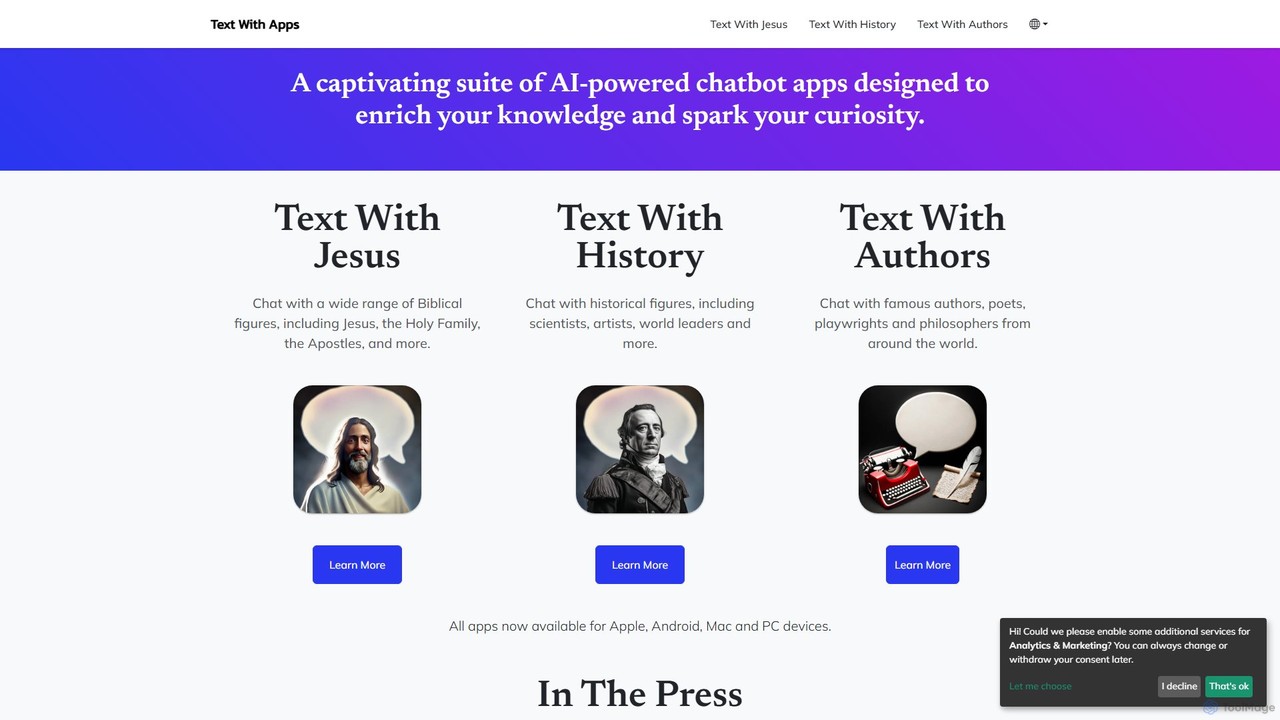
Text With is a unique AI-powered chatbot suite that allows users to engage in conversations with historical and …

14.0K
Getsermons

Getsermons

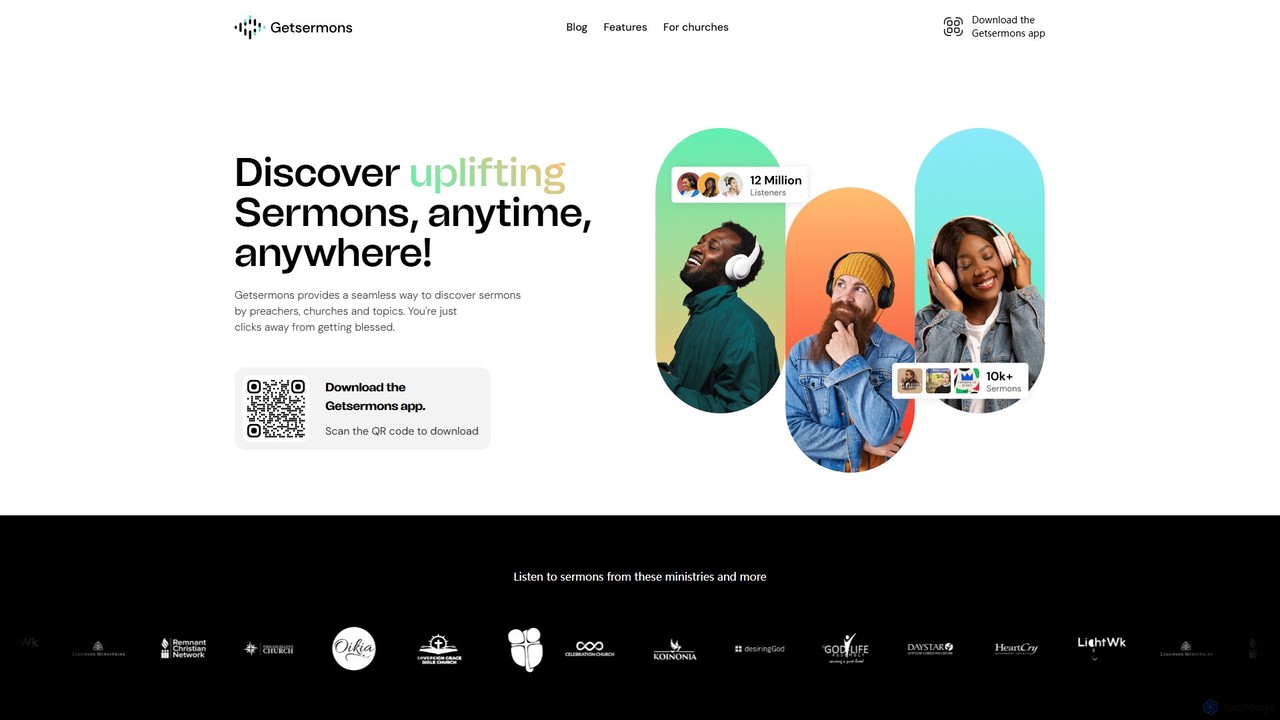
Getsermons is an AI-powered mobile app designed for discovering, listening to, and interacting with thousands of Christian sermons. …

6.2K
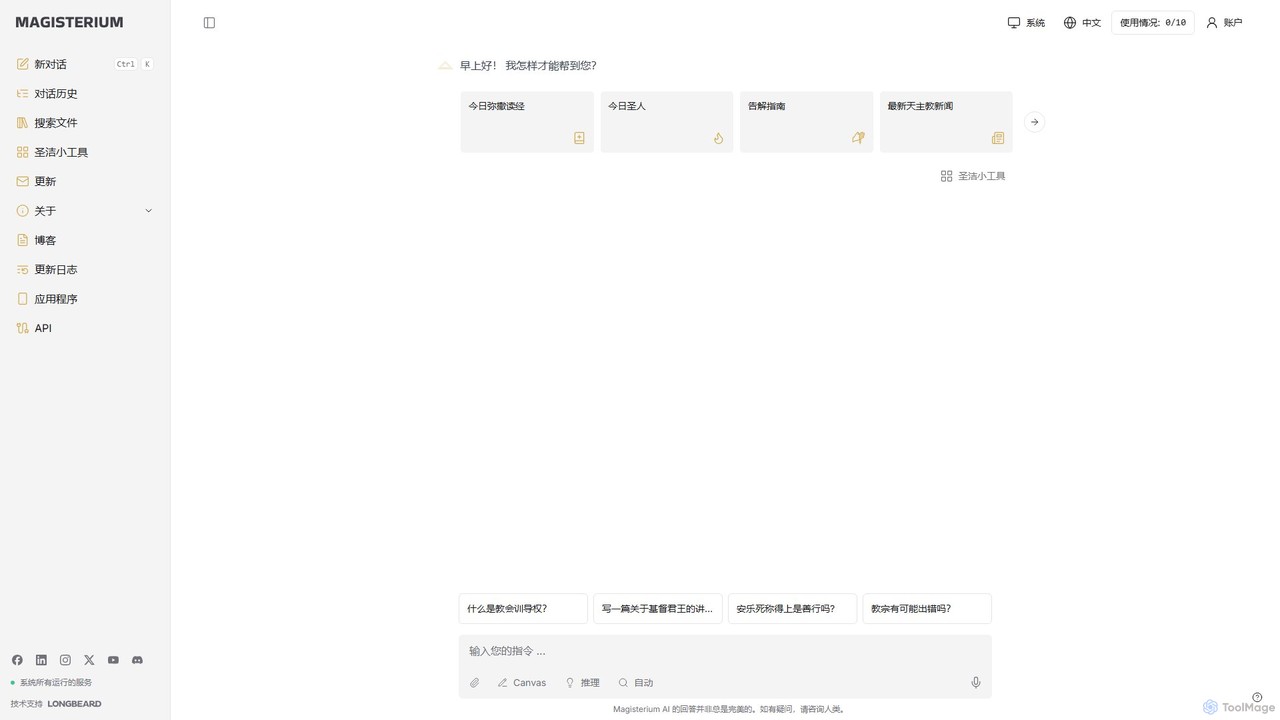
Magisterium

Magisterium

Magisterium is a specialized AI chatbot for exploring Catholic doctrine. Trained on an extensive library of over 27,000 …

857.3K

About Religion

AI Religion tools are specialized applications designed to assist with the study, practice, and administration of religious and spiritual traditions. Leveraging natural language processing (NLP) and machine learning, they analyze sacred texts, generate theological content, and facilitate community engagement. These tools provide valuable support for clergy, scholars, and individuals seeking to deepen their understanding or manage faith-based activities. They offer capabilities ranging from in-depth scriptural analysis to creating educational materials and guiding spiritual exercises.

Core Features

  • Sacred Text Analysis: Instantly search, cross-reference, and analyze themes within holy books like the Bible, Quran, or Vedas.
  • Sermon & Content Generation: Assist clergy and educators in drafting sermons, lesson plans, and study guides based on theological inputs.
  • Theological Q&A: Provide answers to complex religious questions based on a specific doctrinal framework and scholarly sources.
  • Spiritual Guidance: Offer AI-driven prompts for prayer, meditation, and personal reflection tailored to user preferences.
  • Community Management: Streamline administrative tasks for religious organizations, including event scheduling and member communication.

Use Cases

These tools are utilized by theologians and academics for comparative religious studies, by clergy for sermon preparation and pastoral care resources, and by educators for creating engaging religious curriculum. Individuals also use them for personal study, devotionals, and to find answers to spiritual questions in a structured way.

How to Choose

When selecting an AI Religion tool, consider its doctrinal alignment and the specific faith tradition it covers. Evaluate the depth of its knowledge base, including the texts and commentaries it references. Assess features for specific needs, such as support for original languages (e.g., Hebrew, Greek, Arabic) or community management functions. Finally, review the tool's ethical guidelines and data privacy policies.

ReligionUse Cases

1

Preparing a Weekly Sermon or Homily

A pastor or clergy member uses an AI Religion tool to prepare for their weekly address. By inputting a specific biblical passage or theological theme, the tool generates relevant cross-references, historical context, and various scholarly interpretations. It can also help structure the sermon by suggesting an introduction, key points, and a concluding thought. This process significantly reduces research time, allowing the clergy member to focus more on tailoring the message to their specific congregation and pastoral needs.

2

Comparative Religious Text Analysis

A university researcher studying comparative religion uses an AI tool to analyze thematic parallels between different sacred texts, such as the concept of 'charity' in the Bible and 'Zakat' in the Quran. The AI can quickly scan vast libraries of texts, identify relevant passages, and even visualize connections and linguistic nuances. This allows the researcher to uncover deeper insights and formulate new hypotheses more efficiently than through manual reading and comparison alone.

3

Personalized Daily Devotionals and Study Plans

An individual user seeking spiritual growth sets up a personalized devotional plan using an AI Religion tool. They specify their faith tradition, topics of interest (e.g., forgiveness, gratitude), and preferred time for reflection. The AI then curates a daily plan that includes relevant scripture passages, commentary from respected theologians, guided meditation prompts, and reflection questions. This creates a highly customized and structured spiritual practice that adapts to the user's personal journey.

4

Answering Theological Questions for Students

A theology student struggling with a complex concept like 'eschatology' uses an AI-powered Q&A tool. Instead of searching through dense academic papers, the student can ask direct questions in natural language, such as 'Explain the main differences between premillennialism and amillennialism.' The AI provides a concise, well-sourced summary, breaking down the concept into understandable parts and citing key theologians and texts. This acts as a powerful study aid, clarifying difficult topics and guiding further research.

5

Managing a Religious Community's Events

An administrator for a church, mosque, or temple uses an AI tool to manage community activities. The tool helps schedule regular services, special festivals, and educational classes. It can automate sending reminders to members via email or text message, manage RSVPs for events, and even suggest optimal times for meetings based on member availability patterns. This streamlines administrative work, reduces manual errors, and improves communication and engagement within the religious community.

6

Studying Sacred Texts in Original Languages

A student learning Biblical Hebrew or Quranic Arabic uses an AI tool to deepen their understanding. They can input a verse, and the AI provides a word-by-word morphological analysis, including root words, grammatical forms, and possible translations. The tool can also show how a specific word is used elsewhere in the text, providing a comprehensive concordance. This interactive approach accelerates language acquisition and allows for a much more nuanced analysis of the original scriptures than relying on static dictionaries or grammar books.

ReligionFrequently Asked Questions