Community Best in category 1 results Ai Art AI Tool

Popular AI tools in the Ai Art field of Community include tusiart, etc., helping you quickly improve efficiency.

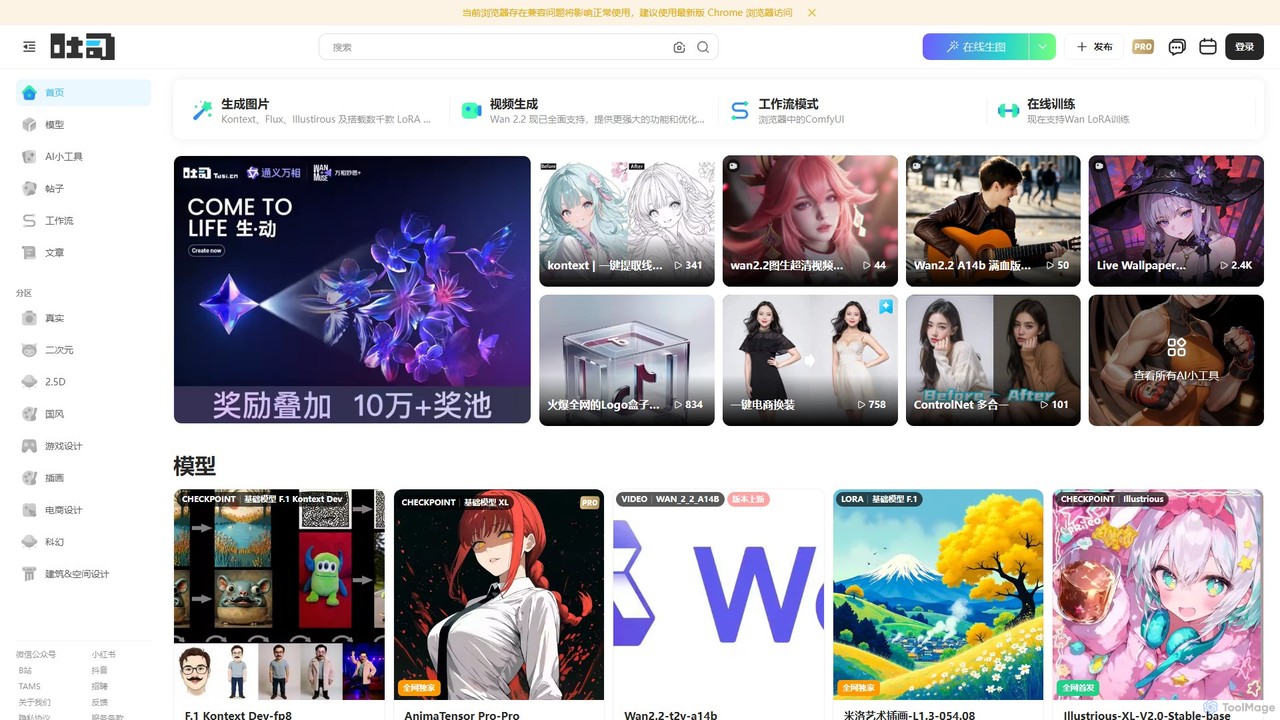
tusiart

tusiart

tusiart is a comprehensive AI model sharing community and online creation platform. It allows users to discover, share, …

174.5K

About Ai Art

AI Art platforms are online communities and galleries dedicated to showcasing, sharing, and discussing artwork created using artificial intelligence. These spaces function as central hubs where artists and enthusiasts can discover new visual styles, exchange creative prompts, and receive feedback on their work. They play a vital role in the growing AI art ecosystem by fostering connection, inspiration, and the evolution of this new creative medium. As a specific type of community, they focus on the visual and technical aspects of AI-generated art.

Core Features

  • Digital Galleries & Portfolios: Allows artists to upload, organize, and showcase their AI-generated artwork in personal profiles.
  • Prompt Sharing & Discovery: A key feature for users to share the text prompts used to create images, facilitating learning and experimentation.
  • Community Interaction: Includes features like comments, ratings, forums, and themed contests to encourage engagement and feedback.
  • Curated Collections: Tools for users and platform editors to curate and feature collections of high-quality or themed AI art.
  • Artist Discovery: Search and filter functions to find new artists based on style, tools used, or popularity.

Use Cases

These platforms are primarily used by AI artists seeking to build a portfolio and gain visibility. They are also valuable for graphic designers, creative directors, and content creators looking for visual inspiration and to stay updated on emerging aesthetic trends. Additionally, art enthusiasts and collectors use these communities to explore the cutting edge of digital art and connect with creators.

How to Choose

When selecting an AI Art platform, consider the community's focus; some may specialize in certain styles like photorealism or anime. Evaluate the platform's features, such as the quality of portfolio tools and the functionality for prompt sharing. Assess the size and engagement level of the user base to ensure opportunities for feedback and visibility. Finally, check for any monetization options, like print-on-demand integrations or NFT support, if that is a priority.

Ai ArtUse Cases

1

Building a Professional AI Artist Portfolio

A digital artist specializing in AI-generated fantasy landscapes uses a platform to create a comprehensive portfolio. They upload their best work, organize it into collections like 'Mystical Forests' and 'Celestial Skies,' and write detailed descriptions for each piece, including the base model and key prompt phrases. This professional portfolio serves as their online gallery, which they can share with potential clients or employers to showcase their skills and unique artistic style, leading to commission opportunities.

2

Learning Advanced Prompting Techniques

A user new to AI art wants to improve their image generation skills. They join a community platform and browse works from established artists. By studying the shared prompts, they learn how to structure complex commands, use negative prompts effectively, and control specific elements like lighting and composition. They participate in forums, asking questions and receiving advice, which accelerates their learning curve from creating basic images to producing detailed, high-quality artwork.

3

Finding Inspiration for a Marketing Campaign

A creative director at an advertising agency is tasked with developing a visual concept for a new tech product. They use an AI art platform's search and discovery features to explore themes like 'futurism,' 'data visualization,' and 'human-machine interface.' By browsing thousands of diverse interpretations, they gather a mood board of compelling visuals, identify emerging aesthetic trends, and find inspiration for a unique campaign direction that feels fresh and innovative.

4

Participating in a Themed Art Contest

An AI art hobbyist decides to enter a weekly contest on their favorite platform with the theme 'Underwater Realms.' They spend time crafting the perfect prompt, generating several variations, and selecting their best submission. The process is not just about winning; it's about challenging their creativity, seeing how other artists interpret the same theme, and receiving constructive feedback from judges and peers. This engagement helps them grow as an artist and feel more connected to the community.

5

Curating a Public Collection of AI Art

An art history student interested in new media uses a platform's collection feature to curate a public gallery titled 'The Rise of AI Surrealism.' They browse the platform daily, selecting pieces that fit their theme and writing short analyses for each addition. Their collection gains followers and becomes a go-to resource for others interested in this specific niche. This act of curation helps them deepen their own understanding and contributes a valuable, organized perspective to the community.

6

Collaborating with Other AI Artists

Two artists with complementary styles meet through a platform's community forum. One excels at character design, while the other is skilled in creating atmospheric environments. They decide to collaborate on a project, using the platform to share their work-in-progress images and exchange prompts. The final result is a series of artworks that neither could have created alone. They publish the series on the platform as a joint collection, showcasing the power of community collaboration in pushing creative boundaries.

Ai ArtFrequently Asked Questions