Community Best in category 1 results Ai Development AI Tool

Popular AI tools in the Ai Development field of Community include Voice AI Space, etc., helping you quickly improve efficiency.

Free
Voice AI Space

Voice AI Space

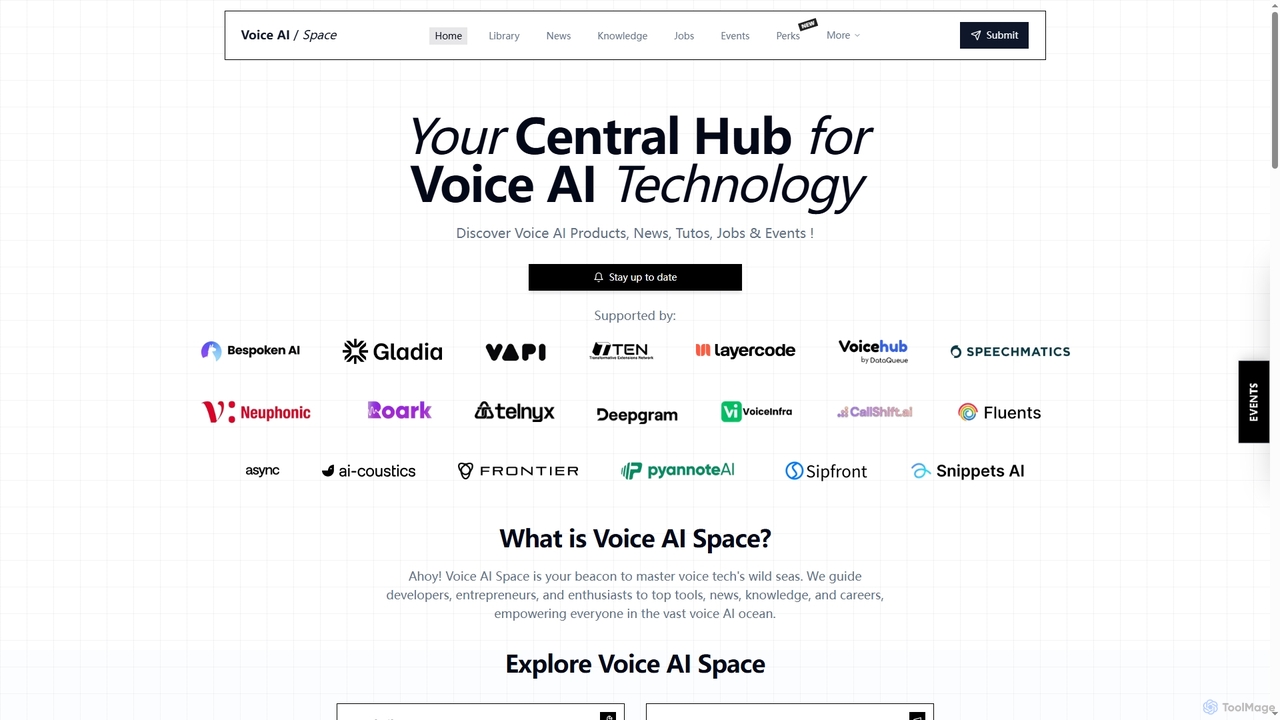
Voice AI Space is a comprehensive online hub dedicated to voice AI technology, offering a curated directory of …

198.9K

About Ai Development

AI Development refers to a specialized category of tools designed to facilitate the entire lifecycle of artificial intelligence projects, from data preparation and model training to deployment and monitoring. These platforms and frameworks empower developers and data scientists to build, test, and scale intelligent applications by providing robust computational resources, pre-built algorithms, and streamlined workflows. They are crucial for transforming raw data into actionable insights and innovative AI-powered solutions, often fostering collaboration within developer communities. These tools are a cornerstone for innovation, enabling the creation of sophisticated AI models that drive progress across various industries.

Core Features

  • Model Training & Optimization: Provides environments and libraries for efficiently training machine learning and deep learning models, including advanced techniques for hyperparameter tuning, performance evaluation, and model versioning.
  • Data Preprocessing & Augmentation: Offers capabilities to clean, transform, label, and expand raw datasets, ensuring high-quality input for AI models and improving their accuracy and robustness.
  • Deployment & MLOps: Facilitates the seamless deployment of trained AI models into production environments, along with tools for managing their lifecycle, monitoring performance, and ensuring continuous integration and delivery (CI/CD) for machine learning.
  • Algorithm Libraries & Frameworks: Grants access to a wide range of pre-implemented AI algorithms, neural network architectures, and popular frameworks like TensorFlow or PyTorch, accelerating development and experimentation.
  • Collaborative Development Environments: Integrated platforms that support team-based development, version control, code sharing, and knowledge management, essential for complex AI projects within a community of developers.

Use Cases

These tools are indispensable for data scientists, machine learning engineers, and AI researchers working on complex projects. They are extensively used in scenarios like developing custom recommendation engines for e-commerce platforms, building predictive maintenance systems for industrial IoT applications, or creating advanced natural language processing models for customer service automation. Furthermore, they enable the rapid prototyping of AI solutions for scientific research and the development of intelligent agents for gaming or robotics.

How to Choose

When selecting AI development tools, consider the specific AI tasks you need to perform, the level of technical expertise required by your team, and the scalability of the platform to handle growing data volumes and model complexity. Evaluate factors such as supported programming languages (e.g., Python, R), integration capabilities with existing infrastructure, the availability of pre-trained models, MLOps features for deployment and monitoring, cost structure, and the strength of the developer community support. Cost-effectiveness, security features, and the ease of MLOps integration are also critical for ensuring long-term project success and maintainability.

Ai DevelopmentUse Cases

1

Developing Custom Recommendation Engines

E-commerce data scientists utilize AI development tools to build and train personalized recommendation models. By analyzing customer browsing history, purchase patterns, and product interactions, they deploy models that suggest relevant products, significantly enhancing user experience and driving sales. This involves data preprocessing, model selection (e.g., collaborative filtering, deep learning), and continuous A/B testing.

2

Building Predictive Maintenance Systems

Industrial engineers and data scientists in manufacturing leverage AI development platforms to create predictive maintenance solutions. They collect sensor data from machinery, train machine learning models to identify anomalies and predict equipment failures before they occur. This proactive approach minimizes downtime, reduces maintenance costs, and extends asset lifespan, optimizing operational efficiency.

3

Creating Advanced NLP Models for Customer Service

AI researchers and developers build sophisticated Natural Language Processing (NLP) models for automating and enhancing customer service. Using these tools, they train models for sentiment analysis, intent recognition, and automated response generation, enabling chatbots and virtual assistants to understand and respond to complex customer queries more effectively, improving satisfaction.

4

Rapid Prototyping of AI Solutions for Scientific Research

Academic researchers and scientists use AI development environments to quickly prototype and experiment with new AI algorithms and models. Whether it's for drug discovery, climate modeling, or astrophysics, these tools provide the computational power and libraries to test hypotheses, process vast datasets, and accelerate scientific breakthroughs without extensive infrastructure setup.

5

Developing Intelligent Agents for Gaming and Robotics

Game developers and robotics engineers employ AI development tools to create intelligent agents capable of learning and adapting. For gaming, this means building NPCs with realistic behaviors and decision-making. In robotics, it involves training robots for autonomous navigation, object manipulation, and complex task execution, enhancing their capabilities in dynamic environments.

6

Optimizing Supply Chain Logistics with Machine Learning

Logistics and operations managers, supported by data scientists, use AI development tools to build machine learning models for supply chain optimization. These models predict demand fluctuations, optimize routing, manage inventory levels, and identify potential disruptions. The result is a more resilient, cost-effective, and efficient supply chain, reducing waste and improving delivery times.

Ai DevelopmentFrequently Asked Questions