Community Best in category 1 results Faith Based AI Tool

Popular AI tools in the Faith Based field of Community include OneAccord, etc., helping you quickly improve efficiency.

OneAccord

OneAccord

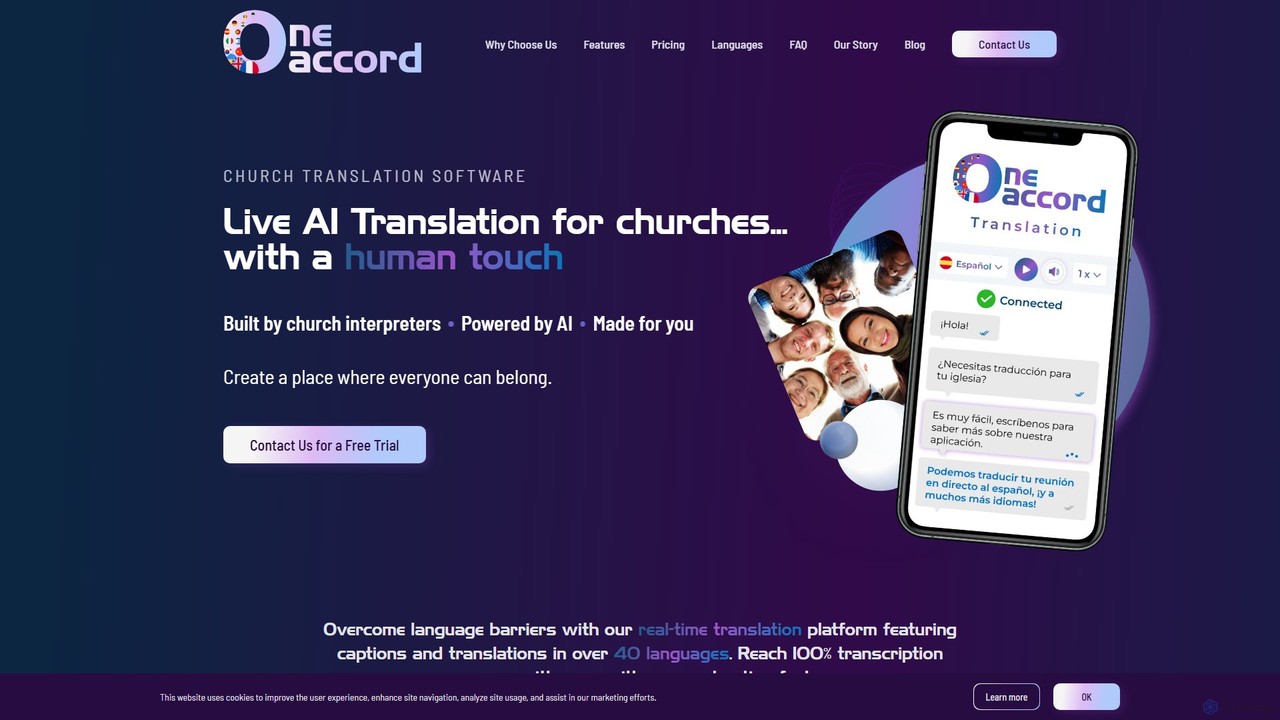
OneAccord is a live AI translation platform designed specifically for churches. It provides real-time audio and text translations …

9.9K

About Faith Based

Faith Based AI tools represent a specialized and evolving category within the broader landscape of community AI solutions, specifically engineered to support, enrich, and streamline spiritual practices, religious education, and faith-based community engagement. These innovative tools harness the power of artificial intelligence to process vast amounts of sacred texts, theological concepts, and historical data, enabling the generation of relevant content, personalized insights, and efficient administrative support. Their primary purpose is to make religious resources more accessible to a wider audience, empower faith leaders with advanced tools for sermon preparation and outreach, and foster deeper understanding, connection, and spiritual growth within diverse faith communities globally.

Core Features

  • Advanced Scripture Analysis & Interpretation: AI-powered capabilities to delve into sacred texts, offering deep insights, cross-references, historical context, and various theological interpretations to aid study and understanding.
  • Dynamic Sermon & Content Generation: Comprehensive assistance for clergy and educators in drafting sermons, homilies, lesson plans, and devotional materials, including structured outlines, relevant parables, thematic suggestions, and adaptable content for different age groups.
  • Personalized Community Engagement & Outreach: Sophisticated tools for managing member communications, automating the drafting of newsletters, social media posts, event announcements, and personalized spiritual messages to enhance community connection.
  • Interactive Spiritual Guidance & Reflection: AI companions designed for individual spiritual journeys, providing guided meditation scripts, personalized prayer prompts, ethical dilemmas for reflection, and curated resources for deeper theological exploration.
  • Multilingual Translation & Accessibility: Features that translate religious texts and content into multiple languages, breaking down barriers and making spiritual resources accessible to a global audience.

Applicable Scenarios

These tools prove invaluable for clergy members who dedicate significant time to weekly sermon preparation, offering research assistance and creative inspiration. Religious educators can leverage them to develop highly engaging and interactive lesson plans for Sunday school or youth groups, adapting content to modern learning styles. Individuals seeking to deepen their personal spiritual study can utilize AI for daily devotionals, understanding complex theological texts, or exploring different faith perspectives. Furthermore, faith-based organizations benefit immensely from these tools in efficiently managing their community communications, outreach efforts, and administrative tasks, ensuring their messages are impactful and reach the right audience at the right time.

How to Choose

When selecting a Faith Based AI tool, it is paramount to consider its denominational alignment and the accuracy, authenticity, and ethical integrity of its theological content to ensure it aligns seamlessly with your specific beliefs and values. Evaluate the underlying ethical framework guiding the AI's development, its transparency regarding data usage, and how it addresses potential biases. Look for features that offer extensive customization, allowing you to tailor generated content to your community's unique context, specific doctrines, and cultural nuances. Crucial factors for effective implementation also include ease of use, seamless integration capabilities with existing digital platforms, robust data privacy measures, and the availability of responsive community support or training resources.

Faith BasedUse Cases

1

Streamline Sermon Preparation for Clergy

Clergy members can utilize Faith Based AI tools to significantly reduce the time spent on sermon preparation. By inputting a specific scripture passage or thematic concept, the AI can generate sermon outlines, suggest relevant historical contexts, provide cross-references to other biblical texts, and even propose contemporary anecdotes or parables. This allows pastors and religious leaders to focus more on spiritual reflection and pastoral care, ensuring their messages are well-researched, engaging, and deeply resonant with their congregation's needs, while maintaining theological accuracy.

2

Enhance Personal Spiritual Study & Devotion

Individuals seeking to deepen their personal faith journey can leverage Faith Based AI tools for daily devotionals and in-depth study. Users can ask questions about complex theological concepts, receive personalized prayer prompts based on their current spiritual focus, or explore different interpretations of sacred texts. The AI can also curate guided meditation scripts or suggest relevant readings, making spiritual growth more accessible and tailored to individual needs, fostering a richer and more consistent devotional life without requiring extensive research time.

3

Create Engaging Religious Education Content

Religious educators, Sunday school teachers, and youth group leaders can use AI tools to generate dynamic and age-appropriate educational materials. This includes creating interactive lesson plans, quizzes, storytelling scripts, and discussion prompts that bring ancient texts to life for younger audiences. The AI can adapt content to various learning styles and age groups, ensuring that religious teachings are presented in an engaging and understandable manner, fostering a deeper connection to faith among children and teenagers through innovative educational experiences.

4

Automate Community Outreach & Communication

Faith-based organizations can streamline their communication and outreach efforts using AI. These tools can assist in drafting compelling newsletters, social media posts, event announcements, and personalized messages to members. By analyzing past engagement data, the AI can help tailor content to resonate more effectively with specific segments of the community, ensuring timely and relevant information reaches the right people. This automation frees up valuable staff time, allowing organizations to focus more on direct ministry and community building, while maintaining a consistent and professional communication presence.

5

Facilitate Interfaith Dialogue & Understanding

AI tools can play a crucial role in promoting interfaith understanding by providing objective summaries and comparative analyses of different religious texts, traditions, and theological perspectives. Users can input questions about similarities or differences between faiths, and the AI can generate concise, unbiased explanations. This capability supports scholars, educators, and individuals in fostering respectful dialogue, breaking down misconceptions, and building bridges between diverse spiritual communities, contributing to a more harmonious and informed global society through accessible comparative religious studies.

6

Support Pastoral Care & Counseling Resources

While not replacing human interaction, Faith Based AI tools can serve as valuable support for clergy and pastoral care providers. The AI can quickly retrieve relevant scripture passages for comfort, suggest prayer points for specific situations, or provide resources on common pastoral counseling topics from a faith perspective. This allows care providers to access information rapidly, enhancing their ability to offer timely and biblically grounded support to individuals facing personal challenges, grief, or spiritual questions, thereby augmenting their compassionate ministry.

Faith BasedFrequently Asked Questions