Content Best in category 1 results Content Verification AI Tool

Popular AI tools in the Content Verification field of Content include Nonbot.org, etc., helping you quickly improve efficiency.

Free
Nonbot.org

Nonbot.org

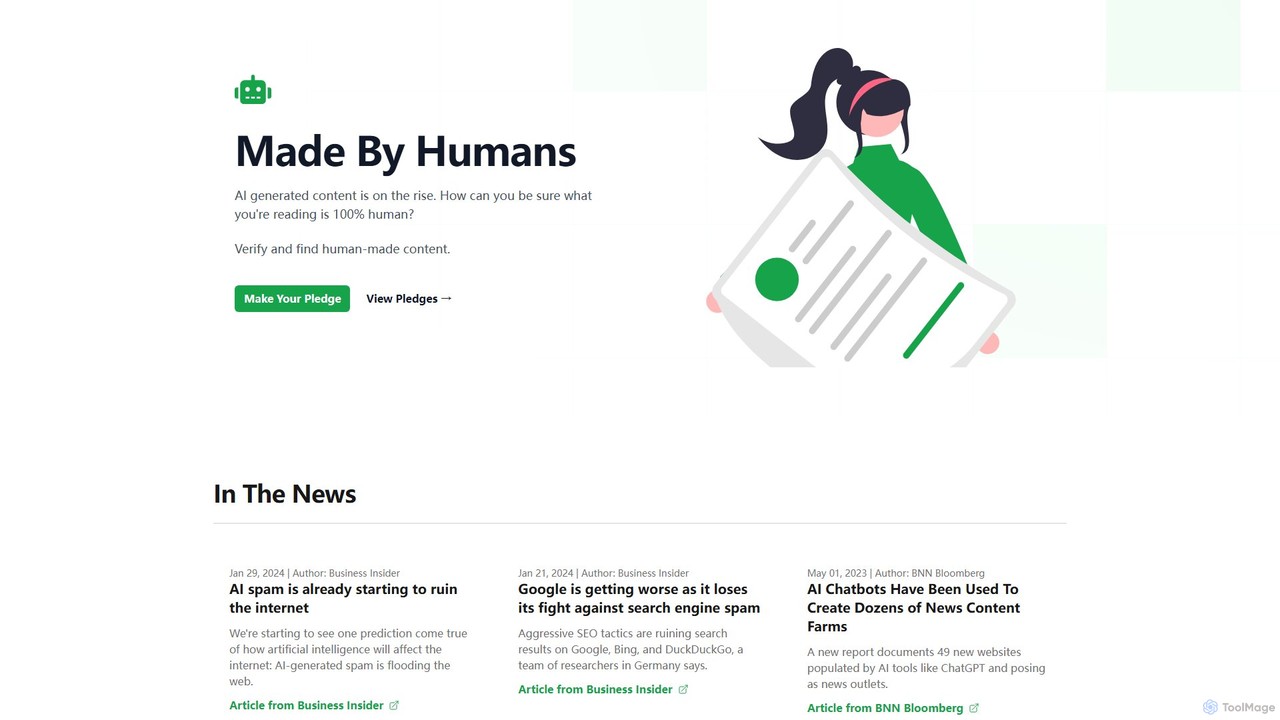
A free platform for creators to certify their content as 100% human-made. By taking a pledge, users receive …

2.8K

About Content Verification

Content Verification tools are AI-powered solutions designed to assess the authenticity, accuracy, and integrity of digital content. These tools leverage advanced algorithms, including natural language processing and computer vision, to identify misinformation, detect plagiarism, and verify sources. They are crucial for maintaining trust and credibility across various content-driven industries, ensuring that published information is reliable and free from manipulation.

Core Features

  • Plagiarism Detection: Scans text against vast databases to identify unoriginal content and potential intellectual property infringements.
  • Fact-Checking & Misinformation Detection: Analyzes claims and statements against reputable sources to flag inaccuracies, biases, or fabricated information.
  • Deepfake & Media Authenticity: Employs computer vision and audio analysis to detect manipulated images, videos, and audio, ensuring media integrity.
  • Source Verification: Traces the origin and credibility of information sources, helping to validate the reliability of content.
  • Bias & Sentiment Analysis: Evaluates content for potential biases or underlying sentiment, providing insights into its objectivity and tone.

Use Cases

These tools are essential for journalists, media organizations, educators, and marketing professionals who need to ensure the factual accuracy and originality of their output. They are also vital for platforms combating the spread of disinformation and for brands safeguarding their reputation by verifying user-generated content.

How to Choose

When selecting a Content Verification tool, consider its detection accuracy, the breadth of content types it supports (text, image, video), integration capabilities with existing workflows, and the comprehensiveness of its reporting. Evaluate its ability to handle specific verification needs, such as real-time fact-checking or deepfake analysis, and compare pricing models based on usage volume.

Content VerificationUse Cases

1

Verifying News Articles for Accuracy

Journalists and news editors utilize AI content verification tools to rapidly fact-check claims, statistics, and quotes within articles before publication. By cross-referencing information with a vast knowledge base and identifying potential misinformation, these tools help maintain journalistic integrity and prevent the spread of false narratives, significantly reducing manual research time.

2

Detecting Plagiarism in Academic Papers

Educators and academic institutions employ content verification software to scan student essays, theses, and research papers for originality. The tools compare submitted work against published literature, online sources, and other student submissions, highlighting instances of uncredited content and ensuring academic honesty. This process streamlines grading and upholds educational standards.

3

Authenticating User-Generated Content for Brands

Marketing teams and brand managers use AI verification to assess the authenticity and suitability of user-generated content (UGC) for campaigns. This includes checking images and videos for deepfake manipulation or verifying the origin of testimonials. Ensuring UGC is genuine and aligns with brand values protects reputation and builds consumer trust.

4

Combating Deepfakes in Digital Media

Social media platforms and media companies deploy content verification tools equipped with advanced computer vision to detect deepfake videos and manipulated images. These systems analyze subtle inconsistencies in facial movements, lighting, and audio synchronization, helping to identify synthetic media that could be used for disinformation or malicious purposes, thereby safeguarding public discourse.

5

Ensuring Brand Safety in Advertising

Advertisers and ad tech platforms leverage content verification to ensure their ads appear alongside brand-safe content. Tools analyze the surrounding text and media for inappropriate themes, hate speech, or violent imagery, preventing brand association with harmful content. This proactive approach protects brand image and optimizes advertising spend.

6

Identifying Bias in Research and Reports

Researchers and policy analysts use content verification tools to identify potential biases in data presentation, language, or source selection within reports. By analyzing sentiment and word choice, these tools can highlight areas where subjective viewpoints might influence findings, promoting more objective and balanced reporting crucial for informed decision-making.

Content VerificationFrequently Asked Questions