ToolMage
Sign in

Best 2 Writing AI tools for Content

Popular Writing AI tools in Content include ChatronAI and Beeyond AI, helping you work more efficiently.

ChatronAI

ChatronAI

ChatronAI is an all-in-one AI workspace designed to streamline creative and technical workflows. It integrates tools for long-form content creation, SEO optimization, AI image generation, simple video editing with auto-captions, and code assistance. This unified platform empowers creators, marketers, and developers to produce high-quality work more efficiently by consolidating multiple functionalities into a single, intuitive interface.

Development
Visits 3.5KFavorites 117Likes 111
Beeyond AI
Freemium

Beeyond AI

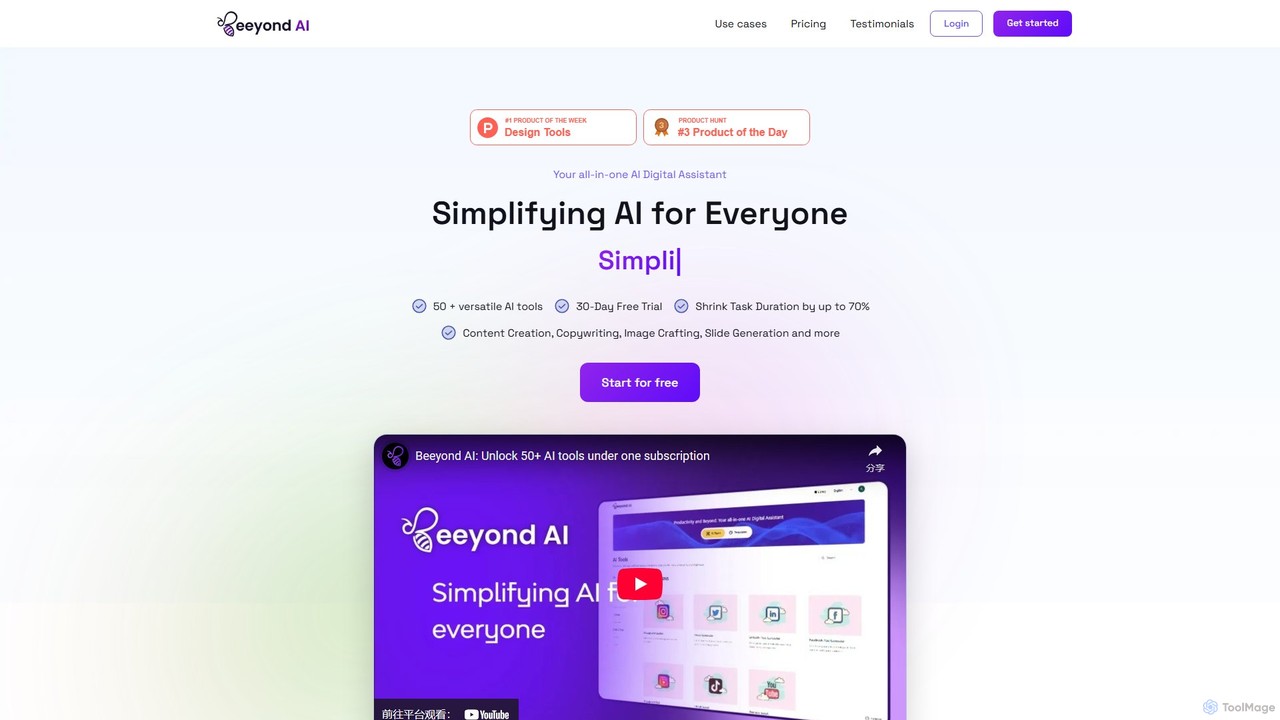
Beeyond AI is an all-in-one AI digital assistant designed to simplify complex tasks. It offers over 50 versatile tools for content creation, copywriting, image generation, slide creation, and more, catering to professionals, creators, and individuals. The platform integrates multiple AI models to provide a seamless, efficient, and cost-effective solution for boosting productivity and creativity.

Writing
Visits 3.5KFavorites 66Likes 70

About Writing

AI Writing tools are applications that leverage artificial intelligence, particularly large language models (LLMs), to generate, refine, and optimize human-like text. These tools analyze vast amounts of data to understand context, grammar, and style, enabling them to create original content, paraphrase existing text, and correct errors. They serve as powerful assistants for anyone involved in content creation, helping to increase productivity, overcome writer's block, and improve the overall quality of written communication. The technology can adapt its output to specific tones, formats, and audiences with remarkable flexibility.

Core Features

  • Text Generation: Creates original content from prompts, including articles, emails, marketing copy, and social media posts.
  • Paraphrasing & Rewriting: Rephrases sentences or entire paragraphs to improve clarity, change tone, or avoid plagiarism.
  • Grammar & Style Correction: Identifies and corrects grammatical errors, punctuation mistakes, and stylistic inconsistencies beyond basic spell-checking.
  • Content Summarization: Condenses long documents, articles, or reports into concise summaries, highlighting key points.
  • Tone & Voice Adaptation: Adjusts the writing style to match a specific tone, such as formal, casual, persuasive, or empathetic.

Use Cases

AI Writing tools are widely used across various sectors. Content marketers and SEO specialists use them to rapidly produce blog posts and ad copy. Students and academics leverage them to draft essays, check for plagiarism, and refine research papers. In the business world, professionals use these tools to compose clear emails, generate reports, and create compelling presentations, ensuring consistent and high-quality communication.

How to Choose

When selecting an AI Writing tool, first consider your primary need—whether it's long-form content creation, email drafting, or academic writing. Evaluate the quality and coherence of the generated text. Examine the feature set, looking for essentials like plagiarism checkers, SEO optimization, and multi-language support. Finally, consider the tool's integration capabilities with your existing workflow (e.g., browser extensions or API access) and its pricing model.

Featured tool rankings

Writing use cases

1

Automate Blog Post & Article Creation

A content marketer is tasked with publishing multiple SEO-optimized articles per week to drive organic traffic. Using an AI Writing tool, they can generate a comprehensive article outline based on a target keyword. They then use the tool to draft initial sections, research relevant statistics, and rephrase paragraphs for better readability. This process reduces the time from concept to publication by over 60%, allowing the marketer to focus on content strategy and promotion rather than manual writing.

2

Draft Professional Emails & Business Reports

A project manager needs to send a clear, formal project update to stakeholders and draft a detailed quarterly report. They use an AI Writing tool to structure the email, ensuring a professional tone and concise language. For the report, the tool helps summarize data points, generate executive summaries, and check the entire document for grammatical consistency and clarity. This ensures all business communications are polished and effective, saving valuable time on editing and proofreading.

3

Accelerate Academic Research & Essay Writing

A university student is working on a complex research paper with a tight deadline. They use an AI Writing tool to paraphrase scholarly sources to avoid plagiarism while retaining the original meaning. The tool also helps organize their arguments into a coherent structure and provides suggestions for improving sentence flow and academic tone. Finally, it performs a thorough grammar and citation style check, helping the student submit a high-quality, well-researched paper on time.

4

Generate Engaging Social Media Captions

A social media manager for a fashion brand needs to create daily content for Instagram, Twitter, and Facebook. Using an AI Writing tool, they input a product description and target audience. The tool generates a dozen caption variations, each tailored to the platform's character limits and tone—from witty one-liners for Twitter to more descriptive, emoji-filled captions for Instagram. This allows the manager to maintain a consistent and engaging online presence without spending hours brainstorming new copy each day.

5

Overcome Writer's Block & Brainstorm Ideas

A novelist is struggling with a new chapter and feels stuck. They turn to an AI Writing tool not for final text, but for inspiration. By inputting a character's dilemma or a plot point, the AI generates several potential scenarios, dialogue snippets, or descriptive passages. This acts as a creative catalyst, providing fresh perspectives and helping the writer break through their block and continue the narrative with renewed momentum. The tool functions as a brainstorming partner available 24/7.

6

Translate and Localize Marketing Copy

A global e-commerce company needs to launch a product campaign in five different countries. Instead of direct translation, which can miss cultural nuances, the marketing team uses an advanced AI Writing tool. They provide the original English copy and specify the target country. The AI not only translates the text but also adapts idioms, cultural references, and calls-to-action to be more effective in each local market. This localization process results in higher engagement and conversion rates than a simple machine translation would achieve.

Writing FAQ

What are AI Writing tools?

AI Writing tools are software applications that use natural language processing (NLP) and large language models (LLMs) to assist with or automate the creation of text. They can generate content from scratch, rewrite existing text, check for grammar and style errors, and even adapt the tone of the writing. These tools are designed to enhance human writing capabilities, improve efficiency, and help overcome creative blocks across various tasks like marketing, academic writing, and business communication.

How do I choose the right AI Writing tool?

To choose the right tool, consider these factors:

  • Primary Use Case: Identify your main goal. Do you need long-form articles, short social media posts, or technical documentation? Different tools specialize in different content types.
  • Quality of Output: Test the tool to see if its output is coherent, accurate, and matches your desired style. Many offer free trials for this purpose.
  • Key Features: Look for features essential to your workflow, such as SEO optimization, plagiarism detection, multi-language support, or specific tone adjustments.
  • Integrations: Check if the tool integrates with your existing software, like web browsers, Google Docs, or WordPress, to ensure a smooth workflow.
  • Budget: Compare pricing plans based on your usage needs, from free or low-cost options for individuals to enterprise plans for teams.
What's the difference between an AI writer and a grammar checker?

A traditional grammar checker primarily focuses on correcting objective errors like spelling, punctuation, and basic grammatical syntax. An AI Writing tool does all of that and much more. It operates on a deeper, contextual level, offering suggestions to improve style, clarity, and tone. Crucially, AI writers can also generate entirely new content, paraphrase sentences, summarize text, and brainstorm ideas, acting as a creative partner rather than just a proofreader.

Can AI Writing tools replace human writers?

AI Writing tools are best viewed as powerful assistants that augment, rather than replace, human writers. They excel at tasks like generating drafts, summarizing information, and overcoming writer's block. However, human oversight remains crucial for strategic direction, fact-checking, injecting genuine creativity, and ensuring the content aligns with a brand's unique voice and values. The most effective approach combines the efficiency of AI with the critical thinking and emotional intelligence of a human writer.

Who can benefit from using AI Writing tools?

A wide range of individuals and professionals can benefit from AI Writing tools. This includes:

  • Marketers and SEO Specialists: For creating blog posts, ad copy, and social media content at scale.
  • Students and Academics: For drafting essays, paraphrasing sources, and checking for grammatical accuracy.
  • Business Professionals: For writing clear emails, reports, and presentations quickly.
  • Authors and Bloggers: For brainstorming ideas and overcoming writer's block.
  • Developers: For generating technical documentation and code comments.
  • Non-native Speakers: For improving fluency and ensuring their writing is natural and grammatically correct.