ToolMage
Sign in

Best 1 Audio Content AI tools for Content Creation

Popular Audio Content AI tools in Content Creation include PodcastShodcast, helping you work more efficiently.

PodcastShodcast
Freemium

PodcastShodcast

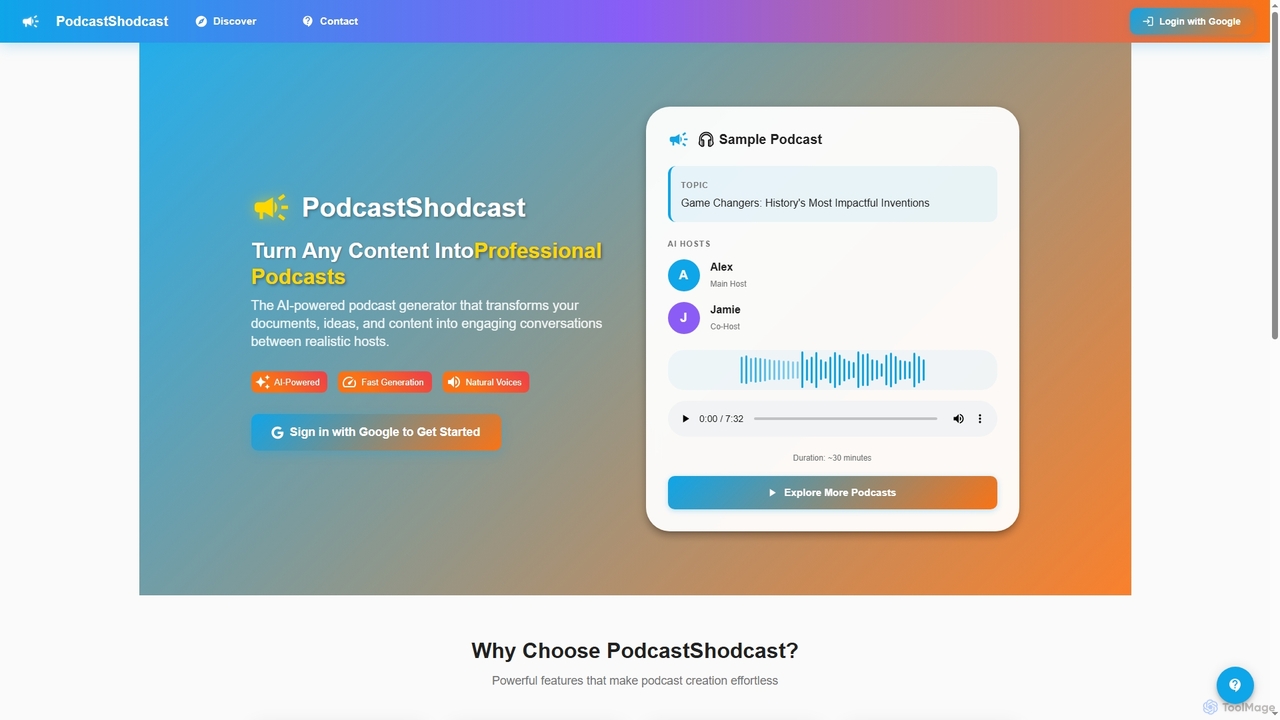
PodcastShodcast is an AI-powered podcast generator that converts various content formats like documents, text, and URLs into professional, engaging audio conversations featuring realistic AI hosts. It offers fast generation and natural voice synthesis for diverse applications.

3D
Visits 4.2KFavorites 136Likes 119

About Audio Content

AI Audio Content tools are a class of software that uses artificial intelligence to generate, manipulate, and enhance audio. These tools employ advanced models like text-to-speech (TTS), voice cloning, and generative audio synthesis to create realistic human speech, original music, and sound effects from simple text prompts or data inputs. They empower creators to produce high-quality audio for podcasts, videos, and applications without needing expensive recording studios or professional voice talent. Many platforms also include features for audio cleanup, such as noise reduction and dialogue enhancement, making professional-grade audio production more accessible and efficient.

Core Features

  • Text-to-Speech (TTS) Generation: Converts written text into natural-sounding human speech in various languages, accents, and emotional styles.
  • Voice Cloning: Creates a digital replica of a specific voice from a short audio sample, allowing for the generation of new speech in that voice.
  • AI Music & Sound Generation: Composes royalty-free background music, jingles, or sound effects based on genre, mood, or descriptive prompts.
  • Audio Enhancement & Restoration: Automatically removes background noise, corrects volume levels, and repairs imperfections in existing audio recordings.
  • Speech-to-Speech (STS) Conversion: Transforms the characteristics of one voice (e.g., emotion, accent) into another while preserving the original speech content.

Use Cases

These tools are widely used by podcasters for creating intros and editing interviews, by video creators for adding voiceovers and background music, and by developers for integrating dynamic voice responses into applications. E-learning professionals use them to produce course narration, while marketers create audio ads and branded virtual assistant voices.

How to Choose

When selecting an AI Audio Content tool, consider the quality and naturalness of the generated voices or music. Evaluate the range of available languages, accents, and customization options (e.g., pitch, speed, emotion). For developers, API availability and documentation are crucial. Also, review the pricing models (e.g., per-character, subscription) and usage rights for commercial projects to ensure they align with your needs.

Featured tool rankings

Audio Content use cases

1

Automated Audiobook and Article Narration

Content publishers and bloggers can use AI audio tools to convert their written works, such as books, articles, and newsletters, into engaging audio formats. By simply inputting the text, a text-to-speech (TTS) engine generates a high-quality narration in a chosen voice and language. This process automates the creation of audiobooks and 'listen to this article' features, making content more accessible to visually impaired audiences and those who prefer consuming content on the go. It significantly reduces the cost and time compared to hiring a professional voice actor and booking a recording studio.

2

Podcast Production and Audio Enhancement

Podcasters can leverage AI audio tools throughout their production workflow. An AI music generator can create unique, royalty-free intro and outro music tailored to the podcast's theme. During editing, AI-powered audio enhancement features can automatically remove background noise, level volumes between different speakers, and cut out filler words like 'um' and 'ah'. For creators who are camera-shy or want to maintain anonymity, a realistic AI voice can be used to narrate entire episodes, ensuring a consistent and professional sound without ever stepping in front of a microphone.

3

Multilingual Video Dubbing and Voiceovers

Video creators aiming for a global audience can use AI audio tools to quickly and affordably dub their content into multiple languages. Instead of hiring voice actors for each language, they can use a text-to-speech tool that supports various languages. The process involves transcribing the original audio, translating the script, and then generating a new voiceover in the target language. Some advanced tools even offer voice cloning and speech-to-speech features to preserve the original speaker's tone and cadence, resulting in a more natural and authentic-sounding dub that resonates better with international viewers.

4

Creating a Unique Brand Voice for Marketing

Marketing teams can use AI voice cloning to establish a consistent and recognizable audio brand identity. By cloning the voice of a CEO, a brand ambassador, or a professionally selected voice actor, a company can create a unique 'brand voice'. This AI-generated voice can then be used across all audio touchpoints, including interactive voice response (IVR) systems, video advertisements, corporate training materials, and social media content. This ensures a uniform brand experience for customers and eliminates the logistical challenges and costs associated with repeatedly scheduling recording sessions with a specific person.

5

Rapid Prototyping for Game and App Sound Design

Game developers and app designers can use AI audio tools to rapidly prototype and iterate on sound design. Instead of waiting for voice actors to deliver lines, developers can use a text-to-speech tool to generate placeholder dialogue for characters, allowing them to test gameplay mechanics and narrative flow early in the development cycle. Similarly, an AI sound effect generator can create a wide variety of sounds (e.g., footsteps, explosions, interface clicks) based on text descriptions. This enables designers to quickly find the right audio aesthetic for their project without sifting through large sound libraries or commissioning custom work.

6

Creating Accessible Content for Visually Impaired Users

Educators, web developers, and organizations can use AI audio tools to enhance accessibility. By converting on-screen text, website content, and educational materials into clear, spoken audio, they can cater to users with visual impairments or reading disabilities. AI TTS voices can be integrated into screen readers or used to create audio versions of documents and web pages. This application of AI audio technology promotes digital inclusion and helps organizations comply with accessibility standards like WCAG (Web Content Accessibility Guidelines), ensuring that information is available to everyone, regardless of their physical abilities.

Audio Content FAQ

What are AI Audio Content tools?

AI Audio Content tools are software applications that use artificial intelligence to generate and modify audio. They can convert text into lifelike speech (Text-to-Speech), create a digital copy of a person's voice (Voice Cloning), compose original music, or clean up noisy recordings. These tools make high-quality audio production faster, more affordable, and accessible to users without specialized skills or equipment.

How to choose the right AI audio tool?

Choosing the right tool depends on your specific needs. Consider the following factors:

  • Audio Quality: Listen to samples. Does the voice sound natural and not robotic? Is the music high-fidelity?
  • Features: Do you need basic text-to-speech, or advanced features like voice cloning, emotion control, or API access?
  • Language and Accent Support: Ensure the tool supports the languages and regional accents you need for your target audience.
  • Usage Rights: Check the terms of service to confirm if you can use the generated audio for commercial purposes.
  • Pricing: Compare pricing models. Some charge per character/word, while others offer monthly subscriptions with different usage tiers.
What's the difference between AI voice generators and traditional text-to-speech (TTS)?

While both convert text to audio, AI voice generators represent a significant advancement over traditional TTS. Traditional TTS often sounds robotic and monotonous because it relies on concatenating pre-recorded sound snippets. Modern AI voice generators use deep learning to synthesize speech from scratch, allowing them to produce highly naturalistic voices with realistic intonation, emotion, and pacing. They can also learn and replicate specific voices (voice cloning), a capability traditional TTS lacks.

Can AI-generated audio be used for commercial purposes?

This depends entirely on the terms of service of the specific AI tool you are using. Most reputable services offer commercial licenses, often as part of their paid subscription plans, which grant you the right to use the generated audio in for-profit projects like advertisements, audiobooks, or monetized videos. However, free or trial versions may have restrictions. Always read the licensing agreement carefully before using AI-generated audio in a commercial context to avoid copyright issues. Some platforms may also have specific rules regarding voice cloning to prevent misuse.

Who can benefit from using AI Audio Content tools?

A wide range of professionals and creators can benefit from these tools. This includes:

  • Content Creators: Podcasters, YouTubers, and social media influencers who need voiceovers, background music, or audio cleanup.
  • Marketers: For creating audio ads, brand voices for virtual assistants, and narration for promotional videos.
  • Educators & Trainers: To produce e-learning modules, audiobooks, and accessible educational materials.
  • Developers: To integrate dynamic voice responses into apps, games, and IVR systems.
  • Authors & Publishers: For affordably converting books and articles into audio formats.
Content Creation Best in category Audio Content AI Tool - ToolMage