Content Creation Best in category 1 results Document Editing AI Tool

Popular AI tools in the Document Editing field of Content Creation include Doco, etc., helping you quickly improve efficiency.

Doco

Doco

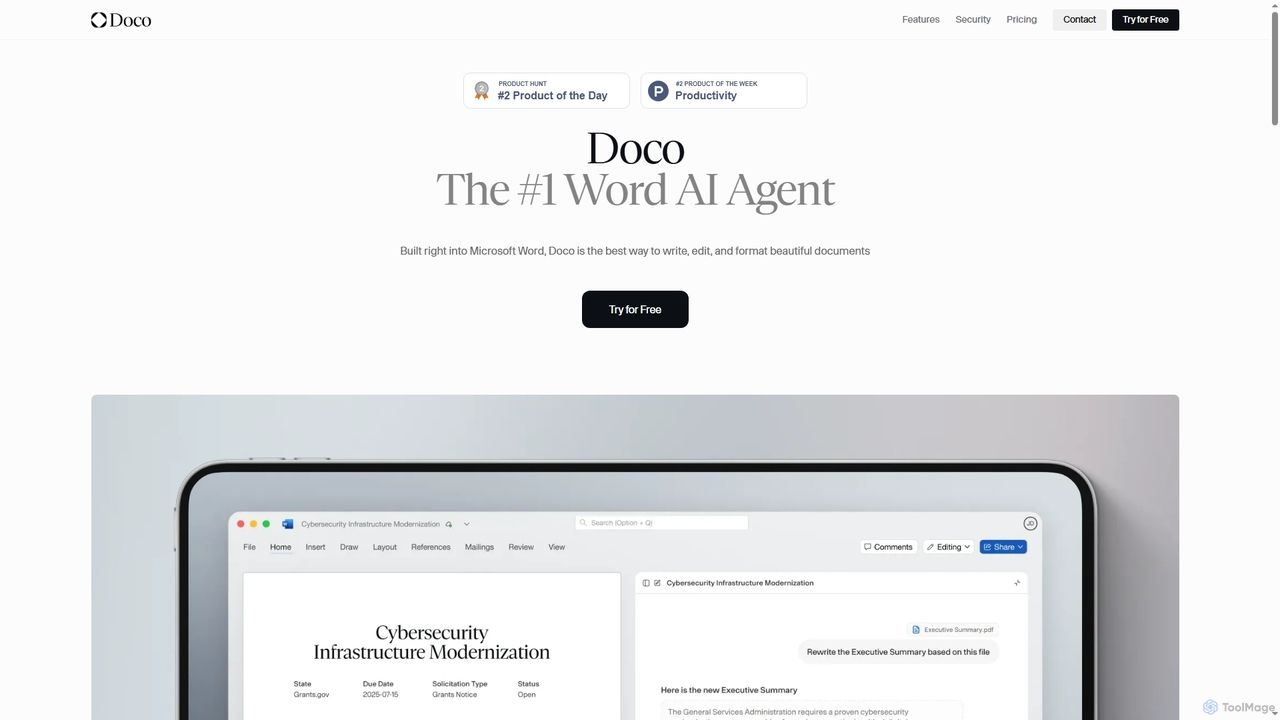
Doco is an AI agent that integrates directly into Microsoft Word, leveraging your existing data and knowledge base …

3.3K

About Document Editing

AI-powered Document Editing tools are designed to enhance, refine, and automate various aspects of text-based content. These tools leverage advanced natural language processing (NLP) and machine learning algorithms to analyze, modify, and optimize documents. They significantly streamline workflows for writers, editors, and businesses by improving accuracy, consistency, and overall quality of written materials. From proofreading to complex structural adjustments, AI document editing transforms raw text into polished, professional content.

Core Features

  • Grammar & Style Correction: Automatically identifies and corrects grammatical errors, spelling mistakes, punctuation issues, and suggests stylistic improvements for clarity and conciseness.
  • Content Summarization: Generates concise summaries of lengthy documents, extracting key information and main ideas efficiently.
  • Text Expansion & Rewriting: Expands short notes into detailed paragraphs or rewrites existing text to improve readability, tone, or to avoid plagiarism.
  • Translation & Localization: Translates documents between multiple languages while maintaining context and nuance, often with options for localization.
  • Formatting & Layout Assistance: Helps standardize document formatting, applies consistent styles, and assists with layout adjustments for professional presentation.

Use Cases

Professionals in content creation, marketing, legal, and academic fields utilize these tools to ensure high-quality written output. They are essential for refining reports, articles, legal documents, and marketing copy before publication.

How to Choose

When selecting an AI document editing tool, consider the specific editing needs (e.g., grammar, summarization, translation), the accuracy and naturalness of its AI output, integration capabilities with existing platforms (e.g., Microsoft Word, Google Docs), and the supported languages. Evaluate its user interface for ease of use and review pricing models based on usage volume.

Document EditingUse Cases

1

Refining Professional Reports and Proposals

Business analysts and consultants use AI document editing tools to ensure their reports and proposals are grammatically flawless, stylistically consistent, and convey a professional tone. The AI can suggest clearer phrasing, identify jargon, and ensure adherence to company style guides, significantly reducing review cycles and improving client perception.

2

Enhancing Academic Papers

University students and researchers use AI document editing tools to meticulously proofread their theses, dissertations, and research papers. The AI identifies complex grammatical errors, suggests academic tone improvements, and ensures consistent citation formatting, helping to elevate the quality and credibility of scholarly work before submission.

3

Optimizing Marketing Copy for Engagement

Marketing specialists leverage these tools to craft compelling ad copy, social media posts, and website content. AI can analyze the text for emotional resonance, readability, and SEO keywords, suggesting improvements to increase audience engagement and conversion rates, ensuring messages are impactful and clear.

4

Streamlining Legal Document Review

Legal professionals leverage AI document editors to quickly review contracts, briefs, and legal agreements for clarity, consistency, and potential ambiguities. These tools can highlight specific clauses, suggest rephrasing for precision, and even identify discrepancies across multiple documents, significantly reducing manual review time and mitigating risks.

5

Accelerating Academic Paper Proofreading

Researchers and students utilize AI editors to meticulously proofread their theses, dissertations, and journal articles. Beyond basic spell-checking, the AI identifies complex grammatical errors, improves sentence structure, and ensures academic tone and citation consistency, saving hours of manual review and enhancing publication readiness.

6

Optimizing Marketing Copy for Campaigns

Marketing teams utilize AI document editing to refine ad copy, website content, and social media posts. The AI analyzes text for tone, engagement, and SEO potential, suggesting improvements to make content more persuasive, concise, and impactful for target audiences, leading to higher conversion rates.

7

Streamlining Legal Document Review

Legal professionals employ AI document editing for reviewing contracts, briefs, and agreements. The tools can quickly spot inconsistencies, identify ambiguous language, and ensure compliance with legal terminology and formatting standards, thereby minimizing risks and accelerating the drafting and review process.

8

Automating Technical Documentation Updates

Technical writers and product managers employ AI tools to maintain and update user manuals, help guides, and product specifications. The AI can ensure terminology consistency, simplify complex sentences for better user understanding, and automatically generate summaries of changes, making documentation more accessible and easier to manage.

9

Enhancing Multilingual Content Quality

Global content teams use AI document editing to refine translated content or create original content for diverse audiences. These tools can check for cultural appropriateness, idiomatic expressions, and grammatical nuances in multiple languages, ensuring high-quality communication across international markets.

10

Accelerating Multilingual Content Creation

Global businesses and content agencies use AI document editing for rapid translation and localization of marketing materials, product descriptions, and internal communications. The AI not only translates but also adapts content to cultural nuances and local linguistic preferences, ensuring messages resonate effectively with international audiences.

11

Automating Content Summarization for Information Digest

Executives and information managers use AI tools to automatically summarize lengthy internal documents, research papers, or news articles. This allows for rapid digestion of key information, enabling quicker decision-making and efficient knowledge sharing without needing to read every detail.

12

Refining Business Reports and Presentations

Business analysts and executives use AI document editors to polish critical reports, proposals, and presentation scripts. The tools help to clarify complex data explanations, improve sentence structure for better flow, and ensure a professional, error-free delivery, enhancing the impact of their communications to stakeholders.

Document EditingFrequently Asked Questions