ToolMage
Sign in

Best 88 Writing AI tools for Content Creation

Popular Writing AI tools in Content Creation include Baidu AI Search, beehiiv, ChatGLM, TinyWow, HIX.AI, Chatbox AI, Tubetranscript, Simplified, iFlytek Spark, and Accuratescribe, helping you work more efficiently.

Nolimit
Freemium

Nolimit

Nolimit is an advanced AI platform designed for unrestricted exploration, ultimate privacy, and enterprise-grade performance. It features a 13-billion parameter model with a 16K token context window, zero content filters, and a client-server architecture ensuring no data retention and anonymous processing. Ideal for sensitive research, creative content, and secure data handling.

General Purpose
Visits 5.8KFavorites 109Likes 138
Hixx.ai
Freemium

Hixx.ai

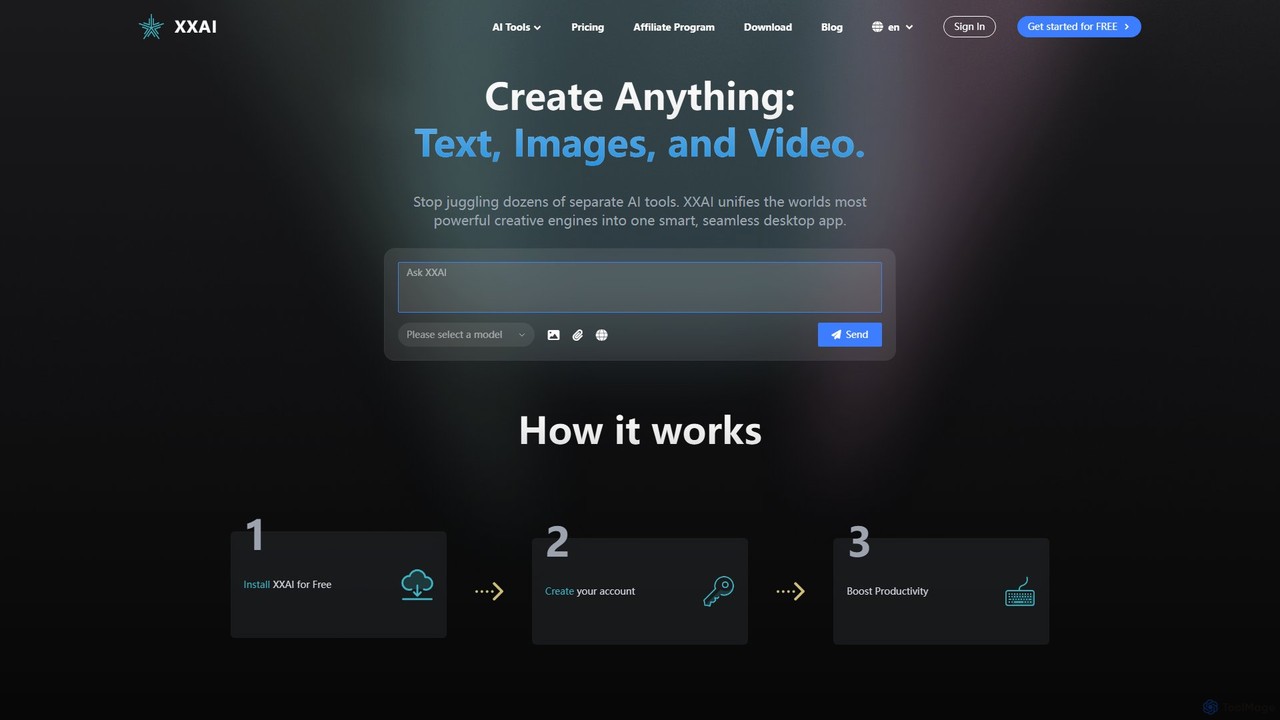
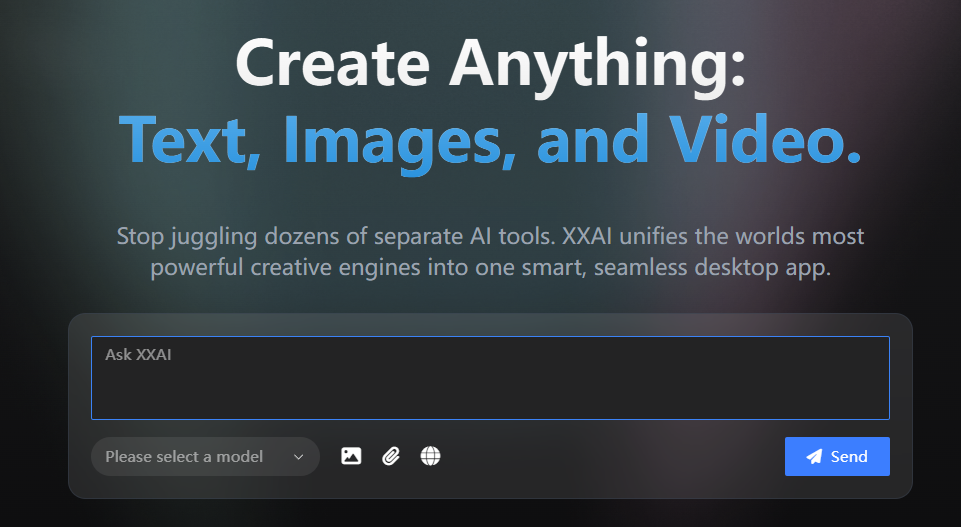
Hixx.ai is an all-in-one AI desktop application that unifies text, image, and video creation into a single, seamless platform. It acts as an AI copilot across all your apps and websites, providing access to top models like ChatGPT, DALL-E 3, and Runway to streamline your workflow, boost productivity, and eliminate the need for multiple separate AI tool subscriptions.

Image Generation
Visits 36.1KFavorites 91Likes 111
Chatbox AI
Freemium

Chatbox AI

Chatbox AI is a powerful, cross-platform AI client for desktop and mobile. It integrates chat with documents, images, and code, offers real-time web search, AI image generation, and prioritizes user privacy with local data storage. Use your own API keys or subscribe to their all-in-one service.

Writing
Visits 861.1KFavorites 125Likes 147
DigiCord
Freemium

DigiCord

DigiCord is a powerful, all-in-one AI bot for Discord, integrating over 80 AI models like GPT-4o, Claude 3, and Leonardo AI. It brings advanced capabilities such as text and image generation, content summarization, translation, and team collaboration directly into your server. With a pay-as-you-go model, it makes AI accessible and cost-effective for everyone.

Writing
Visits 5.7KFavorites 146Likes 151

About Writing

AI Writing tools are a class of software that utilizes artificial intelligence, particularly large language models (LLMs), to generate, refine, and analyze human language. These tools function as intelligent assistants, capable of understanding context, tone, and style to produce coherent and relevant text. They are designed to augment the writing process, helping users overcome writer's block, improve clarity, correct grammatical errors, and accelerate content creation. From drafting emails to composing long-form articles, AI writing tools significantly enhance productivity and the quality of written communication.

Core Features

  • Content Generation: Creates original text from prompts, including articles, marketing copy, and creative stories.
  • Paraphrasing & Rewriting: Rephrases sentences or entire paragraphs to improve clarity, change tone, or avoid repetition.
  • Grammar & Style Correction: Identifies and corrects grammatical errors, spelling mistakes, and stylistic inconsistencies beyond basic spell-checking.
  • Text Summarization: Condenses long documents, articles, or reports into concise summaries, highlighting key points.
  • Tone Adjustment: Modifies the tone of the text to be more formal, casual, persuasive, or empathetic as needed.

Use Cases

AI Writing tools are widely used across various sectors. Content marketers and bloggers leverage them to rapidly produce drafts for articles and social media. Businesses use them to create professional marketing copy, internal reports, and customer support emails. Students and academics find them useful for summarizing research papers, paraphrasing complex ideas, and proofreading their work for clarity and correctness.

How to Choose

When selecting an AI Writing tool, consider the quality and coherence of the generated content. Evaluate the range of features offered, such as specific templates for different content types (e.g., blog posts, ad copy). Check for integration capabilities, like browser extensions or API access, that fit your workflow. Finally, compare pricing models, whether they are based on word count, subscription tiers, or a one-time purchase, to find the best fit for your budget and usage needs.

Featured tool rankings

Writing use cases

1

Rapidly Draft Blog Posts and Articles

Content marketers and bloggers often face tight deadlines and the challenge of consistently producing high-quality content. An AI writing tool can act as a powerful assistant in this process. By providing a topic, keywords, and a desired tone, the user can generate a structured outline and initial drafts within minutes. The tool can help expand on specific sections, suggest alternative phrasing, and ensure the entire article maintains a consistent voice. This process transforms hours of writing and research into a more efficient task of editing and refining, allowing creators to increase their output and focus on strategic content planning.

2

Generate Persuasive Marketing Copy

Marketing teams need to create compelling copy for various channels, from social media ads to email campaigns and product descriptions. AI writing tools excel at this by offering specialized templates based on proven marketing frameworks like AIDA (Attention, Interest, Desire, Action). A user can input product features and target audience details, and the AI will generate multiple copy variations. This enables rapid A/B testing to identify the most effective messaging, saving significant time on brainstorming and copywriting while helping to improve conversion rates across campaigns.

3

Enhance Business and Professional Communication

Professionals in any field need to write clear and effective emails, reports, and presentations. AI writing tools can help polish this communication. For instance, a manager can draft a project update email and use the AI to adjust the tone to be more formal or encouraging. The tool can also summarize lengthy meeting notes into concise action items or rephrase complex technical jargon into language understandable by a non-technical audience. This ensures all business communications are professional, clear, and achieve their intended purpose.

4

Assist with Academic Research and Writing

Students and researchers can use AI writing tools to streamline their academic workflow. When dealing with dense research papers, the summarization feature can quickly extract key findings and arguments. The paraphrasing tool helps in reformulating information in their own words to avoid plagiarism, while ensuring the original meaning is preserved. Furthermore, the advanced grammar and style checker helps refine the final paper, correcting complex grammatical errors and improving academic tone, which is crucial for submitting high-quality work.

5

Overcome Creative Writer's Block

Creative writers, including novelists and screenwriters, often struggle with writer's block. AI writing tools can serve as a creative partner to break through these barriers. By providing a simple plot point or character description, the AI can generate potential scenes, dialogue snippets, or plot twists. While the generated content may not be the final version, it provides fresh ideas and different perspectives, sparking the writer's own creativity and helping them move forward with their story. It acts as a brainstorming assistant that is available 24/7.

6

Localize Content for Global Audiences

For businesses operating internationally, simply translating content is often not enough. AI writing tools can help with the localization process. After an initial machine translation, the tool can be used to rewrite and polish the text to sound more natural and culturally appropriate for the target audience. It can adjust idioms, formalities, and tone to match local conventions. This ensures that marketing materials, website content, and product documentation resonate effectively with customers in different regions, improving global brand perception and engagement.

Writing FAQ

What are AI Writing tools?

AI Writing tools are software applications that use artificial intelligence, primarily large language models (LLMs), to assist with or automate the creation of text. They can generate content from scratch, rewrite existing text, check for grammar and style errors, summarize long documents, and more. Unlike simple spell checkers, they understand context and nuance, making them powerful assistants for a wide range of writing tasks, from drafting emails to writing full-length articles.

How do I choose the right AI writing tool?

Choosing the right AI writing tool depends on your specific needs. Consider the following factors:

  • Content Quality: Test the tool to see if the output is coherent, accurate, and matches your desired style.
  • Features: Determine if you need specific features like long-form article generation, marketing copy templates, or plagiarism checking.
  • Ease of Use: The interface should be intuitive and fit seamlessly into your existing workflow.
  • Integrations: Look for browser extensions or integrations with other platforms you use, like WordPress or Google Docs.
  • Pricing: Compare subscription plans, word limits, and free trial options to find a tool that fits your budget.
What is the difference between an AI writer and a grammar checker?

A traditional grammar checker primarily focuses on identifying and correcting objective errors like spelling, punctuation, and basic grammar rules. An AI writer, while often including these features, goes much further. It can generate entirely new content, rewrite sentences for clarity or tone, summarize text, and even brainstorm ideas. Essentially, a grammar checker is a proofreading tool, whereas an AI writer is a creative and productive partner in the entire writing process, from ideation to final polish.

Can AI writing tools produce plagiarism-free content?

Reputable AI writing tools are designed to generate original content by synthesizing information from vast datasets, not by copying and pasting from existing sources. The output is typically unique and passes plagiarism checks. However, since the AI learns from existing public data, there is a small chance of it generating phrases that are very similar to existing text. It is always a best practice for users to review the generated content and use a plagiarism checker for critical work, such as academic papers or official publications, to ensure full originality.

Who can benefit from using AI writing tools?

A wide range of individuals and professionals can benefit from AI writing tools. This includes:

  • Content Creators & Marketers: To quickly draft blog posts, social media updates, and ad copy.
  • Students & Academics: For help with research summarization, paraphrasing, and proofreading essays.
  • Business Professionals: To write clear emails, reports, and presentations more efficiently.
  • Non-Native Speakers: To improve the fluency and grammatical accuracy of their writing in a foreign language.
  • Authors & Creative Writers: To overcome writer's block and brainstorm new ideas.