
Freemium
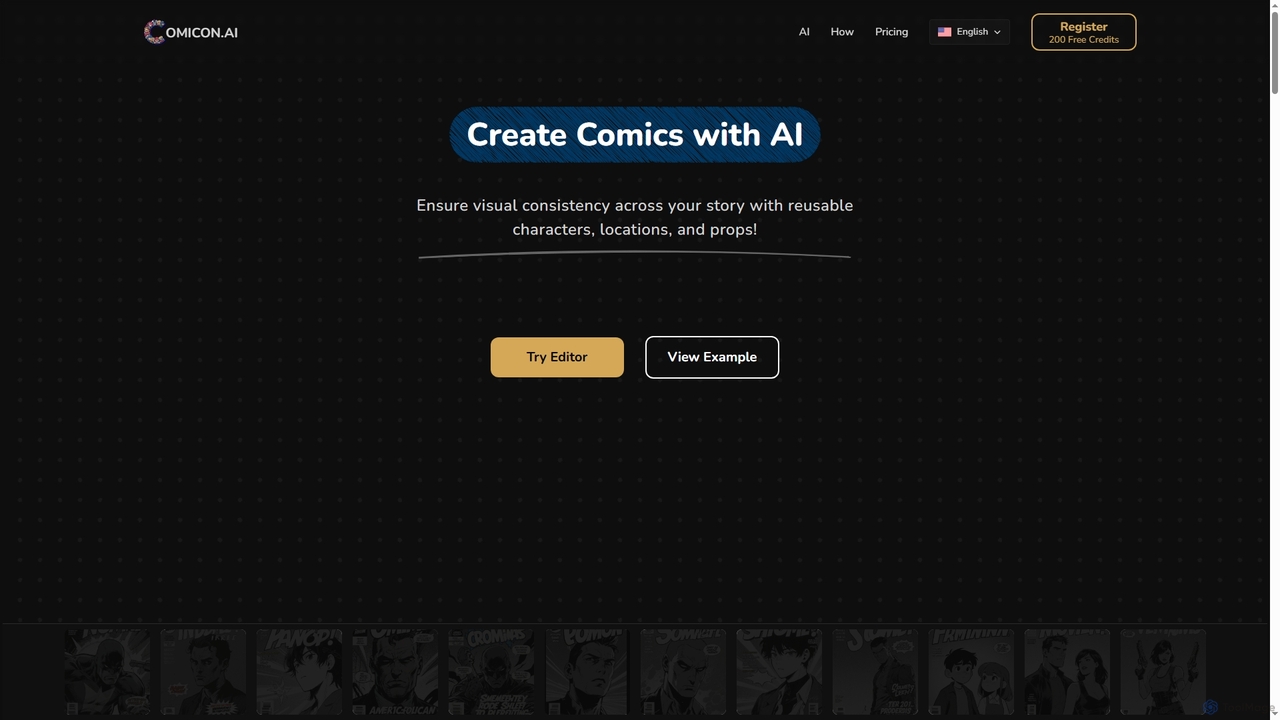
Popular Storytelling AI tools in Content Generation include Comicon, helping you work more efficiently.
Storytelling AI tools are a specialized category of AI-powered applications designed to assist in the creation, development, and refinement of narratives. These tools leverage advanced natural language processing (NLP) and generative AI models to understand plot structures, character arcs, and thematic elements. They empower writers, content creators, and game developers to overcome creative blocks, accelerate drafting, and enhance the overall coherence and engagement of their stories, making the complex process of narrative construction more accessible and efficient.
Storytelling AI tools are invaluable for authors drafting novels, screenwriters developing scripts, and game designers building immersive worlds. They can help marketing teams craft compelling brand narratives or educators create engaging learning content. From brainstorming initial concepts to refining final drafts, these tools streamline the creative process, offering fresh perspectives and accelerating content production across various narrative forms.
When selecting a Storytelling AI tool, consider its genre specialization (e.g., fantasy, sci-fi, drama), the depth of its narrative generation capabilities (plot, character, world), and its integration with existing writing workflows. Evaluate the quality and originality of the generated content, the level of customization offered, and the user interface's intuitiveness. Also, assess the tool's ability to maintain narrative consistency and adapt to complex story requirements.
An aspiring novelist struggling with plot development can use Storytelling AI to generate multiple outline variations for their book. By inputting core ideas, character types, and desired genres, the AI can suggest compelling plot twists, character arcs, and thematic progressions, saving weeks of brainstorming and ensuring a cohesive narrative structure from the outset.
Game developers often need extensive backstory and lore for their virtual worlds. Storytelling AI can assist in creating detailed histories, mythologies, and cultural elements for in-game factions or regions. This helps build a rich, immersive environment for players, ensuring consistency across all narrative components and accelerating the world-building phase of game development.
Marketing professionals can leverage Storytelling AI to develop compelling narratives for product launches or brand campaigns. By providing key messages and target audience demographics, the AI can craft emotionally resonant stories that connect with consumers, illustrating product benefits through relatable scenarios and enhancing brand recall and engagement.
Screenwriters can utilize Storytelling AI to refine and enhance dialogue for their scripts. The AI can analyze character personalities and scene contexts to suggest more authentic, impactful, or witty lines, ensuring that conversations drive the plot forward and reveal character depth effectively. This helps polish scripts and improve overall dramatic tension.
Educators or content creators building interactive learning modules or choose-your-own-adventure stories can use Storytelling AI to generate branching narratives. The AI can help design multiple plot paths and outcomes based on user choices, making educational content more engaging and personalized, and providing dynamic learning experiences.
Content creators or hobby writers facing writer's block can use Storytelling AI for inspiration. By inputting a simple premise or a few keywords, the AI can generate unique story prompts, character ideas, or opening paragraphs. This kickstarts the creative process, providing a foundation upon which writers can build their short stories quickly and efficiently.
Storytelling AI tools are applications that use artificial intelligence to assist in generating and refining narrative content. They leverage advanced natural language processing to understand and create elements like plots, characters, dialogues, and world-building details, helping users craft coherent and engaging stories across various mediums.
While both fall under Content Generation, Storytelling AI tools are specifically designed for narrative creation, focusing on structured plots, character development, and thematic coherence. General Content Generation AI might produce articles, social media posts, or summaries, but Storytelling AI specializes in the intricate art of narrative construction, ensuring a compelling flow and emotional resonance unique to stories.
Storytelling AI tools are highly beneficial for authors, screenwriters, game developers, marketers, and educators. Anyone involved in crafting narratives for books, scripts, games, marketing campaigns, or educational content can use these tools to brainstorm ideas, overcome creative blocks, accelerate drafting, and enhance the quality and consistency of their stories.
Key features to consider include plot generation, character development assistance, dialogue writing capabilities, and world-building support. Look for tools that offer genre-specific templates, narrative structuring guidance, and options for customizing output. The ability to maintain narrative consistency and integrate with your existing writing workflow is also crucial.
No, Storytelling AI tools are designed to be assistants, not replacements, for human writers. They excel at generating ideas, structuring narratives, and handling repetitive tasks, but they lack the nuanced understanding of human emotion, cultural context, and unique creative vision that a human writer brings. They are powerful co-creators that augment, rather than substitute, human creativity.