ToolMage
Sign in

Best 1 Audio AI tools for Creative

Popular Audio AI tools in Creative include Next Music, helping you work more efficiently.

Free

Next Music

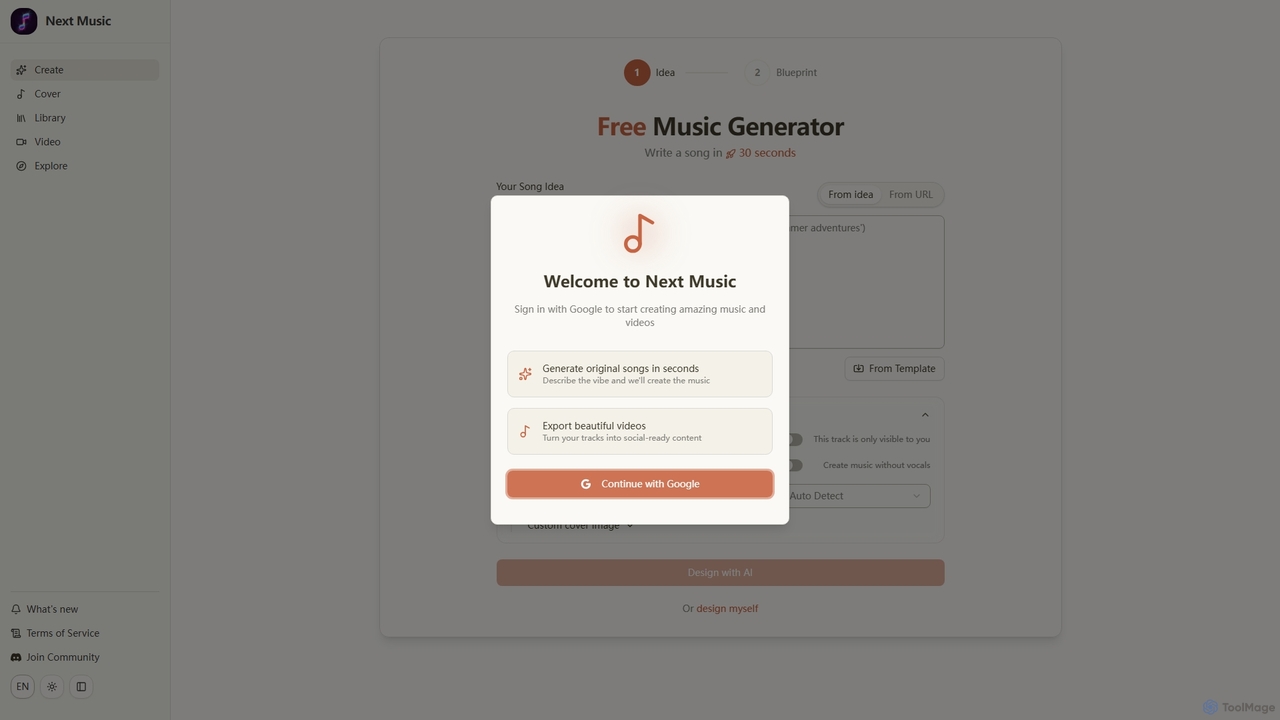
Next Music is a free AI-powered platform that allows users to generate original songs and videos in seconds. Describe your musical idea, choose options like instrumental tracks or custom covers, and transform your creations into social-ready video content. It's designed for quick, creative music production.

Music
Visits 3.5KFavorites 130Likes 121

About Audio

AI Audio tools are a category of AI-powered applications specifically designed to process, generate, enhance, and analyze sound. These innovative tools leverage advanced machine learning algorithms, including deep learning and neural networks, to transform raw audio data or text into high-quality soundscapes, realistic voices, and original music compositions. They significantly streamline complex audio production workflows, enabling content creators, marketers, and developers to produce professional-grade audio content with unprecedented efficiency and creative flexibility, positioning them as essential components within the broader Creative AI domain.

Core Features

  • Text-to-Speech (TTS): Converts written text into natural-sounding spoken audio in various voices and languages.
  • Speech-to-Text (STT): Transcribes spoken language into written text, often with speaker identification and punctuation.
  • Music Generation: Creates original musical compositions, melodies, and accompaniments based on user input or style preferences.
  • Sound Effect Generation: Produces custom sound effects for games, films, or multimedia content from text descriptions.
  • Audio Enhancement & Restoration: Improves audio quality by removing noise, separating vocals, or restoring old recordings.
  • Voice Cloning & Synthesis: Generates new speech in a specific voice, often from a small sample, for personalized content.

Use Cases

AI Audio tools are indispensable for content creators, podcasters, game developers, and marketing professionals. They are used to automate voiceovers for videos, generate background music for presentations, transcribe interviews for documentation, and create unique soundscapes for immersive experiences, greatly enhancing creative output.

How to Choose

When selecting an AI Audio tool, consider the primary function needed (e.g., TTS, music generation), the quality and naturalness of the output, the range of voices or styles available, integration capabilities with existing workflows, and the pricing model. Evaluate the ease of use and the level of customization offered for specific audio projects to ensure it meets your creative and technical requirements.

Featured tool rankings

Audio use cases

1

Generate Voiceovers for Videos and Podcasts

Content creators and marketers can use AI text-to-speech tools to quickly produce professional voiceovers for their video content, podcasts, or e-learning modules. By simply inputting script text, they can select from a variety of AI voices, adjust tone and pace, and generate high-quality audio without needing recording equipment or voice actors, significantly speeding up production time and reducing costs.

2

Automated Voiceovers for Video Content

Video creators and marketers can use AI text-to-speech tools to generate professional voiceovers for explainer videos, advertisements, or e-learning modules. By simply inputting script text, they can produce consistent, high-quality narration in multiple languages and voices, saving significant time and cost compared to hiring voice actors or recording in a studio.

3

Generate Realistic Voiceovers for Videos

Video content creators can use AI audio tools to quickly generate high-quality, natural-sounding voiceovers for their videos. By simply inputting text, they can select from a wide range of voices, languages, and emotional tones, eliminating the need for expensive recording equipment or professional voice actors. This significantly reduces production time and costs, allowing for rapid content localization and iteration, making video creation more accessible and efficient.

4

Transcribe Meetings and Interviews Automatically

Business professionals, journalists, and researchers utilize AI speech-to-text tools to accurately transcribe audio recordings of meetings, interviews, or lectures. This automation saves hours of manual transcription work, allowing users to quickly search, analyze, and share textual content from spoken conversations, improving documentation and information retrieval efficiency.

5

Generating Unique Background Music for Podcasts

Podcasters and content creators can leverage AI music generation tools to create bespoke, royalty-free background music tailored to their show's theme and mood. Instead of searching through stock libraries, they can input parameters like genre, tempo, and instrumentation to produce unique tracks that enhance their audio branding and avoid copyright issues.

6

Automate Podcast Transcription and Summarization

Podcasters and journalists can leverage AI audio tools for automated speech-to-text transcription of their episodes or interviews. This not only creates accurate show notes and searchable content but also allows for quick summarization of key discussion points. The ability to rapidly convert spoken word into text saves countless hours of manual transcription, making content more accessible for hearing-impaired audiences and improving SEO for audio content.

7

Compose Unique Background Music for Games and Apps

Game developers and app designers can utilize AI music generation tools to create original and royalty-free background music. By specifying mood, genre, tempo, and instrumentation, they can generate endless variations of tracks that perfectly fit their project's aesthetic without needing a human composer. This accelerates the development cycle, provides unique auditory experiences, and avoids licensing complexities, allowing for more creative freedom and cost-effectiveness in sound design.

8

Transcribing Interviews and Meetings for Documentation

Journalists, researchers, and business professionals utilize AI speech-to-text services to accurately transcribe audio recordings of interviews, meetings, or lectures. This automates the tedious process of manual transcription, providing searchable text documents that facilitate analysis, content creation, and record-keeping, significantly improving productivity.

9

Create Custom Background Music for Projects

Filmmakers, game developers, and digital artists can employ AI music generation platforms to compose unique, royalty-free background music tailored to their specific project needs. Users can input desired mood, genre, and instrumentation, and the AI generates original tracks, providing a cost-effective and creative solution for bespoke audio scores without requiring musical composition skills.

10

Enhance Audio Quality for Podcasts and Interviews

Podcasters, journalists, and remote workers often deal with imperfect audio recordings. AI audio enhancement tools can automatically remove background noise, reduce echoes, equalize sound levels, and improve vocal clarity. This allows users to transform raw, low-quality audio into professional-sounding content without extensive manual editing. The result is a more polished and engaging listening experience for the audience, crucial for maintaining listener retention and credibility.

11

Enhance Audio Quality and Remove Noise

Podcasters, videographers, and audio engineers use AI audio enhancement tools to clean up recordings by automatically reducing background noise, echo, and hum. These tools can also separate vocals from instrumental tracks or master audio for consistent loudness and clarity, ensuring professional-grade sound even from imperfect source material, improving listener experience.

12

Creating Custom Sound Effects for Game Development

Game developers can employ AI sound effect generators to rapidly produce a wide array of unique audio assets for their games, from environmental sounds to character actions. By describing the desired sound, they can iterate quickly on designs, ensuring a rich and immersive audio experience without extensive sound design expertise or large sound libraries.

13

Develop Personalized Voice Assistants and Chatbots

Developers and enterprises integrate AI voice synthesis and cloning technologies to create highly personalized and natural-sounding voice interfaces for virtual assistants, customer service chatbots, or interactive voice response (IVR) systems. This allows for a consistent brand voice and a more engaging user experience, making digital interactions feel more human and intuitive.

14

Create Custom Sound Effects for Film and Animation

Filmmakers, animators, and multimedia artists can use AI sound effect generators to produce unique and specific audio elements for their projects. Instead of relying on generic sound libraries, they can describe the desired sound (e.g., "a magical whoosh," "footsteps on gravel in a forest") and the AI will generate variations. This capability offers unparalleled creative control, allowing for highly customized soundscapes that perfectly match the visual narrative, enhancing immersion and storytelling.

15

Personalized Audio Messages and Marketing Campaigns

Marketing teams and customer service departments can use AI voice cloning and synthesis to create personalized audio messages for customers, such as welcome calls, promotional announcements, or interactive voice responses. This allows for scalable, consistent brand voice delivery while adding a personal touch that enhances customer engagement.

16

Restoring and Enhancing Archival Audio Recordings

Archivists, historians, and audio engineers can apply AI audio enhancement tools to clean up old or damaged audio recordings, such as historical speeches, interviews, or music. These tools can intelligently remove background noise, reduce hiss, and improve clarity, making valuable historical audio more accessible and enjoyable for modern audiences.

17

Produce Sound Effects for Games and Multimedia

Game designers and multimedia producers leverage AI sound effect generators to quickly create a wide array of unique audio assets, from environmental sounds to character interactions. By describing the desired sound, the AI can generate variations, offering a rapid prototyping solution for sound design and enriching the immersive experience of digital products without extensive sound libraries.

18

Localize Audio Content for Global Audiences

Businesses and content distributors aiming for a global reach can use AI audio tools to localize their audio content efficiently. This involves translating scripts and then generating voiceovers in multiple languages using AI text-to-speech, often with voice cloning capabilities to maintain brand consistency. This process drastically reduces the cost and time associated with traditional localization methods, enabling rapid deployment of content to diverse linguistic markets and expanding audience engagement worldwide.

Audio FAQ

What are AI Audio tools?

AI Audio tools are applications that use artificial intelligence to perform various tasks related to sound, such as generating, processing, enhancing, and analyzing audio. They leverage machine learning models to understand and manipulate sound waves, enabling functions like converting text to speech, transcribing speech to text, creating music, or cleaning up noisy recordings. These tools aim to automate complex audio production and analysis, making it more efficient and accessible for a wide range of users.

What are AI Audio tools?

AI Audio tools are software applications that use artificial intelligence to create, modify, or analyze audio content. They leverage machine learning models to perform tasks like generating speech from text, transcribing spoken words, composing music, designing sound effects, and enhancing audio quality. These tools are part of the broader creative AI landscape, specifically focusing on auditory applications to automate and innovate sound production workflows.

What are AI Audio tools?

AI Audio tools are software applications that use artificial intelligence to manipulate, generate, or analyze sound. They leverage machine learning algorithms to perform tasks such as converting text to speech, transcribing audio, creating music, enhancing sound quality, and even cloning voices, revolutionizing how we interact with and produce audio content.

How do AI Audio tools differ from traditional audio software?

AI Audio tools differ from traditional audio software primarily in their automation and generative capabilities. Traditional software (like DAWs) requires manual input for editing, mixing, and mastering. AI tools, however, can generate entirely new audio content (music, speech, sound effects) from simple text prompts or parameters, and automate complex tasks like noise reduction or transcription using intelligent algorithms. While traditional tools offer precise manual control, AI tools excel in speed, scalability, and creative assistance.

How do AI Audio tools differ from traditional audio software?

AI Audio tools differ from traditional audio software primarily in their automation and intelligence capabilities. While traditional software requires manual input for editing, mixing, or mastering, AI tools can perform complex tasks autonomously, learn from data, and generate new content (like music or voices) based on algorithms, significantly reducing manual effort and opening new creative possibilities.

How do AI Audio tools differ from traditional audio software?

AI Audio tools differ from traditional audio software primarily in their automation and intelligence capabilities. Traditional software relies on manual input and rule-based processing, requiring significant human expertise. AI tools, however, use machine learning to understand context, learn from data, and perform tasks autonomously, often achieving results that would be difficult or impossible with manual methods, such as generating original music or accurately cloning voices. They reduce the need for deep technical audio knowledge and accelerate creative workflows.

What are the main benefits of using AI Audio tools?

The main benefits of using AI Audio tools include significant time and cost savings by automating labor-intensive tasks like transcription and voiceover recording. They also enable new creative avenues, such as generating unique music or personalized voices, and improve accessibility through features like text-to-speech for visually impaired users, enhancing overall audio production efficiency and quality.

What are the main applications of AI Audio generation?

AI Audio generation has diverse applications, including creating realistic voiceovers for videos and podcasts, composing original background music for various media, generating unique sound effects for games and films, and synthesizing personalized voices for virtual assistants or marketing messages. It also extends to creating entire soundscapes for immersive experiences and developing new forms of interactive audio content, significantly broadening creative possibilities across industries.

Who can benefit most from using AI Audio tools?

A wide range of professionals and enthusiasts can benefit from AI Audio tools. This includes content creators (podcasters, YouTubers, vloggers) for voiceovers and transcription, game developers for unique sound effects and music, marketers for localized audio ads, musicians for generating new ideas or backing tracks, and businesses for automating customer service voice responses. Anyone looking to streamline audio production, enhance sound quality, or explore new creative possibilities in audio will find these tools valuable.

What are the key considerations when choosing an AI Audio tool?

When selecting an AI Audio tool, several factors are crucial. First, identify your primary need: is it text-to-speech, music generation, or audio enhancement? Evaluate the quality and naturalness of the output for your specific use case. Consider the range of voices, languages, styles, or instruments offered. Check for integration capabilities with your existing workflow software (e.g., video editors, DAWs). Assess the pricing model, scalability, and any usage limitations. Finally, user-friendliness and customer support are important for a smooth experience.

Can AI Audio tools create music in specific styles or genres?

Yes, many AI music generation tools are capable of creating music in specific styles or genres. Users can typically input parameters such as genre (e.g., classical, electronic, jazz), mood (e.g., uplifting, melancholic), tempo, instrumentation, and even specific melodic or harmonic ideas. The AI then uses its trained models to generate original compositions that adhere to these specifications, offering a high degree of creative control within defined boundaries and allowing for tailored audio experiences.

Can AI Audio tools generate realistic human voices?

Yes, modern AI Audio tools, particularly those focused on text-to-speech and voice cloning, can generate remarkably realistic human voices. Advances in deep learning and neural networks allow these tools to capture nuances in tone, pitch, and emotion, making the synthesized voices almost indistinguishable from real human speech, suitable for professional narration, virtual assistants, and more.

Can AI Audio tools replace human voice actors or musicians?

While AI Audio tools have made significant strides in generating realistic voices and music, they are generally seen as complementary rather than outright replacements for human talent. AI excels at automating repetitive tasks, generating variations, and providing cost-effective solutions for large-scale content. However, human voice actors bring nuanced emotional depth and unique artistic interpretation, while human musicians offer unparalleled creativity and improvisation. AI tools empower creators by handling the heavy lifting, allowing human artists to focus on higher-level creative direction and unique performances.

What should I consider when choosing an AI Text-to-Speech (TTS) tool?

When choosing an AI Text-to-Speech (TTS) tool, consider the naturalness and expressiveness of the generated voices, the variety of languages and accents supported, and the availability of different voice styles (e.g., male, female, child, professional). Also, evaluate customization options like pitch, speed, and emphasis control, integration capabilities with your existing platforms, and the pricing model, which often depends on character count or audio duration. Prioritize tools that offer high-quality, emotionally nuanced output for your specific needs.

What should I consider when choosing an AI Audio tool for music generation?

When choosing an AI Audio tool for music generation, consider the range of genres and styles it supports, the level of customization offered (e.g., instrument selection, mood, tempo), and the quality of the generated output. Also, evaluate its licensing terms for commercial use, ease of integration with your existing creative workflow, and the pricing structure, which often depends on usage or features.