ToolMage
Sign in

Best 3 Content Creation AI tools for Creative

Popular Content Creation AI tools in Creative include Seedance 2, Songgeneratorai, and XA AI Music, helping you work more efficiently.

Seedance 2
Freemium

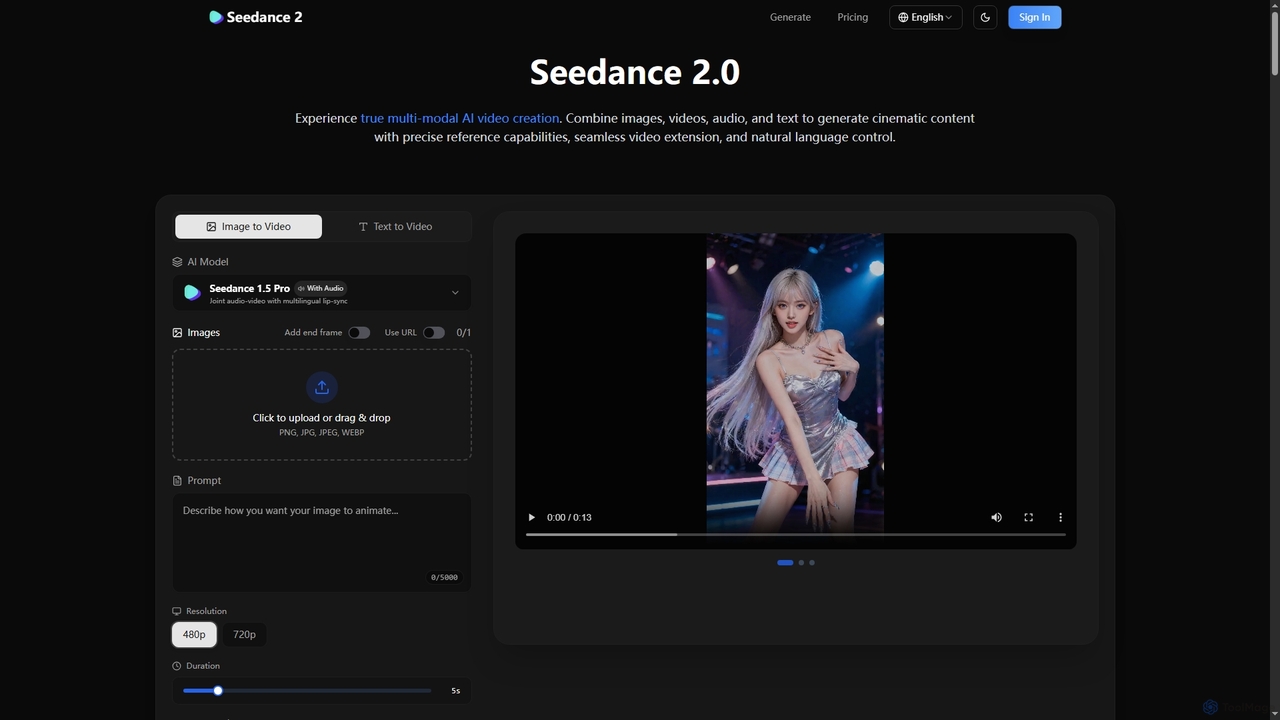
Seedance 2

Break free from generic AI video. Seedance 2 offers unparalleled multi-modal control, allowing creators to precisely reference motion, styles, and characters from their own assets, ensuring cinematic consistency and targeted editing capabilities.

Content Creation
Visits 2.1MFavorites 17Likes 19
Songgeneratorai
Paid

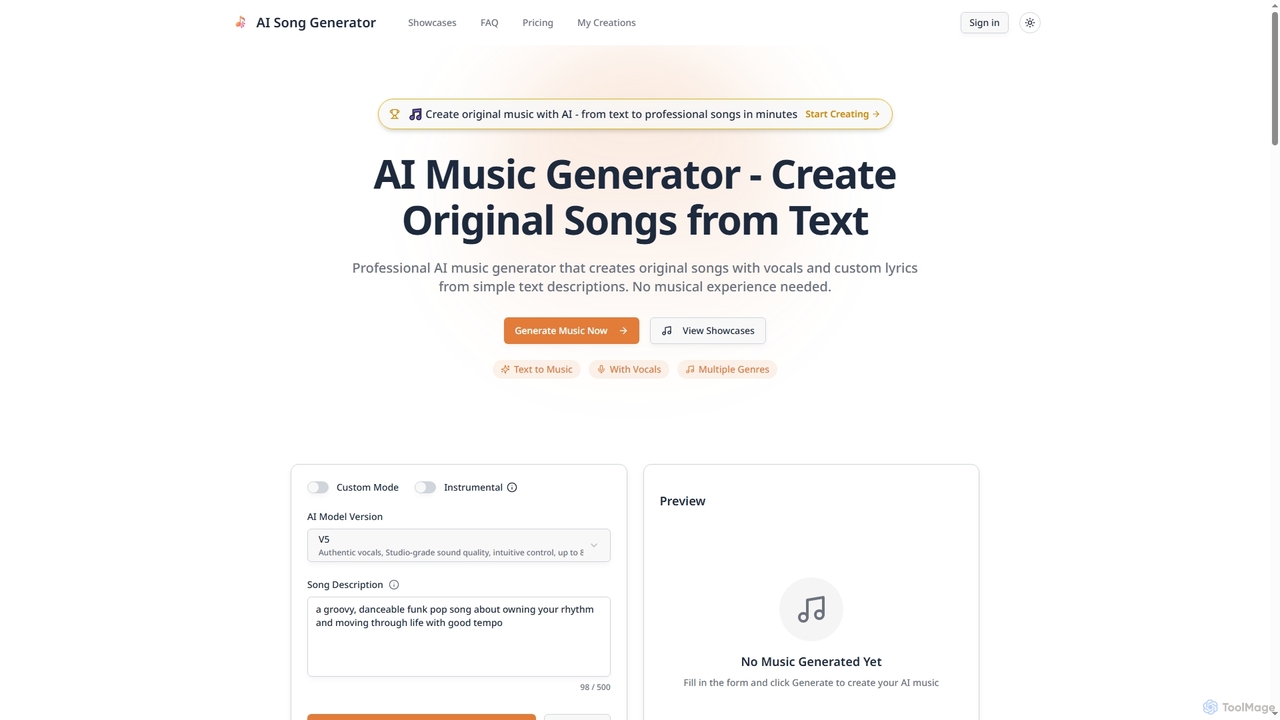
Songgeneratorai

Songgeneratorai is an AI-powered music generator that creates original, professional-quality songs from simple text descriptions. It supports multiple genres, custom lyrics, and both male and female AI vocals. No musical experience is required, and all generated music includes commercial usage rights.

Music Generation
Visits 3.5KFavorites 115Likes 124
XA AI Music
Freemium

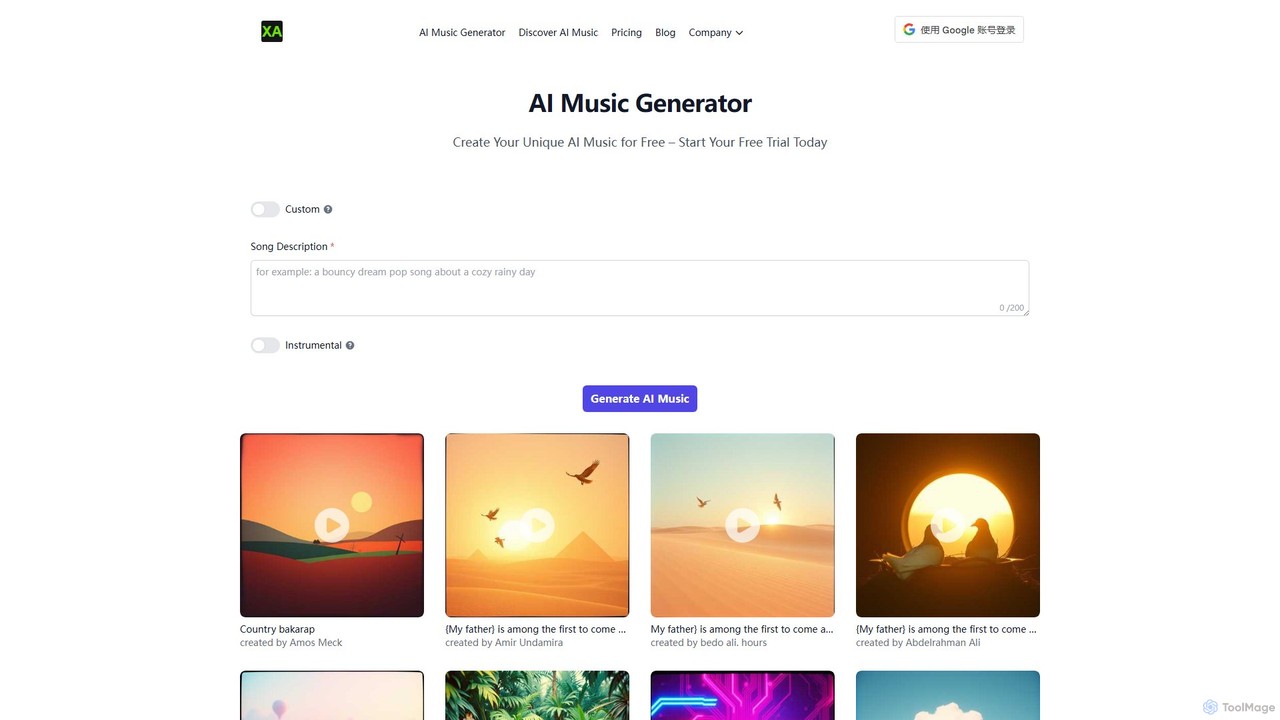
XA AI Music

XA AI Music is an AI-powered music generator that transforms text prompts into unique songs. Create full tracks with vocals and instrumentals across various genres like pop, electronic, and classical. Ideal for content creators, musicians, and hobbyists, it offers a free trial and flexible, permanent credit-based plans for generating high-quality, downloadable music instantly.

Music Generation
Visits 3.4KFavorites 136Likes 138

About Content Creation

AI Content Creation tools are a class of applications that use generative models to produce original text, images, audio, and video. These tools leverage large language models (LLMs) and diffusion models to transform simple text prompts into diverse forms of high-quality content. Their primary value lies in accelerating the creative process, overcoming writer's block, and enabling the scalable production of marketing materials, social media updates, and artistic assets. They serve as powerful assistants for creators and marketers, automating repetitive tasks and providing new avenues for inspiration.

Core Features

  • Multi-Modal Generation: The ability to create various content types, including articles, social media posts, ad copy, images, voiceovers, and video scripts from a single platform.
  • Prompt-Based Control: Users guide the AI's output using detailed natural language instructions (prompts) to specify tone, style, format, and subject matter.
  • Content Repurposing: Efficiently transform existing content into different formats, such as converting a long-form article into a series of tweets, a video script, or an infographic.
  • Template-Driven Workflows: Utilize pre-built templates for specific use cases like blog post outlines, email newsletters, or ad campaigns to streamline content production.

Use Cases

These tools are widely adopted by marketing teams for creating campaign assets, content creators for drafting articles and scripts, and social media managers for scheduling posts. E-commerce businesses also use them to generate product descriptions and promotional materials at scale, significantly reducing manual effort.

How to Choose

When selecting an AI Content Creation tool, evaluate the range and quality of content types it supports. Consider its integration capabilities with your existing workflow (e.g., CMS, social media platforms). Assess the user interface's ease of use and the level of control you have over the final output. Finally, compare pricing models based on your expected usage volume and feature requirements.

Featured tool rankings

Content Creation use cases

1

Generate a Complete Social Media Campaign

A social media manager for a small business needs to create a week's worth of content for Instagram and Facebook. Using an AI content creation tool, they input a prompt like 'Create a 7-day campaign for our new eco-friendly coffee cup, focusing on sustainability and morning rituals.' The AI generates seven distinct post ideas, each with engaging captions, relevant hashtags, and suggestions for accompanying visuals. The manager then uses the tool's image generation feature to create unique lifestyle photos for each post, resulting in a cohesive and professional campaign created in under an hour, a task that would typically take a full day.

2

Draft and Outline a Long-Form Blog Post

A content writer is tasked with writing a 2,000-word article on 'The Future of Renewable Energy.' To overcome the initial hurdle, they use an AI tool to generate a comprehensive outline. They provide the topic and desired key points, and the AI produces a structured outline with H2 and H3 headings, bullet points for each section, and suggested internal linking opportunities. The writer then uses this detailed framework to write the article, using the AI to draft specific sections or rephrase complex sentences. This process reduces research and structuring time by over 50% and ensures the article covers all critical aspects of the topic logically.

3

Create Ad Copy and Visual Variations for A/B Testing

A digital marketer is launching a new product and needs to test different ad angles. They use an AI content creation platform to generate five different headlines, three body copy variations, and two calls-to-action. The platform's integrated image generator is then used to create four distinct visual styles that match the tone of the copy. In minutes, the marketer has a complete set of 40 ad variations (5x3x2x4 combinations, simplified) ready to deploy on different platforms. This allows for rapid, data-driven A/B testing to identify the most effective messaging and creative, optimizing ad spend and improving conversion rates far more quickly than manual creation would allow.

4

Produce a Script and Voiceover for an Explainer Video

A startup wants to create a 90-second explainer video for their new app. The marketing lead, who is not a scriptwriter, uses an AI tool to generate a video script. They input the app's features, target audience, and desired tone. The AI outputs a structured script complete with scene descriptions, dialogue, and timing cues. Next, they paste the script into the tool's text-to-speech function, select a natural-sounding AI voice, and generate a high-quality audio voiceover. This combined workflow allows them to produce professional-grade video pre-production assets without hiring a scriptwriter or voice actor, saving significant time and budget.

5

Generate Bulk E-commerce Product Descriptions

An e-commerce manager is adding 200 new products to their online store. Writing unique, SEO-friendly descriptions for each is a monumental task. They upload a CSV file with product names, key features, and specifications to an AI content creation tool. The tool is configured to generate a 150-word description for each product in a persuasive, brand-aligned tone, incorporating target keywords. Within 30 minutes, the manager receives a completed CSV file with unique descriptions for all 200 items. This automation saves days of manual writing and ensures consistency across all product listings, improving both user experience and search engine visibility.

6

Brainstorm and Repurpose Content for Multiple Channels

A content strategist needs to create a content pillar around the topic 'Financial Planning for Millennials.' They use an AI tool to brainstorm a central, long-form guide. From this core idea, they ask the AI to repurpose the content for different channels. The AI generates: a 10-point listicle for the blog, five short video script ideas for TikTok, a detailed infographic outline for Pinterest, and a series of engaging questions for a Twitter thread. This approach allows the strategist to develop a cohesive, multi-channel content plan from a single source of truth, ensuring brand consistency and maximizing the reach of their core message with minimal extra effort.

Content Creation FAQ

What are AI Content Creation tools?

AI Content Creation tools are software applications that use artificial intelligence, particularly generative models like LLMs and diffusion models, to produce original content. Unlike simple editing tools, they generate new text, images, audio, or video from scratch based on user prompts. Key features often include multi-modal output (creating different types of media), content repurposing, and template-based generation. They are used by marketers, writers, and creators to accelerate production, brainstorm ideas, and create content at scale.

How to choose the right AI Content Creation tool?

Choosing the right tool depends on your specific needs. Consider the following factors:

  • Primary Content Type: Do you need mostly text, images, video, or a combination? Select a tool that excels in your required format.
  • Quality of Output: Test different tools to evaluate the quality, coherence, and originality of the content they generate. Look for tools that produce content requiring minimal editing.
  • Ease of Use and Workflow Integration: The tool should have an intuitive interface and ideally integrate with your existing software, such as your CMS, social media scheduler, or design tools.
  • Customization and Control: Check how much control you have over the output. Can you define a specific brand voice, style, and tone?
  • Pricing: Compare pricing models (subscription, pay-per-use) and ensure they align with your budget and expected volume of content creation.
What's the difference between AI Content Creation and AI Writing tools?

The terms are often used interchangeably, but there's a key distinction. AI Writing tools focus specifically on generating text-based content, such as articles, emails, and ad copy. AI Content Creation tools represent a broader category that encompasses text generation but also includes the creation of other media types like images, voiceovers, music, and video. Essentially, all AI writing tools are a type of content creation tool, but not all content creation tools are limited to just writing. If you need to produce visuals or audio alongside your text, you should look for a comprehensive AI Content Creation platform.

What types of content can AI create?

Modern AI Content Creation tools are incredibly versatile and can generate a wide array of content formats. Common examples include:

  • Text: Blog posts, articles, social media captions, email newsletters, ad copy, product descriptions, video scripts, and even poetry or fiction.
  • Images: Photorealistic images, digital art, illustrations, logos, icons, and marketing graphics from text descriptions.
  • Audio: Realistic text-to-speech voiceovers in multiple languages and accents, as well as original music tracks and sound effects.
  • Video: Some advanced tools can generate short video clips from text prompts, create animated avatars, or automatically edit existing footage based on a script.
Who can benefit from using AI Content Creation tools?

A wide range of professionals and individuals can benefit from these tools. Key user groups include:

  • Marketers: To quickly generate ad copy, social media posts, email campaigns, and landing page content, enabling rapid testing and scaling of campaigns.
  • Content Creators & Bloggers: To overcome writer's block, generate outlines, draft articles, and repurpose content for different platforms.
  • Small Business Owners: To create professional marketing materials, product descriptions, and website content without a large budget or dedicated team.
  • Designers & Artists: To brainstorm visual concepts, generate unique images and illustrations, and accelerate the creative process.
  • Educators & Students: To create learning materials, summarize complex topics, and assist with research and writing assignments.