ToolMage
Sign in

Best 1 Music AI tools for Content Creation

Popular Music AI tools in Content Creation include Next Music, helping you work more efficiently.

Next Music
Free

Next Music

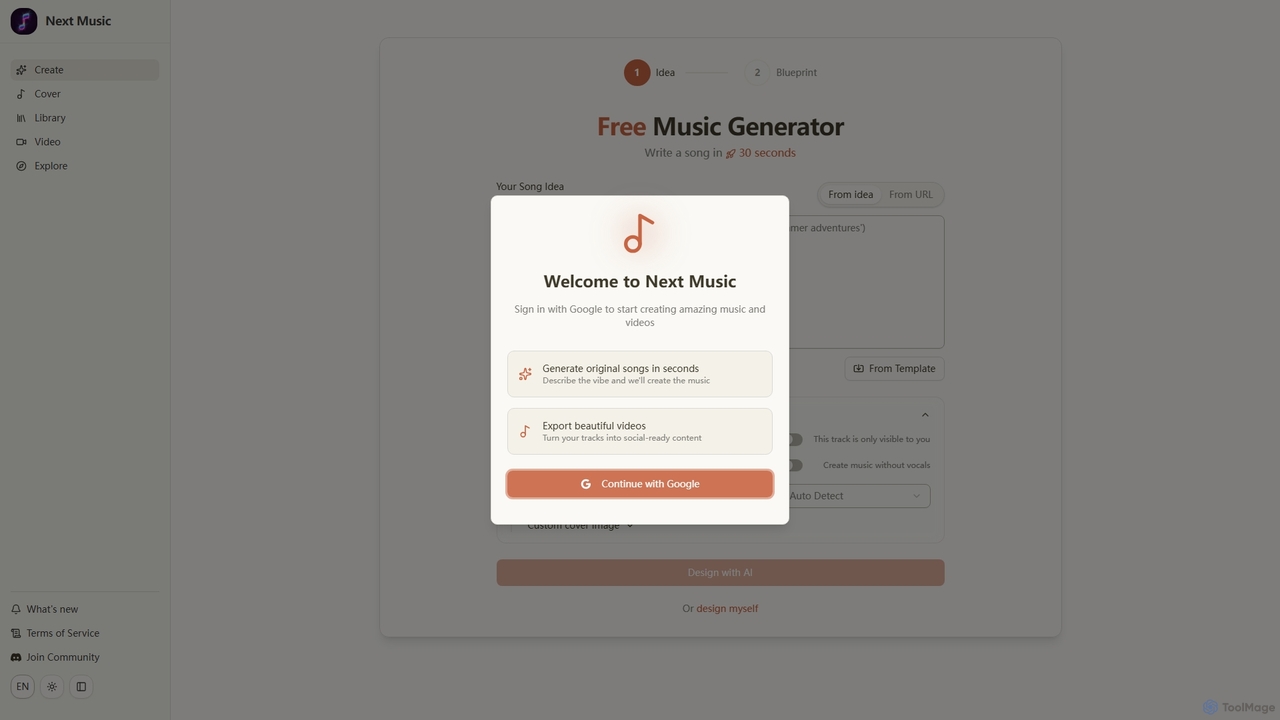
Next Music is a free AI-powered platform that allows users to generate original songs and videos in seconds. Describe your musical idea, choose options like instrumental tracks or custom covers, and transform your creations into social-ready video content. It's designed for quick, creative music production.

Music
Visits 5.3KFavorites 140Likes 143

About Music

AI Music tools are a category of artificial intelligence applications designed to assist and automate various aspects of music creation, production, and analysis, fitting within the broader field of content creation. These tools leverage advanced machine learning algorithms, including deep learning and neural networks, to understand musical patterns, generate new compositions, and process audio. They empower musicians, producers, content creators, and hobbyists to explore new creative avenues, streamline workflows, and produce high-quality audio content more efficiently.

Core Features

  • Music Generation & Composition: Automatically create melodies, harmonies, rhythms, and full tracks based on user input or predefined styles.
  • Stem Separation & Remixing: Isolate individual components like vocals, drums, bass, and instruments from mixed audio files for editing or remixing.
  • Audio Mastering & Mixing: Enhance the overall sound quality, balance levels, and apply effects to achieve a professional-grade audio output.
  • Style Transfer & Transformation: Apply the stylistic elements of one piece of music or genre to another, or transform existing audio.
  • Sound Design & Synthesis: Generate unique sound effects, textures, or synthesize new instrument sounds for various media projects.

Use Cases

These tools are invaluable for independent artists looking to quickly prototype song ideas, video editors needing custom background scores without licensing complexities, and podcasters aiming for professionally mastered audio. They also serve game developers generating dynamic, adaptive soundtracks and content creators seeking unique sound effects.

How to Choose

When selecting an AI Music tool, consider its primary function (generation, editing, mastering), the range of genres and styles it supports, and its integration capabilities with existing Digital Audio Workstations (DAWs). Evaluate the licensing terms for generated content, the level of user control offered, and the tool's ease of use for your technical proficiency.

Music use cases

1

Generating Background Music for Videos

Video content creators input desired mood, genre, and duration to quickly produce unique, royalty-free background music, eliminating the need for extensive music libraries or licensing fees. This saves significant time in post-production and ensures a consistent sonic brand for their visual content.

2

Generating Custom Background Music for Videos

Video content creators, YouTubers, and filmmakers often require unique, royalty-free background music to enhance their productions. AI Music tools allow them to input desired mood, genre, and tempo, generating custom tracks that perfectly fit their visual content. This eliminates the need for expensive stock music licenses or time-consuming manual composition, significantly accelerating the video production workflow and ensuring originality.

3

Composing Song Demos and Ideas

Songwriters and composers use AI to generate new melodic lines, chord progressions, or rhythmic patterns as starting points for new songs. This helps overcome creative blocks and rapidly prototype musical ideas, accelerating the songwriting process and allowing for quick experimentation with different arrangements.

4

Rapid Prototyping and Composition for Musicians

Independent musicians, songwriters, and composers can leverage AI Music tools to quickly generate musical ideas, melodies, and chord progressions. Instead of starting from scratch, they can use AI to explore different stylistic variations or complete instrumental backing tracks for their vocal demos. This accelerates the creative process, allowing artists to experiment more freely and bring their concepts to life faster.

5

Separating Vocals and Instruments for Remixes

DJs, producers, and remix artists utilize AI stem separation tools to isolate individual vocal tracks, drums, bass, or other instruments from existing songs. This allows for creative remixing, mashups, or acapella creation without requiring access to original multi-track recordings, opening up new possibilities for audio manipulation.

6

Isolating Stems for Remixing and Sampling

DJs, music producers, and remix artists frequently need to isolate specific elements like vocals, drums, or basslines from existing tracks for creative manipulation. AI-powered stem separation tools can accurately extract these individual components, even from complex mixes. This capability opens up new possibilities for creating remixes, mashups, or sampling specific sounds without access to original multi-track recordings.

7

Automated Audio Mastering for Professional Sound

Podcasters, independent artists, and small studios often struggle to achieve professional-grade audio mastering due to lack of expertise or expensive equipment. AI Music mastering tools analyze audio tracks and automatically apply optimal equalization, compression, and limiting to enhance clarity, loudness, and overall sonic balance. This democratizes access to high-quality audio production, making polished sound achievable for everyone.

8

Creating Unique Sound Effects for Games

Game developers and sound designers employ AI to generate custom sound effects, ambient soundscapes, or character voices based on textual descriptions or existing audio samples. This provides a vast library of unique sounds tailored to specific game environments and actions, enhancing immersion and reducing manual sound design efforts.

9

Automated Audio Mastering for Independent Artists

Independent musicians and podcasters use AI mastering tools to automatically optimize the loudness, clarity, and overall sonic balance of their tracks. This achieves a professional, release-ready sound without requiring specialized audio engineering knowledge or expensive studio services, making high-quality production accessible to a wider audience.

10

Creating Dynamic and Adaptive Game Soundtracks

Game developers require soundtracks that can dynamically adapt to in-game events, player actions, and changing environments. AI Music tools can generate modular musical pieces or even entire adaptive scores that respond in real-time to gameplay parameters. This creates a more immersive and engaging audio experience for players, moving beyond static loops to truly interactive soundscapes.

11

Personalized Music Generation for Wellness Apps

Developers of fitness, meditation, or sleep aid applications integrate AI music generators to create adaptive, personalized background music. The AI can adjust tempo, intensity, or instrumentation in real-time based on user activity, heart rate, or desired relaxation levels, enhancing the user experience and engagement with the application.

12

Exploring New Soundscapes with AI Sound Design

Sound designers and media artists constantly seek innovative sounds for films, games, or experimental projects. AI Music tools, particularly those focused on synthesis and sound design, can generate entirely new textures, ambient soundscapes, or unique instrument patches based on descriptive inputs. This expands the creative palette beyond traditional synthesis methods, offering novel sonic possibilities.

Music FAQ

What are AI Music tools?

AI Music tools are software applications that use artificial intelligence, primarily machine learning and deep learning, to assist in the creation, production, and analysis of music. They can generate original compositions, separate audio components, master tracks, and even transform musical styles. These tools aim to augment human creativity and streamline various stages of the music production workflow.

What are AI music tools?

AI music tools are software applications that use artificial intelligence, particularly machine learning, to assist in various aspects of music creation and production. They can generate original compositions, separate audio stems, apply musical styles, master tracks, and create sound effects, acting as powerful assistants for musicians, producers, and content creators.

How do AI Music generators work?

AI Music generators typically work by being trained on vast datasets of existing music. They learn patterns, structures, melodies, and harmonies across different genres. When a user provides input—such as a desired genre, mood, tempo, or even a simple melody—the AI uses its learned models to generate new, original musical sequences. Some advanced systems can even compose multi-instrumental pieces or adapt to real-time parameters.

How do AI music generators work?

AI music generators typically work by being trained on vast datasets of existing music. They learn patterns, structures, and relationships between different musical elements. Using techniques like neural networks or generative adversarial networks (GANs), they can then generate new, original musical pieces based on user inputs such as genre, mood, instrumentation, or specific melodic phrases, predicting the next logical musical sequence.

What's the difference between AI music generation and traditional composition?

Traditional composition relies entirely on human creativity, skill, and musical knowledge to create music from scratch. AI music generation, while often guided by human input, uses algorithms to automate parts of or the entire compositional process. AI tools can rapidly generate variations or complete pieces, acting as a creative assistant or a primary composer, whereas traditional composition is a purely human-driven endeavor. AI aims to augment, not entirely replace, human artistry.

What are the main benefits of using AI for music creation?

The primary benefits include accelerating creative workflows by generating ideas quickly, overcoming creative blocks, and democratizing music production by making advanced tools accessible. AI can also help explore new sonic territories, automate repetitive tasks like mastering, and provide personalized musical experiences, allowing creators to focus more on artistic vision and unique expression.

Who can benefit from using AI Music tools?

A wide range of individuals and professionals can benefit from AI Music tools. This includes independent musicians and songwriters looking for creative inspiration or quick demo production, video editors and podcasters needing custom background music, game developers requiring dynamic soundtracks, and music producers seeking efficient mixing and mastering solutions. Even hobbyists can use them to explore music creation without extensive technical knowledge.

How to choose the best AI music tool for my needs?

To choose the right AI music tool, consider your primary goal: do you need generation, editing, mastering, or stem separation? Evaluate the quality and variety of musical styles the tool supports, its customization options, and compatibility with your existing Digital Audio Workstation (DAW). Also, check the licensing terms for generated music and ensure the user interface matches your technical comfort level for a seamless workflow.

What should I consider when choosing an AI Music tool?

When choosing an AI Music tool, consider your primary need: do you want generation, editing, mastering, or stem separation? Evaluate the quality and variety of its output, the genres it supports, and its ease of use. Check for compatibility with your existing Digital Audio Workstation (DAW) and understand the licensing terms for any generated music. Finally, compare pricing models and community support.

Can AI music tools replace human musicians or composers?

No, AI music tools are designed to augment and assist human creativity, not replace it. While AI can generate technically proficient music, it lacks the human experience, emotion, and intentionality that define truly impactful art. They serve as powerful collaborators, providing new ideas, automating tasks, and expanding creative possibilities, allowing human artists to focus on the unique artistic expression only they can provide.