Best of the Year 5 results Decision Making AI Tools

Popular AI tools in the Decision Making field include CompareLabs、DeepVote、Decider AI、QChing、Nexcion, etc., helping you quickly improve efficiency.

QChing

QChing

QChing is an innovative AI tool that merges ancient I Ching wisdom with cutting-edge quantum randomness for profound …

3.5K
Decider AI

Decider AI

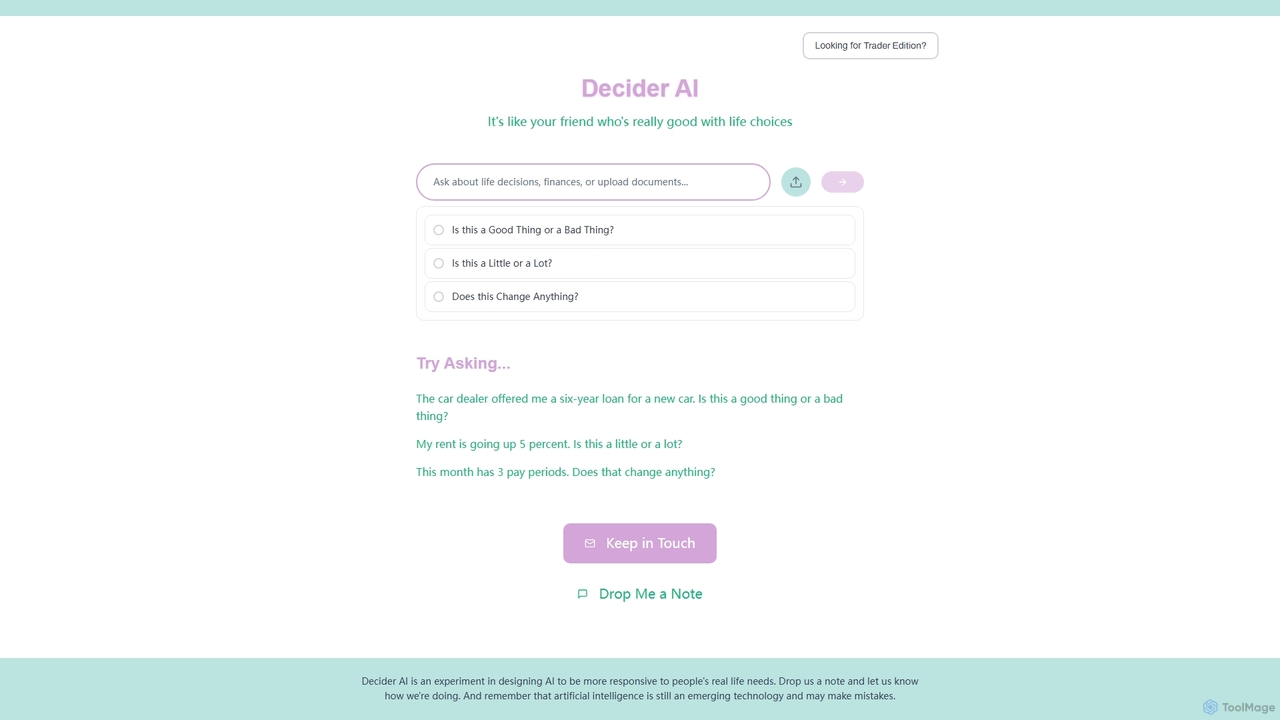
Decider AI is an experimental AI tool designed to assist individuals with everyday life choices by offering quick …

3.5K
DeepVote

DeepVote

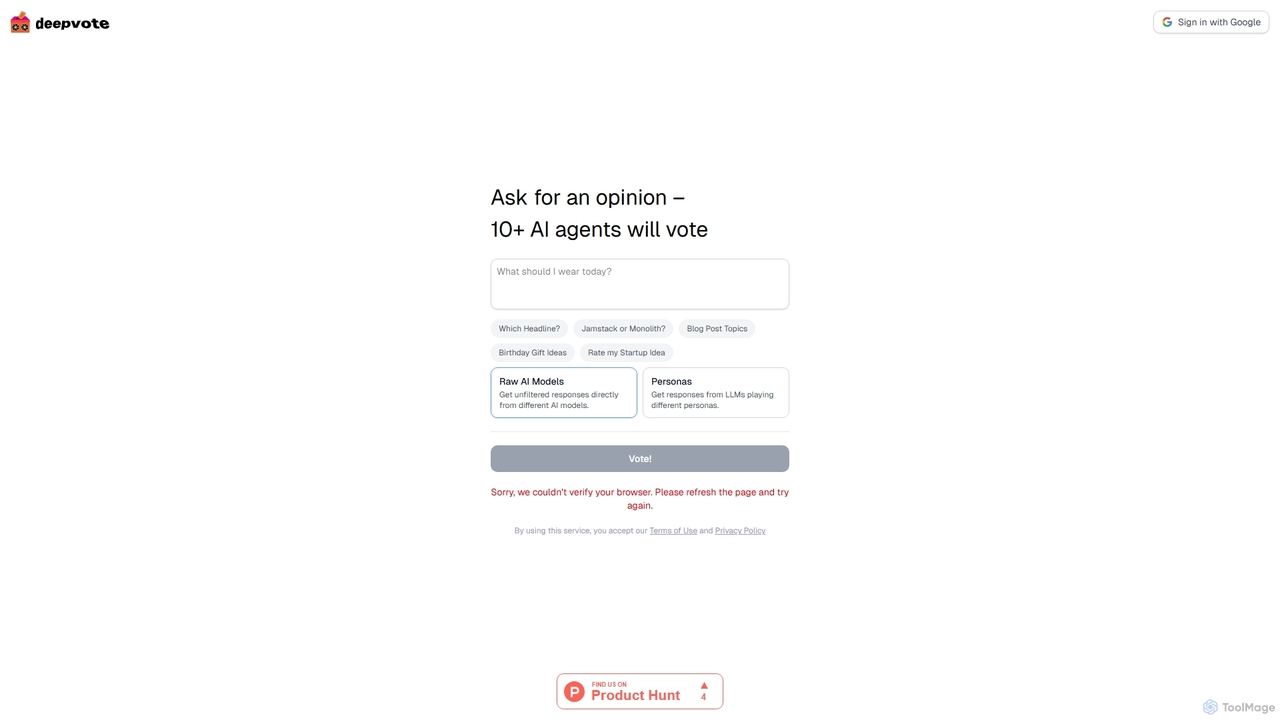
DeepVote is an innovative AI tool that gathers diverse opinions from over 10 AI agents on any given …

3.6K
CompareLabs

CompareLabs

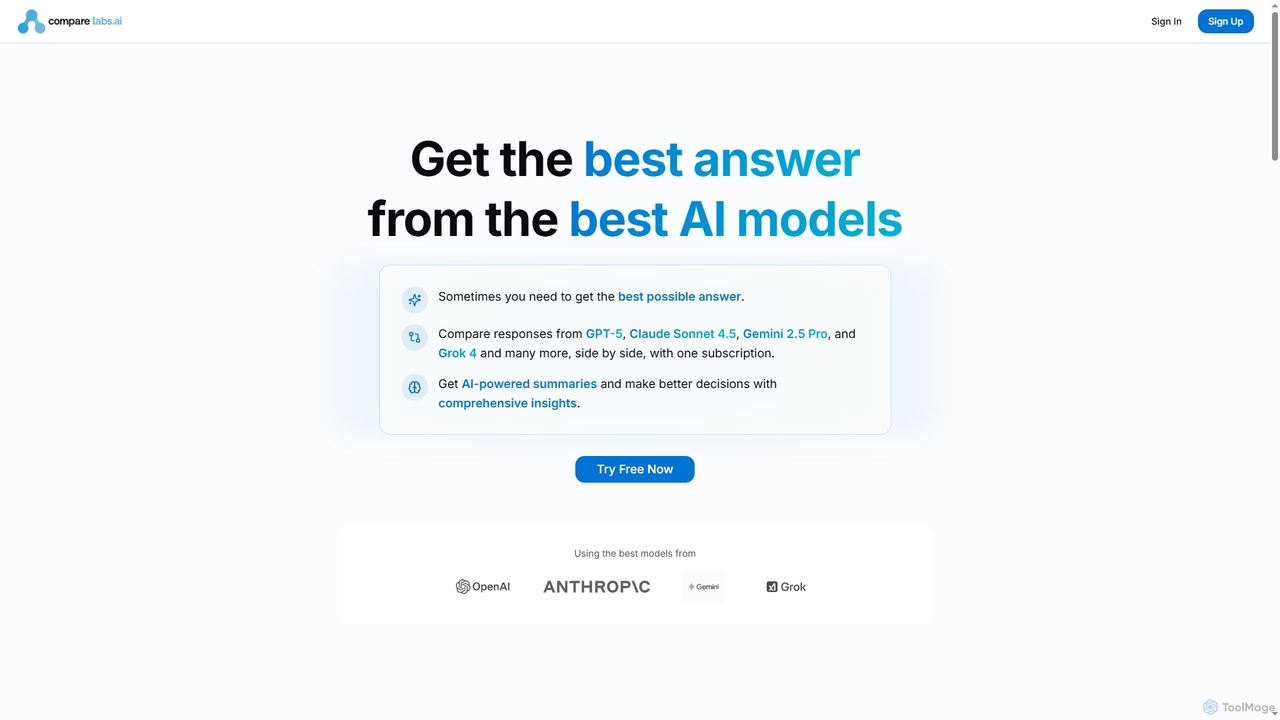
CompareLabs is an advanced AI platform that allows users to simultaneously query and compare responses from over 20 …

7.1K
Free
Nexcion

Nexcion

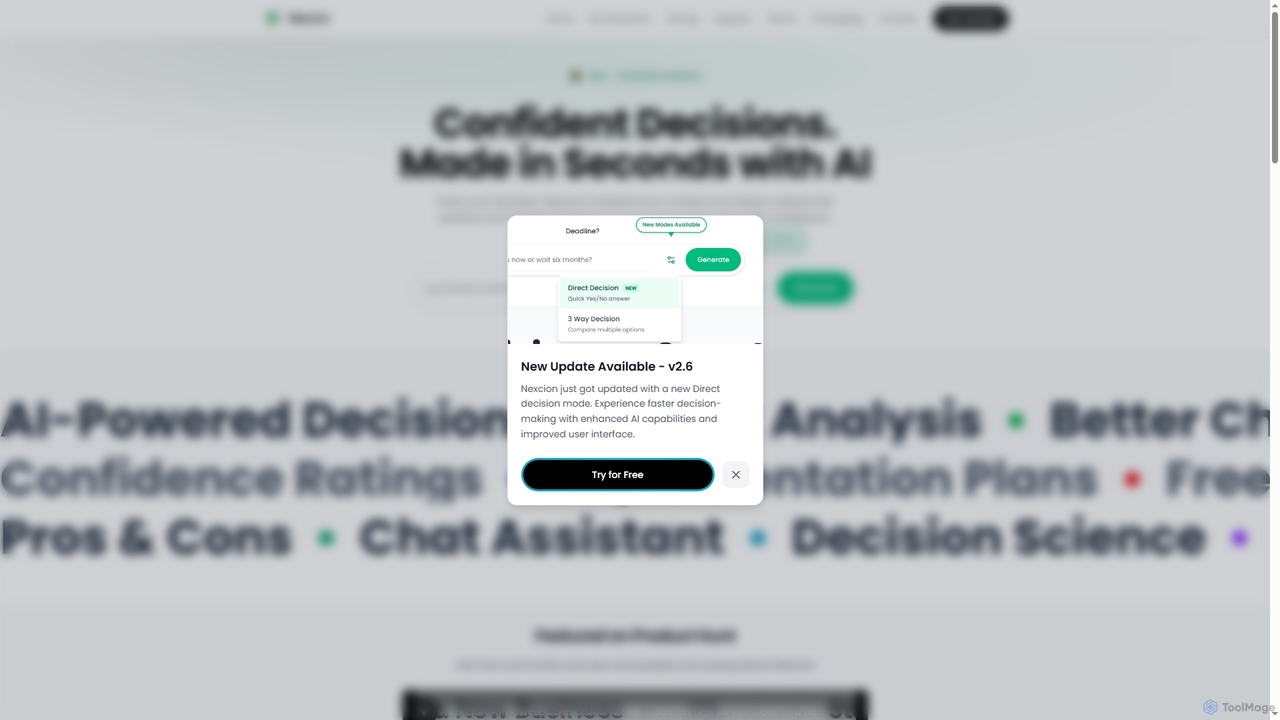
Nexcion is an AI-powered decision assistant that helps users make confident choices quickly by analyzing situations, outlining impacts, …

421

About Decision Making

Decision Making AI tools are a class of artificial intelligence applications designed to assist individuals and organizations in making more informed, efficient, and data-driven choices. These tools leverage advanced algorithms, machine learning, and data analytics to process complex information, identify patterns, predict outcomes, and recommend optimal courses of action. By automating data synthesis and providing actionable insights, they empower users to navigate uncertainty, mitigate risks, and achieve strategic objectives across various domains.

Core Features

  • Data Analysis & Synthesis: Processes vast datasets from multiple sources to identify trends, correlations, and anomalies relevant to decision-making.
  • Predictive Modeling: Utilizes historical data to forecast future outcomes and assess the potential impact of different choices.
  • Scenario Planning: Simulates various "what-if" scenarios, allowing users to evaluate potential risks and rewards before committing to a decision.
  • Recommendation Engines: Provides prioritized suggestions or optimal strategies based on predefined goals, constraints, and analyzed data.
  • Risk Assessment: Quantifies and visualizes potential risks associated with different decisions, aiding in proactive mitigation.

Use Cases

These tools are invaluable for business strategists analyzing market entry options, financial analysts optimizing investment portfolios, and project managers evaluating resource allocation. They also assist healthcare professionals in treatment plan selection and supply chain managers in inventory optimization, providing a data-backed foundation for critical choices.

How to Choose

When selecting a Decision Making AI tool, consider its data integration capabilities with your existing systems, the accuracy and transparency of its predictive models, and its ability to customize decision criteria. Evaluate the user interface for ease of use, the level of technical expertise required, and the scalability to handle growing data volumes and complexity. Finally, assess the vendor's support and the tool's compliance with relevant industry regulations.


Decision MakingUse Cases

1

Optimizing Investment Portfolio Decisions

Financial analysts and individual investors can utilize Decision Making AI tools to analyze market trends, evaluate asset performance, and predict future price movements. By inputting risk tolerance and financial goals, the AI can recommend an optimized portfolio allocation, suggesting specific stocks, bonds, or other assets to maximize returns while managing risk. This helps in making timely and data-backed investment choices, potentially outperforming traditional methods.

2

Strategic Market Entry Analysis

Business development teams and strategists employ Decision Making AI to assess the viability of entering new markets. The tools process demographic data, competitor analysis, regulatory landscapes, and economic indicators to identify the most promising regions or product categories. They can simulate market responses to different entry strategies, providing insights into potential revenue, market share, and associated risks, thus guiding critical expansion decisions.

3

Enhancing Supply Chain Resilience

Supply chain managers leverage Decision Making AI to anticipate disruptions, optimize inventory levels, and select the most efficient logistics routes. By analyzing real-time data on weather, geopolitical events, supplier performance, and demand fluctuations, the AI can recommend proactive measures to mitigate risks, such as diversifying suppliers or rerouting shipments. This ensures operational continuity and reduces costs associated with unforeseen events.

4

Personalized Healthcare Treatment Plans

Medical professionals can use Decision Making AI to develop highly personalized treatment plans for patients. The tools analyze vast amounts of patient data, including medical history, genetic information, and responses to previous treatments, alongside global research findings. The AI can then suggest the most effective therapies, predict potential side effects, and recommend dosage adjustments, leading to more precise and successful patient care outcomes.

5

Optimizing Resource Allocation in Projects

Project managers and team leads utilize Decision Making AI to efficiently allocate human and financial resources across complex projects. The tools analyze project requirements, team skill sets, budget constraints, and potential bottlenecks to recommend optimal task assignments and resource distribution. This ensures projects stay on schedule and within budget, maximizing productivity and minimizing waste by making data-informed allocation decisions.

6

Data-Driven Product Feature Prioritization

Product managers and development teams use Decision Making AI to prioritize new features or improvements based on user feedback, market demand, and development costs. The AI analyzes customer reviews, usage data, competitor offerings, and internal resource availability to identify features that will deliver the highest impact and return on investment. This ensures product roadmaps are aligned with user needs and business objectives, leading to more successful product launches.

Decision MakingFrequently Asked Questions