ExpoDeploy
ExpoDeploy is a cutting-edge mobile CI/CD platform designed for Expo and React Native applications. It automates the entire …
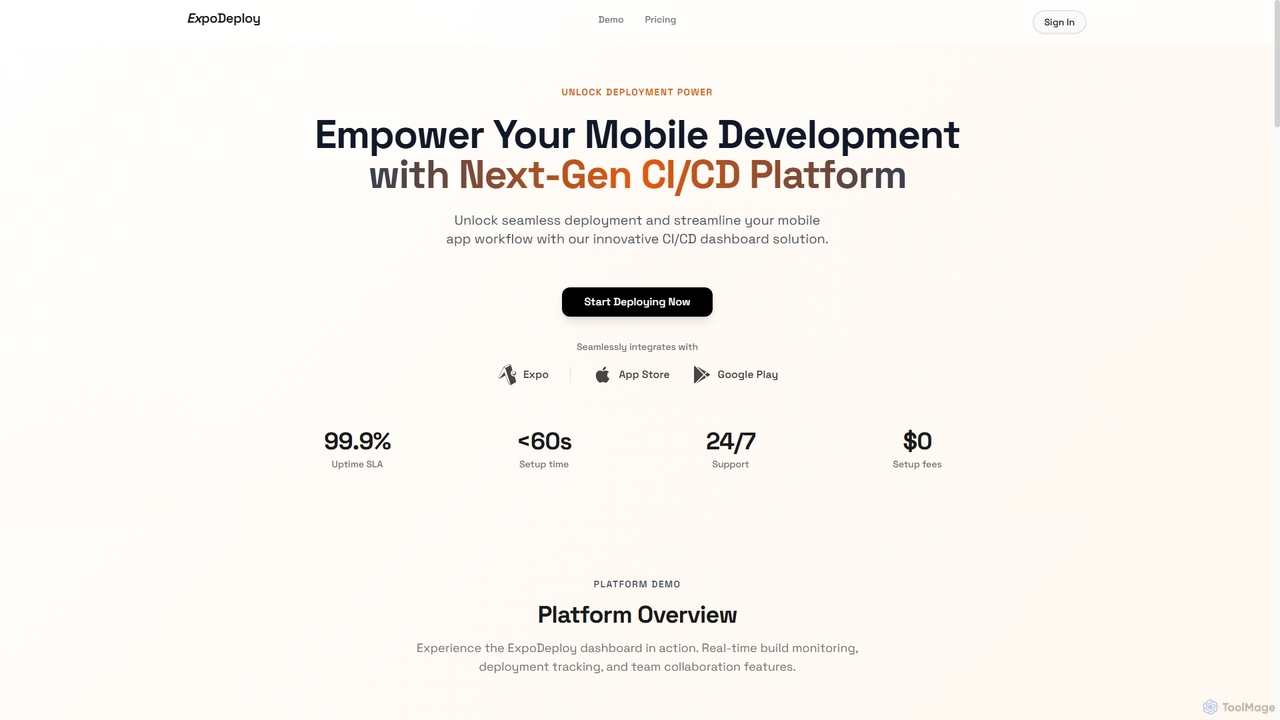
ExpoDeploy is a cutting-edge mobile CI/CD platform designed for Expo and React Native applications. It automates the entire mobile app deployment workflow, from building and testing to unified submission to Apple App Store and Google Play, eliminating manual complexities like certificate management and separate console logins.
Wemob
Wemob is an AI-powered platform that converts any website into a native iOS and Android mobile app in …
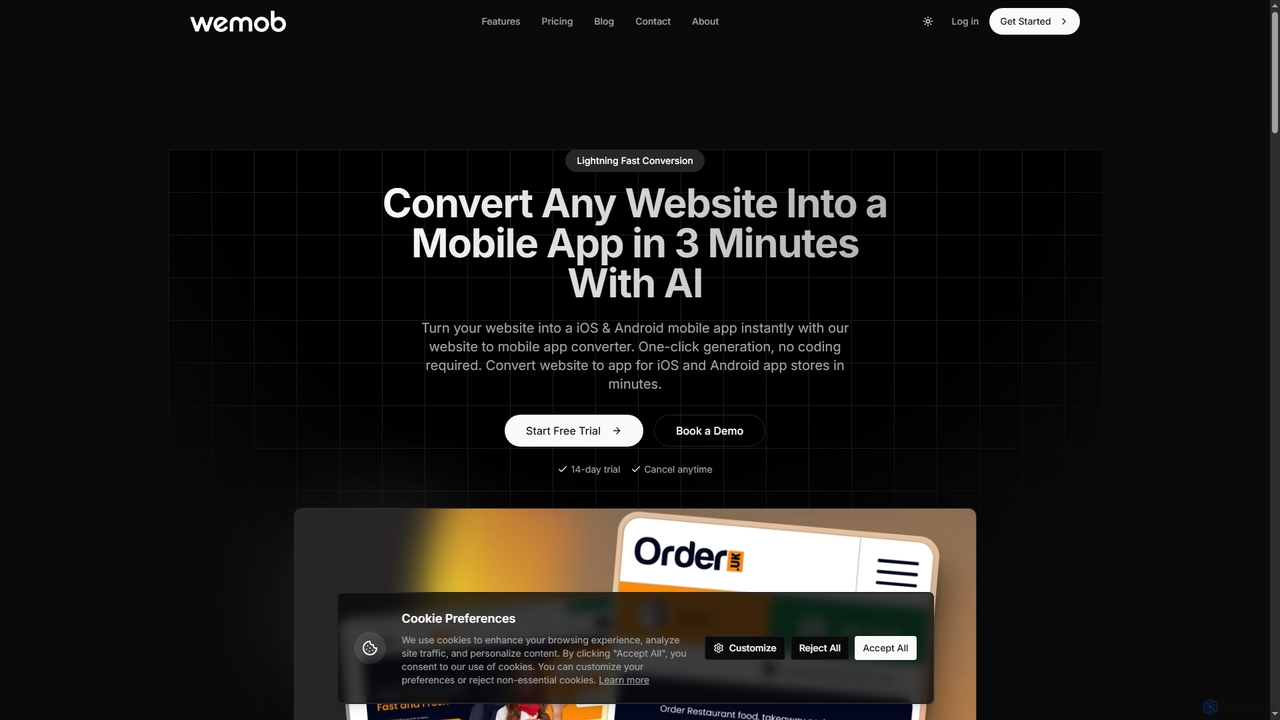
Wemob is an AI-powered platform that converts any website into a native iOS and Android mobile app in just 3 minutes, no coding required. It features push notifications, custom branding, real-time updates, and automated app store deployment.
DreamFlow
DreamFlow is an AI-first development environment that transforms text prompts into cross-platform mobile applications. It integrates AI-powered code …
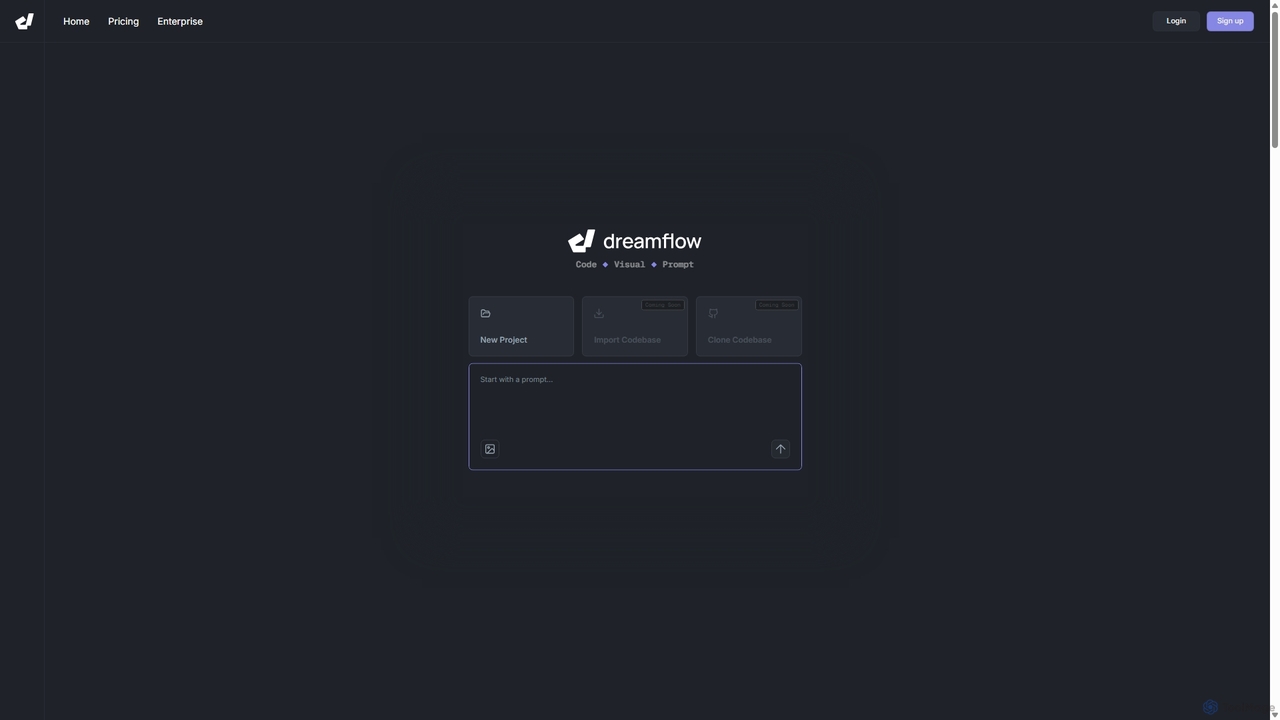
DreamFlow is an AI-first development environment that transforms text prompts into cross-platform mobile applications. It integrates AI-powered code generation, a visual UI builder, and a full-featured code editor to accelerate the entire app development lifecycle for Flutter, from idea to deployment.
WrapFast
WrapFast is an iOS SwiftUI boilerplate designed for developers to rapidly build and launch monetizable AI wrapper applications. …
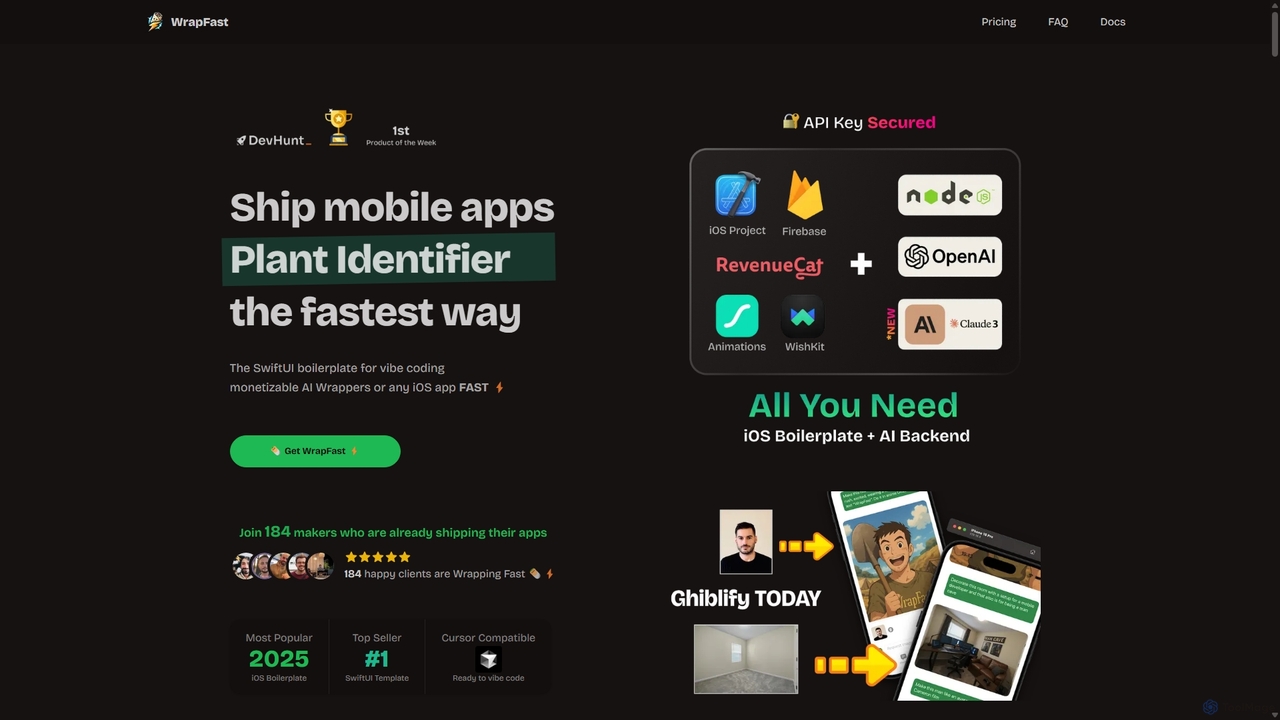
WrapFast is an iOS SwiftUI boilerplate designed for developers to rapidly build and launch monetizable AI wrapper applications. It provides a complete starter kit with pre-built features like user authentication, in-app purchases, secure AI API integration (OpenAI & Anthropic), a Node.js backend, and a cloud database. This allows developers to focus on creating unique app experiences instead of writing repetitive boilerplate code, significantly accelerating the development-to-launch cycle for any iOS app, especially those powered by AI.
FlutterFlow
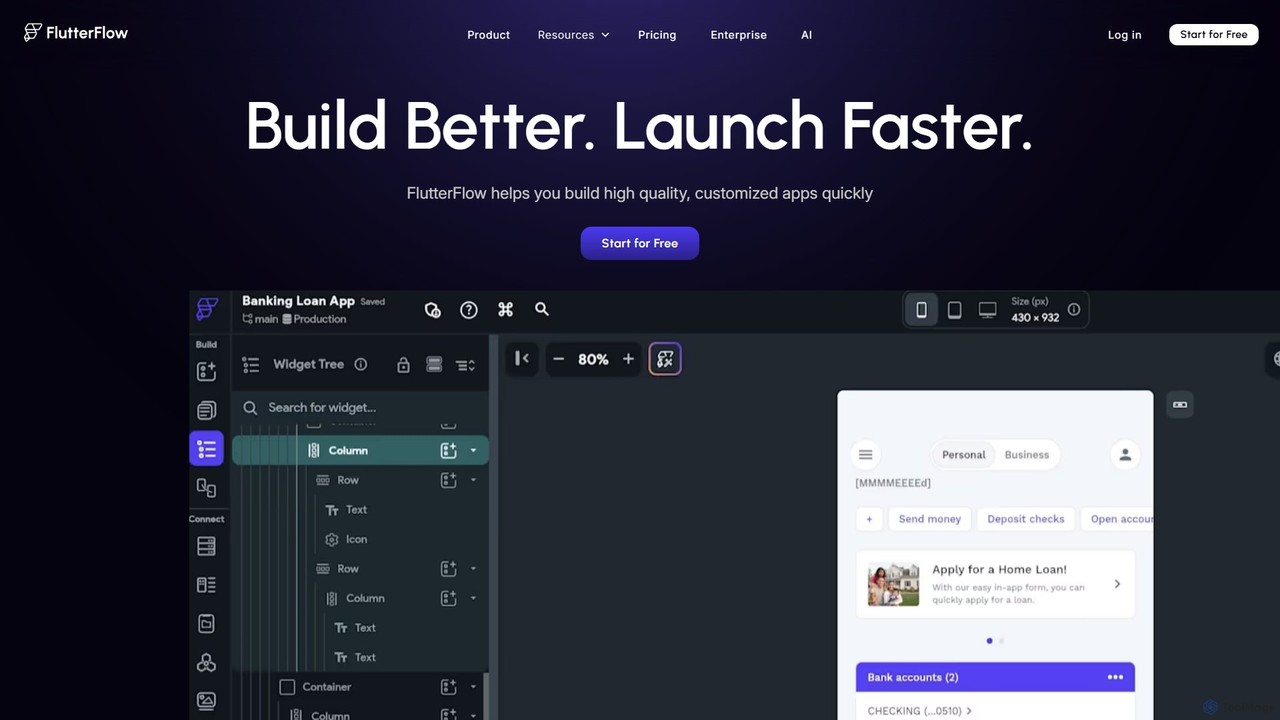
FlutterFlow is a low-code platform for visually building native mobile, web, and desktop applications. It empowers developers and …
FlutterFlow is a low-code platform for visually building native mobile, web, and desktop applications. It empowers developers and non-developers to create high-quality, customized apps with a drag-and-drop interface, pre-built components, and powerful integrations like Firebase and Supabase, significantly accelerating the development process.
DhiWise
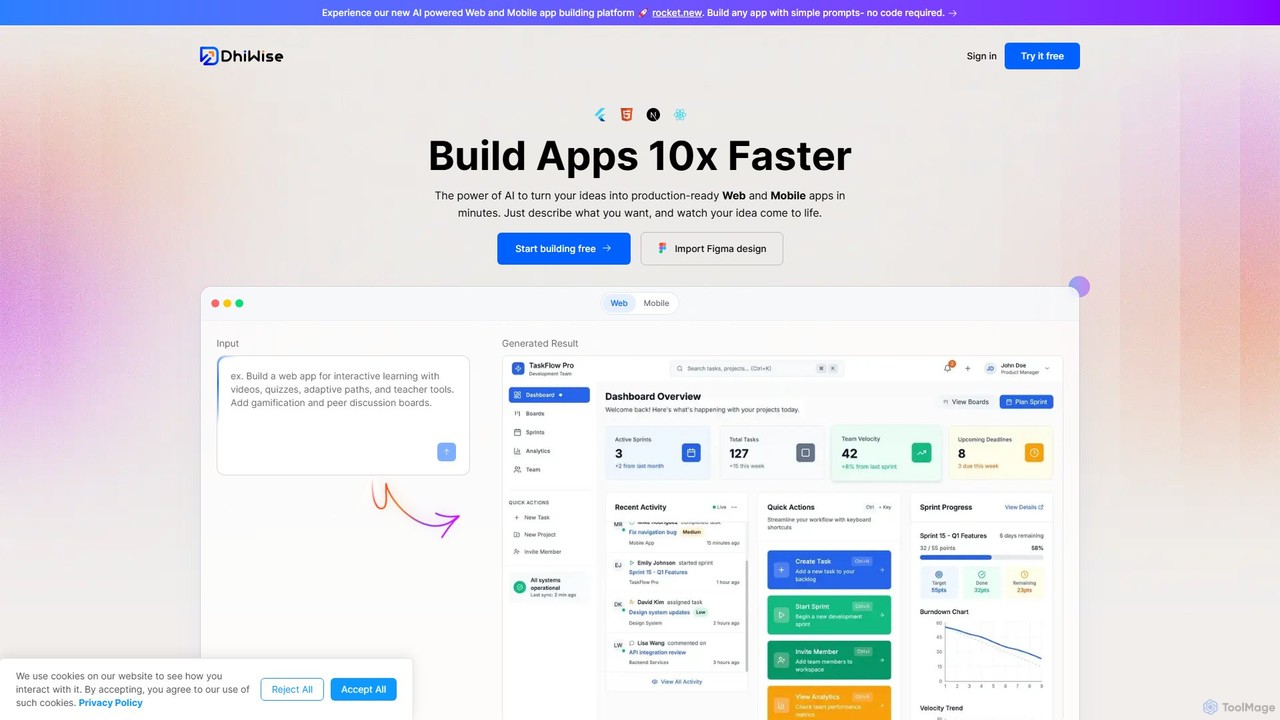
DhiWise is an AI-powered development platform that accelerates the creation of web and mobile applications. It transforms your …
DhiWise is an AI-powered development platform that accelerates the creation of web and mobile applications. It transforms your ideas, natural language prompts, or Figma designs into high-quality, production-ready code in minutes. Supporting frameworks like Flutter and modern web technologies, DhiWise automates boilerplate tasks, enabling developers to build and deploy apps 10x faster.
React
React is a free and open-source JavaScript library for building user interfaces based on components. Developed by Meta, …
React is a free and open-source JavaScript library for building user interfaces based on components. Developed by Meta, it enables developers to create large-scale web and native applications with complex, interactive UIs efficiently. It uses a declarative approach and a component-based architecture to build encapsulated components that manage their own state.
About Mobile Development
AI Mobile Development tools are specialized applications that leverage artificial intelligence to streamline the entire lifecycle of creating, testing, and deploying mobile apps. These tools utilize machine learning models trained on vast codebases to provide intelligent code completion, automated UI generation, and predictive bug detection. Their primary value lies in significantly accelerating development cycles, improving code quality, and reducing manual effort for developers. This allows teams to build and iterate on high-performance iOS and Android applications more efficiently.
Core Features
- Intelligent Code Generation: Automatically creates boilerplate code, functions, and UI components for native (Swift, Kotlin) and cross-platform (Flutter, React Native) frameworks.
- Automated UI/UX Testing: Simulates user interactions across various devices and screen sizes to identify visual bugs and usability issues without manual scripting.
- Performance Analysis & Optimization: Proactively detects memory leaks, excessive battery consumption, and performance bottlenecks specific to mobile environments.
- Natural Language to UI Conversion: Translates plain text descriptions or design mockups into functional UI code, accelerating the prototyping phase.
- App Store Optimization (ASO) Assistance: Generates optimized app titles, descriptions, and keywords to improve visibility and downloads on the App Store and Google Play.
Use Cases
These tools are essential for mobile developers, QA engineers, and product managers. They are applied in scenarios like rapid prototyping of new app features, conducting comprehensive regression testing before a release, and optimizing an app's performance to ensure a smooth user experience. They are valuable in both small startups and large enterprise development teams.
How to Choose
When selecting an AI Mobile Development tool, consider its compatibility with your technology stack (e.g., native iOS/Android, Flutter). Evaluate the depth of its features—whether it focuses on coding, testing, or deployment. Assess its integration capabilities with popular IDEs like Xcode, Android Studio, and VS Code, and consider the learning curve for your team.
Mobile DevelopmentUse Cases
Accelerating UI Prototyping from Design Files
A mobile UI/UX designer finalizes a new feature design in Figma. Instead of developers manually translating this design into XML or SwiftUI code, they use an AI tool. The tool analyzes the Figma file, recognizes components like buttons, text fields, and image views, and generates the corresponding layout code for both iOS and Android. This reduces the initial UI development time from days to a few hours, allowing the team to build a functional prototype for user testing much faster.
Automating Cross-Device Regression Testing
A QA team is preparing for a new app release. They use an AI-powered testing tool to automatically execute critical user flows, such as login, purchase, and profile update, across a wide range of virtual devices. The AI identifies visual inconsistencies, layout breaks on different screen sizes, and performance regressions compared to the previous build. It then generates a detailed report with screenshots and logs, allowing developers to fix bugs before they reach users, ensuring a consistent experience on all devices.
Optimizing App Store Listings with ASO
A product manager wants to improve an app's visibility in the Google Play Store and Apple App Store. They use an AI ASO tool, inputting the app's core functionality and target audience. The tool analyzes top-ranking competitors and market trends to suggest several high-potential keywords, compelling app titles, and descriptive paragraphs. It also generates variations of the app's short and long descriptions for A/B testing, helping the team identify the most effective messaging to increase downloads.
Intelligent Code Refactoring for Performance
A senior mobile developer is tasked with improving the performance of a legacy Android application. Instead of manually reviewing thousands of lines of code, they use an AI coding assistant integrated into Android Studio. The assistant scans the codebase, identifies inefficient algorithms, detects potential memory leaks in Activities, and suggests refactoring the code into more modern, performant patterns like using Kotlin Coroutines for asynchronous tasks. This process helps systematically improve app responsiveness and stability.
Generating Unit Tests for Business Logic
A developer has just finished implementing a complex business logic module in Swift for an iOS app. To ensure its correctness, they use an AI tool to generate a comprehensive suite of unit tests. By providing the function's code, the AI generates test cases covering edge cases, valid inputs, and invalid inputs, asserting the expected outcomes. This automates a tedious part of the development process, increases test coverage, and helps catch regressions early in future development cycles.
AI-Assisted Crash Report Analysis
A mobile development team receives hundreds of crash reports daily via Firebase Crashlytics. An AI tool integrated with their system analyzes and groups these reports. It identifies duplicate issues, prioritizes crashes based on user impact and frequency, and even suggests potential root causes by analyzing stack traces against a knowledge base of common mobile development errors. This allows the team to focus on fixing the most critical bugs first, rather than manually sifting through raw crash data.