
ToolMage
Sign in

Best 1 Content Discovery AI tools for Entertainment

Popular Content Discovery AI tools in Entertainment include Fapello, helping you work more efficiently.

Fapello
Freemium

Fapello

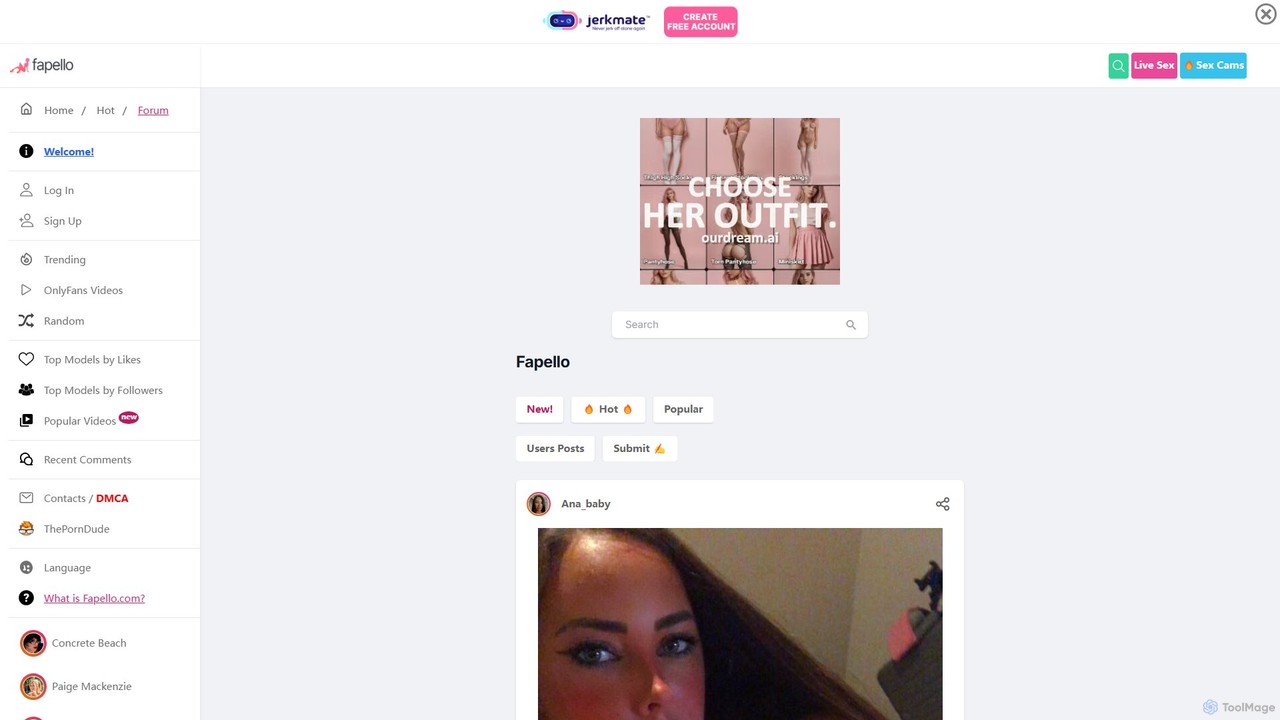
Fapello is an AI-powered content discovery platform designed to explore a vast, daily-updated library of exclusive photos and videos from popular online creators. It uses a recommendation engine to personalize your feed, helping you discover trending models and content from platforms like OnlyFans and Instagram for free.

Content Discovery
Visits 53.5MFavorites 131Likes 131

About Content Discovery

Content Discovery tools are AI-powered systems designed to recommend personalized content such as articles, videos, music, and podcasts. They utilize machine learning algorithms to analyze user behavior, preferences, and content attributes to surface relevant and engaging materials. This helps users navigate the vast amount of digital information and find new items of interest that they might not have found through traditional search. These tools are the core technology behind the recommendation engines of major entertainment and media platforms.

Core Features

  • Personalized Recommendations: Analyzes user history and similar user profiles to suggest highly relevant content.
  • Trend Analysis: Identifies emerging topics, viral content, and popular trends across various platforms.
  • Semantic Content Filtering: Understands the context, sentiment, and topics of content, going beyond simple keyword matching.
  • Multi-Source Aggregation: Gathers and curates content from a wide range of sources like news sites, blogs, and social media.

Use Cases

These tools are essential for media companies, streaming services (like Netflix or Spotify), and news aggregators to increase user engagement and retention. Content creators and marketers also use them to understand audience interests and discover trending topics for their campaigns. Individual users leverage them to create curated information feeds tailored to their specific hobbies and professional fields.

How to Choose

When selecting a Content Discovery tool, consider the sophistication of its recommendation algorithm and the breadth of its content sources. Evaluate the user interface for ease of use and the level of control it offers for refining suggestions. Also, review its privacy policy to understand how your data is collected and used. For professional use, check for integration capabilities with other marketing or content management systems.

Content Discovery use cases

1

Curating a Personalized Music Playlist

A music enthusiast wants to discover new artists beyond their usual rotation. They use a content discovery tool linked to their streaming service. The AI analyzes their listening history, including genres, artists they frequently play, and even tracks they skip. Based on this data, it generates a weekly 'Discovery' playlist featuring emerging artists and niche tracks that match their taste profile. This allows the user to effortlessly find new music they love, expanding their musical horizons without spending hours searching manually.

2

Finding Niche Films and TV Series

A film buff is tired of mainstream recommendations on major streaming platforms. They use a specialized content discovery app that aggregates catalogs from multiple services. The user can input specific criteria like '1970s Italian horror films' or 'documentaries about urban planning'. The AI then scans through thousands of titles, analyzing metadata, synopses, and user reviews to provide a curated list of highly relevant, often overlooked, movies and shows. This helps the user uncover hidden gems that align perfectly with their specific interests.

3

Building a Daily Professional News Briefing

A marketing manager needs to stay updated on industry trends, competitor news, and technological advancements. Instead of manually checking dozens of websites, she uses a content discovery tool focused on professional articles. She sets up topics like 'AI in marketing', 'SaaS growth strategies', and specific competitor names. Every morning, the tool delivers a personalized email digest with the top 10 most relevant articles, summarized for quick reading. This saves her over an hour each day and ensures she never misses critical industry intelligence.

4

Identifying Viral Trends for Social Media Content

A social media manager for a fashion brand uses a content discovery platform to monitor emerging trends on TikTok and Instagram. The tool's AI analyzes millions of videos daily, identifying rising audio clips, new challenge formats, and popular visual styles before they become mainstream. It provides data-driven insights on which trends are gaining traction with the brand's target demographic. This enables the manager to create timely and relevant content that capitalizes on viral momentum, significantly boosting engagement and reach for their campaigns.

5

Discovering Your Next Favorite Podcast

A podcast listener has finished their favorite true-crime series and is looking for something new. They use a podcast discovery app that goes beyond simple category browsing. The AI analyzes the specific topics, host's speaking style, and episode format of the shows they already love. It then recommends new podcasts that share these nuanced characteristics, such as 'investigative journalism podcasts with a single narrator' or 'comedic takes on historical events'. It can even suggest specific starting episodes, making it easy to jump into a new series.

6

Finding Educational Content on YouTube

A student preparing for an exam needs high-quality, reliable educational videos on complex topics. Using a standard YouTube search often yields distracting or inaccurate content. They use a content discovery tool designed for learning. This tool filters YouTube content based on educational credibility, channel authority, and user feedback from other learners. It surfaces curated playlists and channels known for clear, accurate explanations, helping the student find the best learning resources efficiently and avoid misinformation.

Content Discovery FAQ

What are AI Content Discovery tools?

AI Content Discovery tools are applications that use artificial intelligence to help users find new and relevant content. They act as personalized recommendation engines, analyzing your past behavior (like videos watched, articles read, or music played) to suggest other items you are likely to enjoy. Unlike a search engine that responds to a specific query, these tools proactively surface content to broaden your entertainment and information horizons.

How do Content Discovery tools differ from search engines?

The key difference lies in user intent. A search engine is for 'pull' discovery; you have a specific question or topic in mind and you pull information by typing a query. A content discovery tool is for 'push' discovery; it pushes new content to you based on your inferred interests, helping you find things you didn't know you were looking for. Search engines are for finding answers, while discovery tools are for exploration and serendipity.

How can I get better recommendations from these tools?

To improve the quality of your recommendations, you need to provide the AI with clear feedback. Most tools have features for this. You should:

  • Actively Rate Content: Use thumbs up/down, star ratings, or 'like' buttons.
  • Indicate Disinterest: Use features like 'show less like this' or 'not interested'.
  • Curate Your History: If possible, remove items from your viewing/listening history that don't reflect your tastes.
  • Follow Topics/Creators: Explicitly tell the tool what you are interested in by following specific channels, artists, or keywords.

The more data you provide about your preferences, the more accurate the AI's suggestions will become.

Are content discovery tools only for entertainment?

While they are most famously used in entertainment platforms like streaming services, content discovery tools have much broader applications. They are used in e-commerce to recommend products, in academic research to suggest relevant papers, in news platforms to create personalized briefings, and in corporate learning systems to propose training modules. The core principle of matching users with relevant items based on data applies to any field with a large volume of information.

What kind of data do content discovery tools use?

These tools typically use a combination of three types of data:

  • User Interaction Data: This includes your viewing history, clicks, likes, shares, search queries, and even how long you engage with a piece of content.
  • Content Metadata: This is data about the content itself, such as genre, keywords, topics, author/artist, and publication date.
  • Collaborative Data: This involves analyzing the behavior of users with similar tastes. The logic is, 'If User A and User B both liked items 1, 2, and 3, and User A also liked item 4, then User B might like item 4 as well.'