ToolMage
Sign in

Best 1 Creative AI tools for Entertainment

Popular Creative AI tools in Entertainment include whatbeatsrock, helping you work more efficiently.

whatbeatsrock
Free

whatbeatsrock

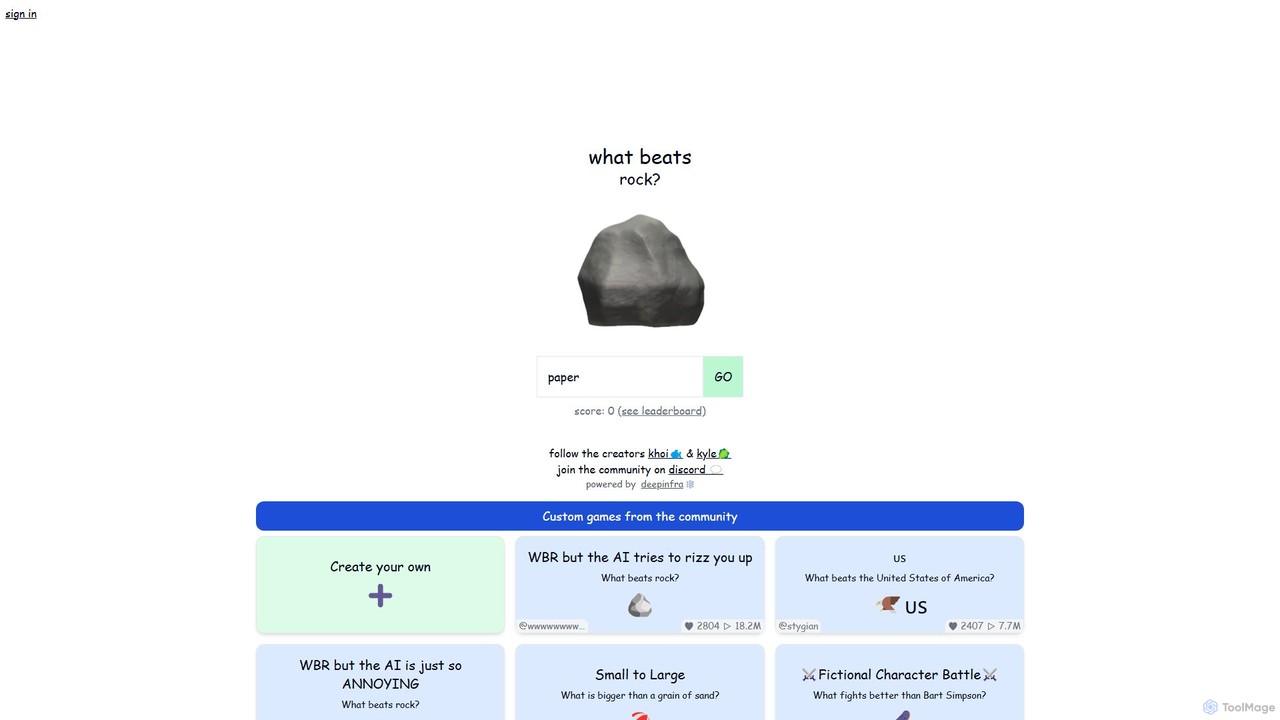
whatbeatsrock is a creative AI-powered word game where players challenge an AI by finding concepts that 'beat' a given prompt, starting with 'rock'. It features endless gameplay, community-created custom games, and leaderboards. Test your creativity and wit against a clever AI judge in this simple yet addictive web-based game.

Social Gaming
Visits 487.1KFavorites 154Likes 169

About Creative

Creative AI tools are a class of applications that use artificial intelligence to generate novel artistic and imaginative content. These tools leverage complex generative models to transform text prompts or existing media into unique images, music, stories, and more. Their primary value lies in making creative expression accessible to everyone, regardless of technical skill, for entertainment and personal projects. They act as a digital muse, enabling users to explore artistic ideas and produce original content with ease.

Core Features

  • Generative Content Creation: Produces original images, text, or music from simple user descriptions or prompts.
  • Style Transfer and Transformation: Applies the aesthetic of one image or artist to another piece of content.
  • Interactive Idea Generation: Acts as a collaborative partner for brainstorming concepts, characters, or plotlines.
  • Customization and Control: Offers parameters to guide the AI's output, allowing for personalized creative results.
  • Multi-Modal Generation: Combines different types of media, such as creating images from text or music from a described mood.

Use Cases

These tools are widely used by hobbyists, social media users, and content creators for personal enjoyment and engagement. For instance, a user can generate a unique avatar for their profile, a writer can brainstorm story ideas, or a vlogger can create custom background music for a video. They serve as a powerful resource for anyone looking to experiment with digital art and expression without a steep learning curve.

How to Choose

When selecting a Creative AI tool, consider the type of content you want to create (e.g., images, music, text). Evaluate the user interface for ease of use, especially for beginners. Examine the variety of styles and the quality of the output. Finally, consider the pricing model—many tools offer free tiers with limitations, while subscriptions provide advanced features and higher usage limits.

Creative use cases

1

Creating Unique Social Media Avatars

A social media user wants a profile picture that stands out and reflects their personality. Instead of using a standard photo, they use a creative AI tool to generate a unique avatar. By inputting a text prompt like 'astronaut cat in a synthwave style' or uploading a selfie and applying an 'anime hero' filter, they can create a visually striking and personalized image. This process requires no artistic skill and allows for endless experimentation, resulting in a one-of-a-kind digital identity that enhances their online presence.

2

Generating Story Ideas and Character Concepts

A hobbyist writer or a tabletop RPG game master is facing a creative block. They use an AI creative tool to spark inspiration. By providing a simple premise like 'a detective in a magical city' or 'a lost robot searching for its creator,' the AI generates multiple plot hooks, character descriptions, and even concept art. This doesn't write the story for them but acts as a powerful brainstorming partner, offering unexpected angles and visual aids that help them overcome the block and develop their world more richly.

3

Designing Personalized Greeting Cards and Invitations

A person planning a birthday party wants to create unique digital invitations. Instead of using generic templates, they turn to an AI creative tool. They enter a prompt like 'A whimsical forest party with glowing mushrooms and friendly animals, invitation card style.' The AI generates several artistic options. They can then select the best one, add text details, and send out a truly custom and memorable invitation that sets the tone for the event, all completed in minutes without any design software knowledge.

4

Composing Background Music for Personal Videos

A vlogger is creating a travel montage and needs background music that matches the mood. Licensing music can be expensive and complicated. Instead, they use an AI music generator. They select a genre like 'Chill Lofi,' set the mood to 'adventurous and uplifting,' and specify a duration of two minutes. The AI composes a unique, royalty-free track that fits their video perfectly. This allows them to enhance their content's emotional impact without worrying about copyright issues or needing any musical composition skills.

5

Experimenting with Digital Art Styles

An art enthusiast, curious about different artistic movements but lacking painting skills, uses a creative AI tool to learn and experiment. They upload a simple photograph of their pet and apply various style prompts like 'in the style of Van Gogh's Starry Night,' 'as a cubist painting,' or 'in a Japanese ukiyo-e woodblock print.' The tool instantly transforms the photo, providing a hands-on, interactive way to understand the core aesthetics of each style. This playful exploration deepens their appreciation for art history and inspires new creative ideas.

6

Creating Fun Memes and Viral Content

A content creator wants to quickly produce timely and humorous memes to engage their audience. Using an AI creative tool, they can input a trending topic or a funny phrase. The AI can generate a series of witty captions or create a bizarre, eye-catching image that perfectly captures the joke. This process is significantly faster than manually searching for templates and using photo editing software. It allows the creator to react to trends in near real-time, increasing their content's relevance and potential for going viral.

Creative FAQ

What are AI Creative tools?

AI Creative tools are software applications that use artificial intelligence, particularly generative models, to create new artistic content. This includes images, music, text, and other media, generated from user prompts. Unlike professional design software, their primary purpose is often entertainment, personal expression, and making the act of creation accessible to individuals without specialized artistic or technical skills.

How to choose a suitable AI Creative tool?

To choose the right tool, consider these factors:

  • Content Type: Determine what you want to create. Are you interested in images, music, writing, or something else? Different tools specialize in different media.
  • Ease of Use: Look for a tool with an intuitive interface, especially if you are a beginner. Some tools are simpler (prompt-in, image-out), while others offer more complex controls.
  • Style and Quality: Review examples of a tool's output. Does it produce the aesthetic you're looking for? Check the resolution and overall quality.
  • Pricing Model: Many tools offer free trials or a limited number of free generations. Evaluate if a free plan is sufficient for your entertainment needs or if a subscription is necessary for more features.
What's the difference between Creative AI and Professional Design AI tools?

The primary difference lies in their target audience and purpose. Creative AI tools (in the context of entertainment) are designed for fun, experimentation, and accessibility for a general audience. They prioritize ease of use and novel outputs. Professional Design AI tools are built for specific workflows (e.g., UI/UX design, architectural rendering, product mockups). They focus on precision, integration with other professional software, collaboration features, and producing commercially viable assets.

Do I need artistic skills to use AI Creative tools?

No, one of the main advantages of these tools is that they do not require traditional artistic skills like drawing or painting. The key skill is often 'prompt engineering'—the ability to write clear, descriptive text prompts that effectively guide the AI to produce the desired result. They are designed to be a creative partner, translating your ideas into a visual or auditory format, making creativity more accessible to everyone.

Who can benefit from using AI Creative tools?

A wide range of individuals can benefit from these tools for entertainment and personal projects. This includes:

  • Hobbyists and Enthusiasts: People looking to explore a new creative outlet without a significant time or financial investment.
  • Social Media Users: Anyone wanting to create unique profile pictures, posts, or memes to stand out online.
  • Writers and Game Masters: Individuals seeking inspiration for characters, settings, or plot points.
  • Content Creators: Vloggers and streamers who need custom, royalty-free music or graphics for their content.
  • Curious Individuals: Anyone interested in experimenting with the capabilities of AI and seeing their imagination come to life.