Entertainment Best in category 1 results Interactive Experience AI Tool

Popular AI tools in the Interactive Experience field of Entertainment include Flirtcam, etc., helping you quickly improve efficiency.

Flirtcam

Flirtcam

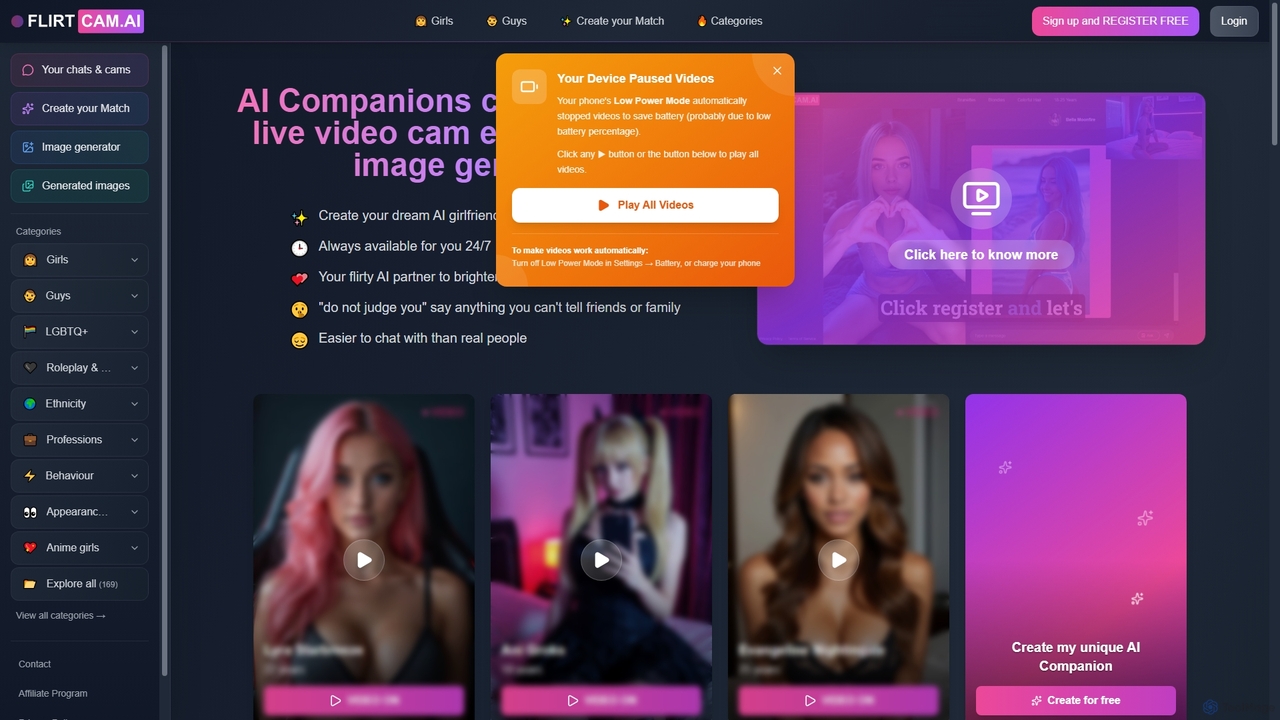
Flirtcam is an innovative AI companion platform offering virtual girlfriends and boyfriends for interactive chat, live video experiences, …

30.4K

About Interactive Experience

Interactive Experience tools are a class of AI applications that generate dynamic, responsive narratives and environments based on user input. They utilize advanced language models and procedural generation algorithms to create unique, co-authored experiences where the user's choices directly influence the story, characters, and world. This approach transforms passive entertainment into an active, participatory adventure, offering high replayability and personalized engagement. These tools are distinct within the entertainment category for their focus on two-way interaction rather than one-way content consumption.

Core Features

  • Dynamic Narrative Generation: The AI creates and adapts story plots, events, and outcomes in real-time in response to user actions.
  • AI Character Interaction: Enables deep, unscripted conversations with AI-driven characters who have their own memories and personalities.
  • World Simulation: Generates and manages a persistent world with consistent rules and elements that react to the user.
  • Personalized Content Adaptation: The experience tailors itself to the user's decisions, creating a unique journey for every playthrough.

Use Cases

These tools are widely used in creating text-based role-playing games, interactive fiction, and advanced non-player characters (NPCs) for video games. They are also applied in educational simulations for training purposes and by writers for brainstorming complex plotlines. For individuals, they offer a new form of immersive entertainment and virtual companionship.

How to Choose

When selecting an Interactive Experience tool, consider the depth of the AI's reasoning and memory capabilities. Evaluate the specific genres or themes it supports, such as fantasy, sci-fi, or modern life. Assess the platform's ease of use and whether it offers APIs for integration. Finally, review the content moderation policies and community guidelines to ensure a safe and suitable experience.

Interactive ExperienceUse Cases

1

AI-Powered Role-Playing Adventures

A fantasy enthusiast wants to play a solo role-playing game without needing a human Game Master. Using an AI Interactive Experience tool, they define their character and a starting scenario. The AI then acts as the Game Master, dynamically generating world descriptions, controlling non-player characters (NPCs), and creating challenges based on the player's actions. If the player decides to explore a dark cave, the AI generates the cave's layout, inhabitants, and potential treasures on the fly, ensuring a unique and unpredictable adventure every time.

2

Developing a Personalized AI Companion

A user looking for companionship or a creative sounding board decides to create a virtual friend. They use an AI tool to define the companion's personality traits, background story, and communication style. Over time, through daily conversations, the AI character learns the user's preferences and conversational patterns. It can recall past discussions, offer emotional support, brainstorm ideas, or engage in playful banter, providing a consistent and personalized interactive experience that evolves with the relationship.

3

Creating Interactive Fiction and Visual Novels

An independent author wants to write a branching narrative story but finds traditional scripting tools restrictive. They use an AI interactive experience platform to outline the main plot points. The AI then helps generate descriptive text, character dialogue, and plausible consequences for different reader choices. This allows the author to create a much more complex and reactive story, where even minor choices can lead to unique outcomes, without having to manually write every single possible path. The result is a richer, more immersive piece of interactive fiction.

4

Prototyping Dynamic NPC Dialogue for Games

A game developer is tired of writing repetitive, static dialogue for non-player characters (NPCs). They integrate an AI interactive experience API into their game engine to power a key NPC. Now, instead of following a rigid dialogue tree, the NPC can understand the player's typed or spoken questions and respond dynamically. The AI can access in-game information, like the time of day or the player's recent achievements, and incorporate it into the conversation, making the NPC feel significantly more alive and aware of the game world.

5

Interactive Educational Simulations

A history teacher wants to create an immersive learning experience for their students. They use an AI tool to build a simulation where students can 'talk' to a historical figure, like Leonardo da Vinci. Students can ask questions about his inventions, his art, and life in Renaissance Italy. The AI, trained on historical data, provides accurate and in-character responses, turning a passive history lesson into an active, memorable conversation and allowing students to explore the topic with genuine curiosity.

6

Interactive Marketing and Brand Storytelling

A marketing team for a new sci-fi movie wants to create a viral campaign. They build an interactive experience where fans can chat with the film's main AI character. Users can ask about the movie's world, the character's motivations, and uncover hidden lore. The AI is programmed to be slightly mysterious, dropping hints and clues about the plot. This creates a highly engaging experience that builds hype, encourages social sharing, and makes fans feel personally connected to the movie's universe before it's even released.

Interactive ExperienceFrequently Asked Questions