Talefy
Talefy is an AI-powered platform for creating and playing interactive stories. Users can dive into a vast library …
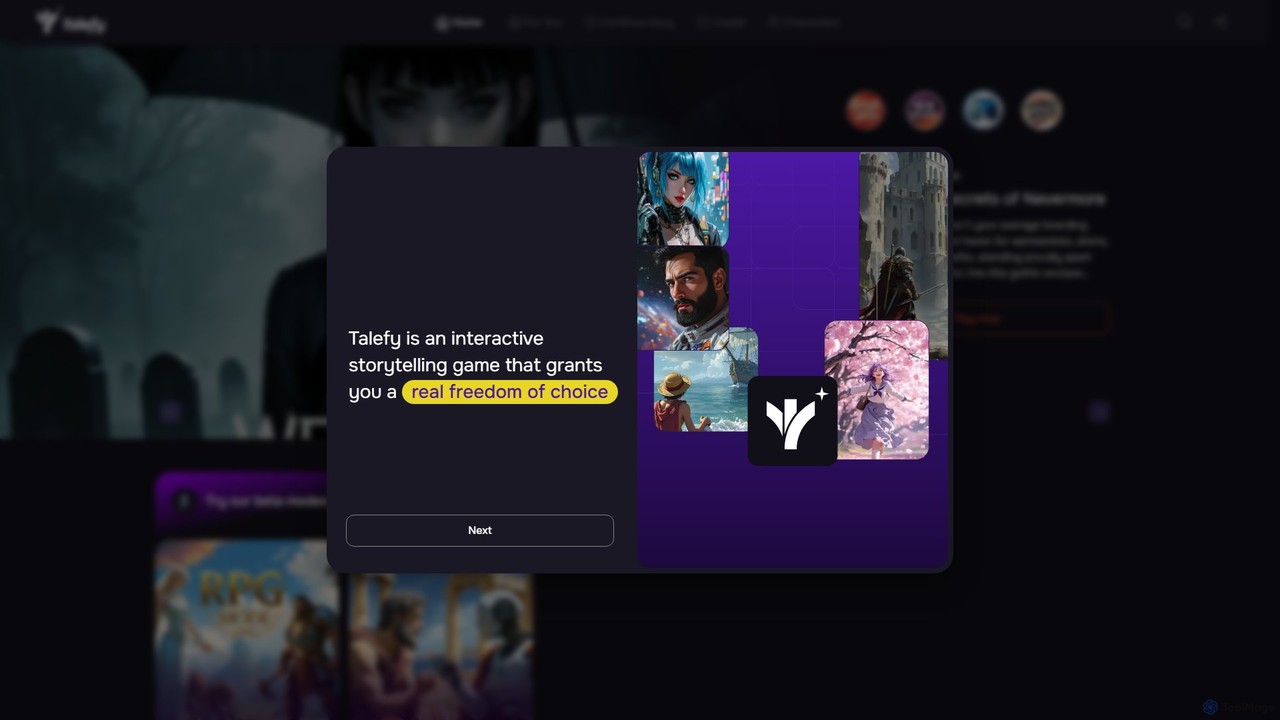
Talefy is an AI-powered platform for creating and playing interactive stories. Users can dive into a vast library of AI-generated narratives across genres like fantasy, sci-fi, and romance, making choices that shape the outcome. For creators, Talefy offers robust tools to generate unique plots, develop complex characters, and build immersive worlds from scratch. It combines the thrill of interactive gaming with the creative freedom of AI-assisted writing, making it perfect for writers, gamers, and storytellers of all levels.
About Interactive Media
Interactive Media refers to AI-powered tools that create dynamic, responsive, and engaging content or experiences where users actively participate. These tools leverage advanced AI algorithms, including natural language processing and generative models, to produce personalized narratives, adaptive environments, and real-time interactions. They transform passive consumption into immersive, user-driven journeys, enhancing engagement across entertainment, education, and marketing. This sub-category within Entertainment focuses on user participation and dynamic content.
Core Features
- Dynamic Content Generation: AI automatically creates or modifies media elements (e.g., characters, environments, narratives) in real-time based on user input or behavior.
- Personalized User Journeys: Adapts content, storylines, or challenges to individual user preferences, skill levels, or past interactions for unique experiences.
- Real-time Interaction & Feedback: Enables users to directly influence the media through voice commands, gestures, or text, with immediate AI-driven responses.
- Immersive Environment Creation: Generates or enhances virtual and augmented reality spaces, making them more responsive and believable.
- Adaptive Storytelling: AI modifies plot points, character dialogues, or outcomes based on user choices, leading to unique narrative paths.
Applicable Scenarios
Game developers use these tools to create AI-driven NPCs with dynamic dialogues and adaptive behaviors, enhancing player immersion. Content creators leverage AI to generate personalized interactive quizzes or choose-your-own-adventure stories for their audience. Marketing teams employ interactive media for engaging product showcases in AR, allowing customers to virtually try on items or explore features.
How to Choose
When selecting Interactive Media AI tools, consider the level of interactivity required (e.g., simple choices vs. complex simulations), the target platform (web, mobile, VR/AR), and the ease of integration with existing content pipelines. Evaluate the AI's ability to generate diverse and coherent content, its real-time processing capabilities, and the flexibility of its customization options. Also, assess the community support and available tutorials for ease of adoption.

Interactive MediaUse Cases
Creating Adaptive Learning Modules
Educational content developers use AI interactive media to build personalized learning paths. Students engage with AI-generated scenarios, receive real-time feedback, and progress through material adapted to their understanding and pace, making education more engaging and effective. This approach can significantly improve retention rates and cater to diverse learning styles.
Designing Dynamic Game Narratives
Game designers employ these tools to craft branching storylines and character interactions that evolve based on player choices. AI generates unique dialogues, quest lines, and world events, ensuring each player experiences a distinct and highly personalized adventure. This significantly enhances replayability and player immersion, moving beyond static, pre-scripted game experiences.
Developing Immersive AR/VR Experiences
Brands and entertainment companies utilize AI to create responsive virtual and augmented reality environments. Users can interact with AI-driven objects, characters, and dynamic scenes, leading to highly engaging product demonstrations, virtual tours, or interactive art installations. This provides a new dimension of engagement, making virtual content feel more alive and reactive to user presence.
Generating Personalized Marketing Campaigns
Marketing professionals leverage interactive AI to create dynamic ad content or landing pages that adapt to individual user behavior. AI can modify visuals, text, and calls-to-action in real-time, optimizing engagement and conversion rates based on user interaction patterns. This allows for highly targeted and effective campaigns that resonate deeply with each potential customer, improving ROI.
Building Interactive Storytelling Platforms
Content creators use AI to develop "choose-your-own-adventure" style stories or interactive fiction. The AI generates new plot twists, character responses, and environmental descriptions based on user decisions, offering a unique and collaborative storytelling experience. This allows for infinite narrative possibilities and a deeply personal connection between the reader/player and the story.
Enhancing Live Event Engagement
Event organizers deploy interactive AI solutions to create dynamic audience participation experiences. This could involve AI-driven polls with real-time visual feedback, interactive art installations responding to crowd movement, or personalized content delivery to attendees' devices during a concert or conference. Such tools transform passive audiences into active participants, making events more memorable and engaging.