ToolMage
Sign in

Best 1 Live Events AI tools for Entertainment

Popular Live Events AI tools in Entertainment include Concerty, helping you work more efficiently.

Concerty
Free

Concerty

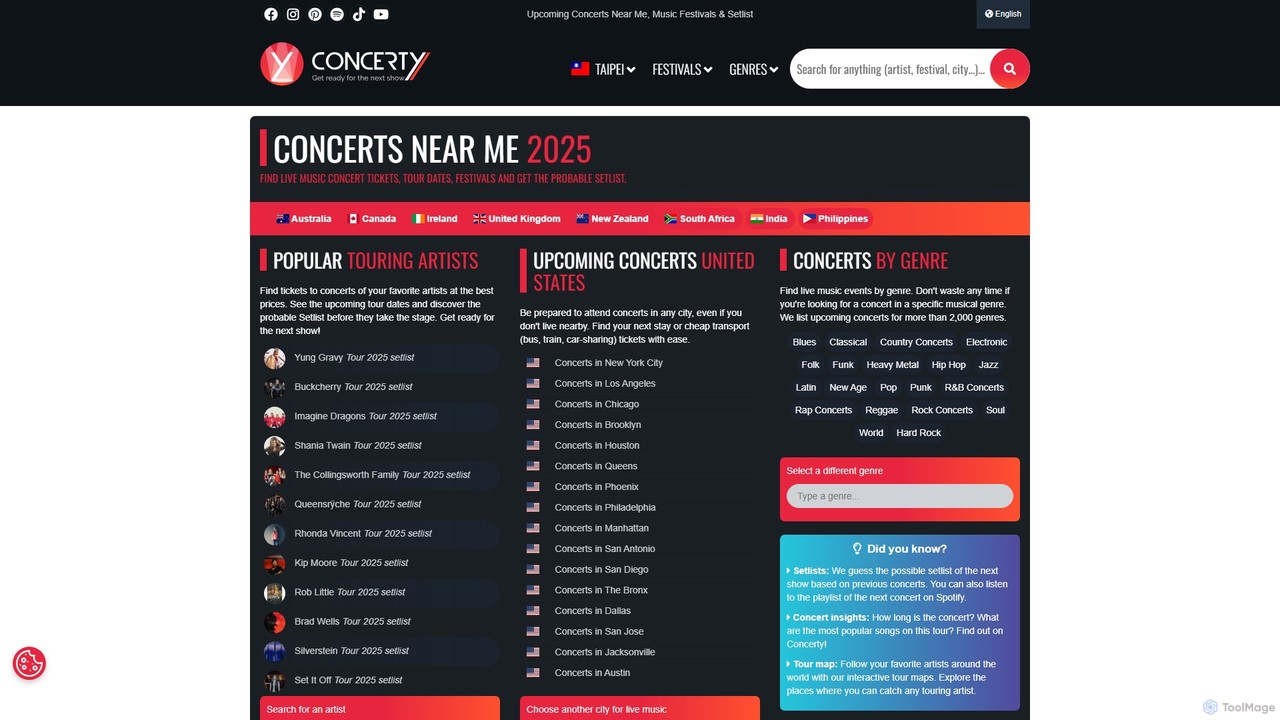
Concerty is a global platform for discovering upcoming concerts, music festivals, and tour dates. It uniquely uses AI to predict probable setlists, helping fans prepare for live shows. The tool also provides concert insights, interactive tour maps, ticket finding, and a hub for music news.

Live Events
Visits 426.8KFavorites 136Likes 135

About Live Events

AI tools for Live Events are specialized solutions that leverage artificial intelligence to enhance, automate, and personalize real-time gatherings. These tools utilize advanced algorithms for real-time data processing, natural language understanding, and predictive analytics. They are designed to improve audience engagement, streamline event management, and provide actionable insights during live broadcasts, conferences, concerts, or online streams. By integrating AI, event organizers can deliver more dynamic, interactive, and memorable experiences.

Core Features

  • Real-time Interaction Analysis: Analyze live chat, sentiment, and Q&A sessions to provide immediate insights into audience engagement and feedback.
  • AI-powered Moderation: Automatically detect and filter inappropriate content, spam, or hate speech in live chats and comment sections.
  • Personalized Content Delivery: Tailor recommendations for sessions, networking connections, or information to individual attendees based on their profiles and real-time behavior.
  • Automated Highlights & Summaries: Generate key moments, transcripts, or concise summaries from live streams and presentations post-event.
  • Virtual Assistant Integration: Provide AI chatbots for instant attendee support, answering common questions and guiding participants through event platforms.

Applicable Scenarios

These tools are invaluable for a wide range of real-time events, from large-scale virtual conferences and interactive webinars to live streaming gaming events and hybrid corporate meetings. They are used by event organizers, content creators, marketing teams, and community managers to create more engaging and efficiently managed live experiences. Whether it's enhancing Q&A, moderating chat, or personalizing attendee journeys, AI for live events offers significant advantages.

How to Choose

When selecting an AI tool for live events, prioritize its integration capabilities with your existing streaming platforms, CRM, and event management software. Evaluate its real-time processing speed and scalability to ensure it can handle your audience size and interaction volume without latency. Consider the robustness of its moderation and security features, as well as its customization options to adapt to different event types. Finally, assess the quality of its analytics and reporting to gain valuable post-event insights.

Live Events use cases

1

Enhancing Audience Engagement in Webinars

Webinar hosts and organizers can leverage AI tools to keep attendees actively involved. AI analyzes live chat for common questions, suggests answers to speakers, or highlights trending topics for discussion. It can also facilitate real-time polls and quizzes, making Q&A sessions more dynamic and responsive. This leads to higher engagement rates and improved attendee satisfaction.

2

Automated Content Moderation for Live Streams

Live streamers and community managers face the challenge of maintaining a positive and safe environment in fast-paced live chats. AI tools automatically detect and filter out spam, hate speech, profanity, or other inappropriate content in real-time. This significantly reduces the manual moderation effort, ensures a cleaner chat experience for viewers, and helps protect the streamer's brand reputation.

3

Personalized Networking at Virtual Conferences

Conference organizers can enhance attendee experience by facilitating meaningful connections. AI analyzes attendee profiles, interests, and session attendance to suggest relevant networking connections or personalized session recommendations during the event. This helps attendees discover peers with shared interests and relevant content, leading to a more valuable and engaging conference experience.

4

Generating Real-time Event Highlights

Event marketers and content creators often need to quickly produce engaging post-event content. AI tools can monitor live video and audio feeds, identifying key moments such as applause, speaker changes, or spikes in audience engagement. They can then automatically generate short highlight clips, transcripts, or summaries, significantly speeding up content creation and extending the reach of event replays.

5

AI-powered Q&A for Large-scale Live Events

Managing a large volume of audience questions during a live Q&A session can be overwhelming for event staff and speakers. AI tools process incoming questions, group similar ones, prioritize them based on popularity or relevance, and can even provide instant answers to common FAQs. This ensures efficient Q&A sessions, allows more questions to be addressed, and reduces the burden on human resources.

6

Optimizing Event Logistics with Predictive Analytics

Event planners and operations managers can use AI to anticipate attendee needs and optimize resource allocation. AI analyzes real-time attendance data, session popularity, and historical trends to predict peak times for services (e.g., virtual help desks, breakout rooms) or potential technical issues. This enables smoother event operations, better resource management, and proactive problem-solving, enhancing the overall event flow.

Live Events FAQ

What are AI tools for Live Events?

AI tools for Live Events are software solutions that use artificial intelligence to enhance various aspects of real-time gatherings, whether virtual, hybrid, or in-person. They automate tasks, personalize experiences, and provide real-time insights. Key functions include audience engagement, content moderation, data analysis, and personalized recommendations, making events more interactive and efficiently managed.

How do AI tools improve audience engagement in live events?

AI tools improve engagement by facilitating interactive Q&A sessions, moderating live chats to maintain a positive environment, and providing personalized content or networking suggestions. They can analyze sentiment, run real-time polls, and even power virtual assistants to answer attendee questions instantly, making the experience more dynamic, responsive, and tailored to individual preferences.

What are the key considerations when choosing an AI tool for live events?

When selecting an AI tool for live events, consider its integration capabilities with your existing event platforms and streaming services. Evaluate its real-time processing speed and scalability to handle your audience size and interaction volume without latency. Look for robust moderation and security features, customization options, and the quality of its analytics and reporting. Finally, assess its ease of use and the level of customer support provided.

Can AI tools help with content moderation during live streams?

Yes, AI tools are highly effective for content moderation in live streams. They can automatically detect and filter out spam, hate speech, profanity, and other inappropriate content in real-time from chat feeds. This significantly reduces the burden on human moderators, ensures a safer and more positive environment for viewers, and helps maintain brand reputation by preventing harmful content from appearing.

What's the difference between general event management software and AI tools for Live Events?

General event management software typically handles logistics like registration, scheduling, and venue booking. AI tools for Live Events, while often integrated with such platforms, specifically focus on enhancing the real-time experience during the event. They leverage AI for dynamic tasks like live chat moderation, audience sentiment analysis, personalized content delivery, and automated Q&A, which traditional event software doesn't inherently provide, thus offering a deeper layer of interaction and intelligence.