ToolMage
Sign in

Best 2 Movie & Tv AI tools for Entertainment

Popular Movie & Tv AI tools in Entertainment include GPTflix and Dejams, helping you work more efficiently.

GPTflix
Free

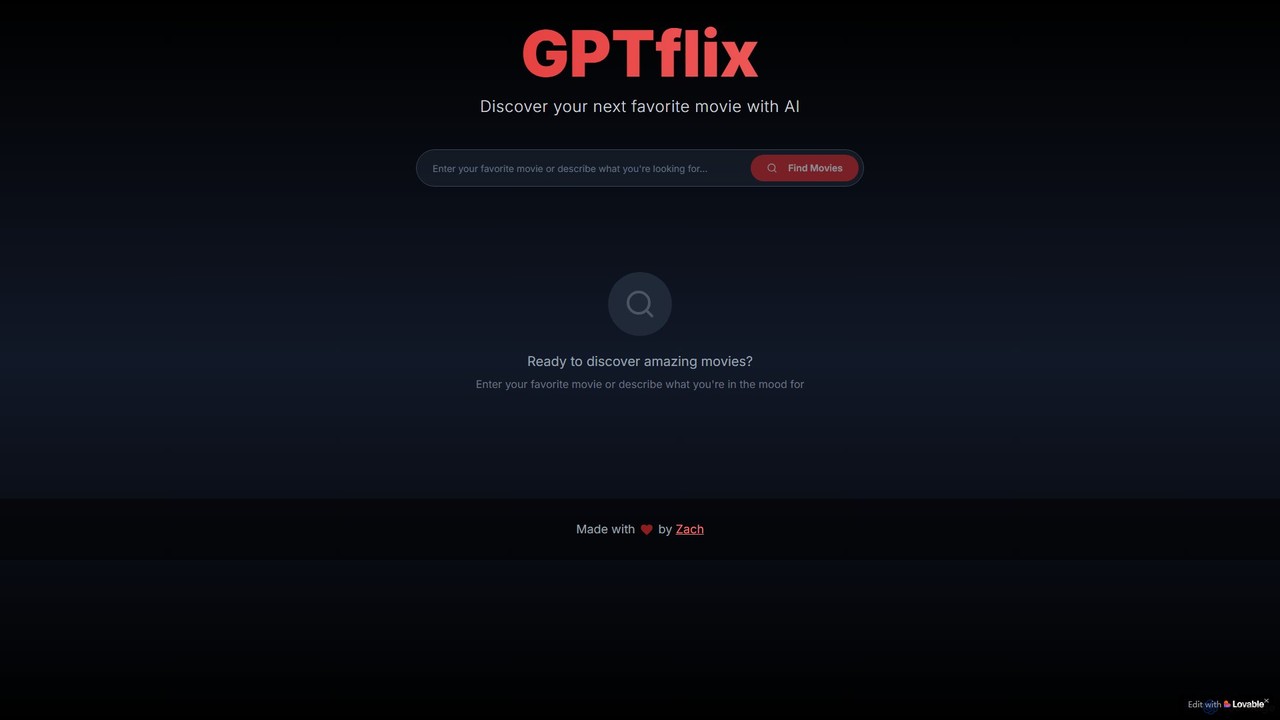
GPTflix

GPTflix is an AI-powered movie recommendation engine that helps you discover your next favorite film. Simply describe your mood, a plot you're interested in, or name a movie you love, and the AI will provide personalized suggestions, making movie night decisions easy and fun.

Movie & Tv
Visits 8.2KFavorites 154Likes 161
Dejams
Free

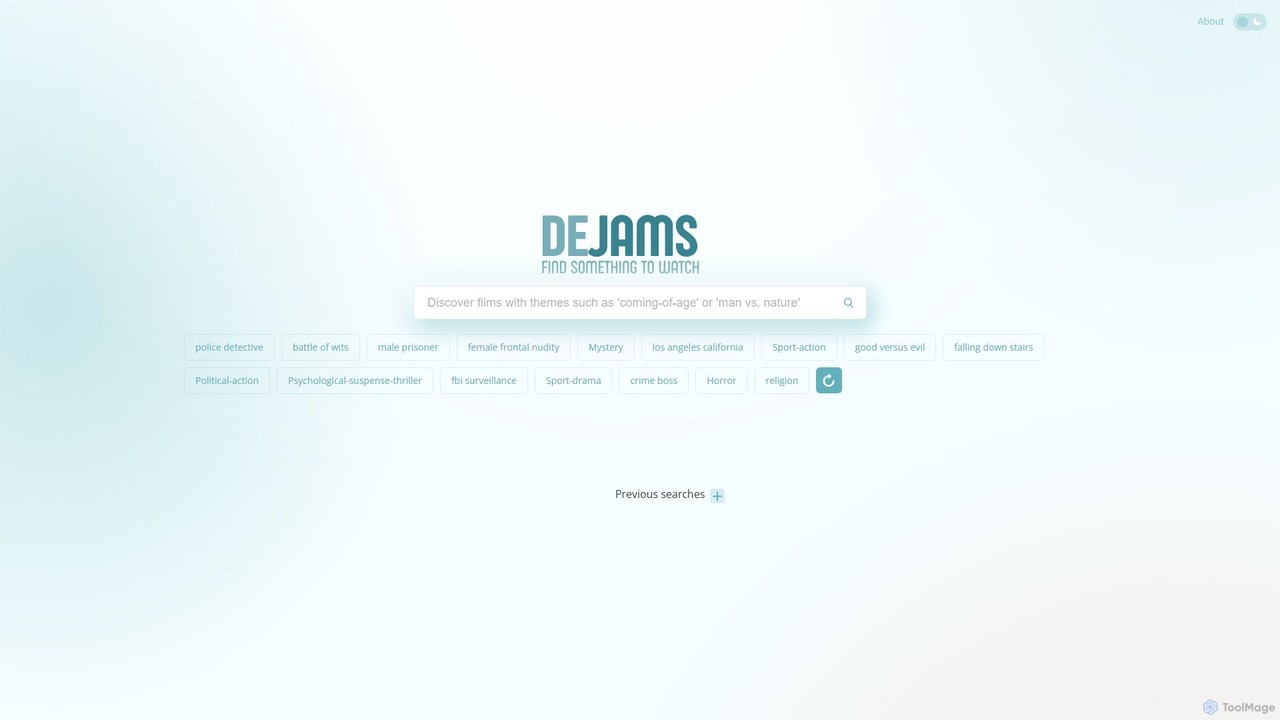
Dejams

Dejams is an AI-powered semantic search engine for movies. Instead of keywords, you can search using natural language descriptions of plots, scenes, themes, or moods to find the exact film you're thinking of or discover new ones that match your specific taste.

Movie & Tv
Visits 6.1KFavorites 150Likes 144

About Movie & Tv

Movie & Tv AI tools leverage artificial intelligence to enhance various aspects of film and television production, post-production, and content delivery. These innovative solutions utilize advanced algorithms for tasks like intelligent script generation, sophisticated visual effects, realistic voice synthesis, and automated video editing. They aim to streamline complex workflows, significantly reduce production costs, and unlock unprecedented creative possibilities for filmmakers, broadcasters, and content platforms within the broader entertainment industry. By automating repetitive tasks and assisting with complex creative challenges, these tools empower creators to focus more on storytelling and artistic vision.

Core Features

  • AI Scriptwriting & Storyboarding: Generates original scripts, detailed outlines, or visual storyboards based on user prompts, character profiles, genre specifications, and narrative structures, accelerating pre-production.
  • Automated Video Editing & Assembly: Employs AI to intelligently identify key moments, synchronize audio and video tracks, suggest optimal cuts, and even assemble rough edits, drastically speeding up post-production workflows.
  • Advanced Visual Effects (VFX) & CGI: Creates highly realistic special effects, digital characters, environmental enhancements, and complex computer-generated imagery (CGI) with AI-driven rendering, object removal, and scene generation capabilities.
  • Realistic Voice Synthesis & Multi-language Dubbing: Generates natural-sounding voiceovers in a wide array of languages and voices, and performs automated lip-sync dubbing, making content localization more efficient and accessible.
  • Content Analysis & Personalized Recommendation: Analyzes video content for themes, sentiment, metadata, and audience engagement patterns, powering highly personalized viewer recommendations and optimizing content strategy for streaming services.

Applicable Scenarios

Film studios, independent filmmakers, TV broadcasters, and streaming platforms extensively utilize these AI tools. They are crucial for accelerating content creation cycles, enhancing the visual and auditory quality of productions, and personalizing viewer experiences. From developing initial concepts and generating first drafts of scripts in pre-production to efficient post-production tasks like editing and VFX, and finally to targeted content distribution and audience engagement, these tools cover the entire media lifecycle.

How to Choose

When selecting Movie & Tv AI tools, it's essential to consider the specific production stage you aim to enhance, whether it's pre-production (scripting, concept art), production (virtual sets, real-time VFX), or post-production (editing, dubbing, final effects). Evaluate the tool's integration capabilities with your existing software ecosystem, the required level of creative control it offers, and the accuracy and quality of its AI-generated outputs. Additionally, assess the pricing model, scalability for large-scale projects, and the learning curve for your team to ensure a smooth adoption.

Movie & Tv use cases

1

Generating Script Drafts for Feature Films

Screenwriters and production houses use AI tools to generate initial script drafts, character dialogues, or plot outlines. By inputting genre, character traits, and key plot points, the AI can quickly produce multiple creative variations, significantly reducing the time spent on brainstorming and first-pass writing, allowing human writers to refine and add artistic depth.

2

Automating Rough Cuts for Documentaries

Documentary editors leverage AI-powered video editing tools to automatically analyze raw footage, identify compelling moments, and synchronize audio with video. The AI can then assemble a preliminary rough cut based on specified themes or keywords, drastically cutting down the manual labor involved in sifting through hours of footage and providing a strong starting point for human editors.

3

Creating Realistic Digital Doubles for VFX

Visual effects artists in film studios utilize AI to generate highly realistic digital doubles or background characters. By scanning an actor or providing reference images, AI can create detailed 3D models, animate facial expressions, and simulate complex movements, saving immense time and resources compared to traditional CGI methods for crowd scenes or stunt doubles.

4

Localizing Content with AI Dubbing & Subtitles

Streaming platforms and content distributors employ AI tools for multi-language dubbing and subtitle generation. These tools can automatically translate dialogue, synthesize natural-sounding voices that match the original tone, and even adjust lip-sync, enabling rapid and cost-effective localization of movies and TV shows for global audiences without extensive manual studio work.

5

Personalizing Viewer Recommendations on Streaming Services

Streaming service providers use AI to analyze viewer behavior, content preferences, and historical watch data. The AI then generates highly personalized movie and TV show recommendations, improving user engagement and retention by suggesting content that aligns with individual tastes, leading to a more tailored and satisfying viewing experience.

6

Enhancing Archival Footage Quality

Archivists and restoration specialists use AI to upscale, denoise, and colorize old or damaged film and television footage. AI algorithms can intelligently reconstruct missing details, remove artifacts, and apply natural color grading, breathing new life into historical content and making it suitable for modern high-definition displays without extensive manual frame-by-frame restoration.

Movie & Tv FAQ

What are Movie & Tv AI tools?

Movie & Tv AI tools are specialized software applications that use artificial intelligence to assist and automate various tasks across the film and television industry lifecycle. They leverage machine learning, natural language processing, and computer vision to enhance processes from scriptwriting and visual effects to editing, dubbing, and content distribution, aiming to boost efficiency and creativity.

How do AI tools enhance film and TV production?

AI tools enhance production by automating repetitive tasks like initial script generation, rough video editing, and object removal in VFX. They also enable new creative possibilities, such as generating complex CGI, synthesizing realistic voices for dubbing, and providing data-driven insights for content optimization and personalized viewer recommendations, ultimately accelerating workflows and reducing costs.

What's the difference between AI tools for Movie & Tv and general AI content creation?

While general AI content creation tools might generate images, text, or basic videos, Movie & Tv AI tools are specifically tailored for the complex, high-fidelity demands of film and television. They offer specialized features like advanced script analysis, cinematic VFX rendering, precise lip-sync dubbing, and industry-specific content metadata analysis, which go beyond generic content generation capabilities.

Can AI tools replace human creativity in film and TV?

No, AI tools are designed to augment, not replace, human creativity in film and TV. They serve as powerful assistants, handling laborious or data-intensive tasks, generating ideas, and providing technical solutions. Human directors, writers, editors, and artists remain essential for vision, storytelling, emotional depth, and making critical creative decisions that AI cannot replicate.

What should I consider when integrating AI into my film or TV workflow?

When integrating AI, consider the specific pain points you want to address (e.g., slow editing, high VFX costs). Evaluate the tool's compatibility with your existing software, its learning curve for your team, and the quality and consistency of its outputs. Also, assess data privacy implications, scalability for your project size, and the vendor's support and update policies to ensure a smooth transition.