ToolMage
Sign in

Best 1 Podcasting AI tools for Entertainment

Popular Podcasting AI tools in Entertainment include daily-horoscope, helping you work more efficiently.

daily-horoscope
Freemium

daily-horoscope

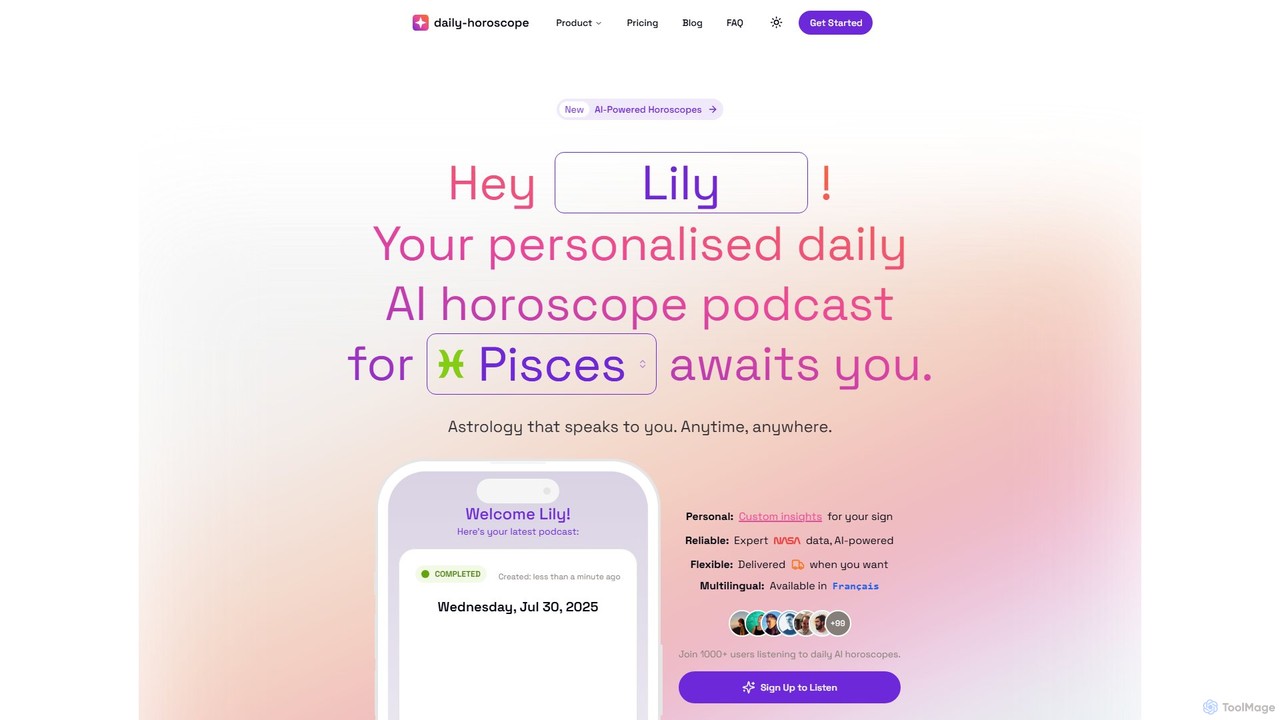
An AI-powered platform that generates hyper-personalized daily horoscope podcasts. By analyzing your unique birth chart, it delivers tailored astrological insights and guidance on love, career, and health directly to you in an audio format.

Podcasting
Visits 5.5KFavorites 120Likes 116

About Podcasting

Podcasting AI tools are specialized software leveraging artificial intelligence to streamline and enhance every stage of podcast creation, from ideation to distribution. These tools utilize advanced algorithms for audio processing, natural language generation, and content optimization, enabling creators to produce high-quality audio content more efficiently. They empower podcasters to overcome technical hurdles, improve audio fidelity, and reach wider audiences with less effort, making professional-grade podcasting accessible to more individuals and teams.

Core Features

  • AI Audio Enhancement: Automatic noise reduction, equalization, and voice mastering for professional sound quality.
  • Automated Transcription & Translation: Convert spoken audio into text, and translate content into multiple languages for global reach.
  • Script & Content Generation: Assist with episode outlines, show notes, social media posts, and even full script drafts.
  • Smart Editing & Chaptering: Identify filler words, silences, and automatically suggest chapter markers for easier navigation.
  • AI Voice Synthesis: Generate realistic voiceovers for intros, outros, or entire episodes using synthetic voices.

Use Cases

Podcasting AI tools are invaluable for independent creators, media companies, and businesses producing audio content. They help solo podcasters manage production without a large team, enable media outlets to scale content creation, and allow businesses to quickly repurpose written content into audio formats for marketing.

How to Choose

When selecting a Podcasting AI tool, consider its core functionalities (e.g., audio editing, transcription, content generation), integration capabilities with existing workflows, the quality and naturalness of AI-generated voices, pricing models, and the level of technical expertise required. Prioritize tools that address your most pressing production challenges.

Podcasting use cases

1

Automate Podcast Audio Post-Production

Independent podcasters or small studios can use AI tools to automatically clean up audio, remove background noise, balance sound levels, and master episodes. This saves hours of manual editing, ensuring a consistent, professional sound quality across all episodes without needing a dedicated audio engineer.

2

Generate Multilingual Transcripts and Translations

Content creators aiming for a global audience can leverage AI to instantly transcribe podcast episodes into text. These transcripts can then be automatically translated into various languages, making content accessible to non-native speakers and improving SEO for search engines, expanding the podcast's reach significantly.

3

Streamline Show Notes and Social Media Content Creation

Marketing teams or busy podcasters can utilize AI to automatically summarize episode content and generate engaging show notes, episode titles, and social media captions. This accelerates the promotional process, ensuring consistent and compelling messaging across platforms without extensive manual writing.

4

Create AI-Generated Voiceovers for Intros/Outros

Brands or individual podcasters can use AI voice synthesis to create professional-sounding intros, outros, or ad reads without hiring voice actors. This ensures brand consistency, allows for quick updates, and provides a cost-effective solution for high-quality audio branding elements.

5

Assist with Episode Scripting and Topic Ideation

New podcasters or those experiencing creative blocks can use AI tools to brainstorm episode topics, generate outlines, or even draft full scripts based on keywords or themes. This helps overcome writer's block, ensures structured content, and speeds up the pre-production phase.

6

Repurpose Long-Form Content into Audio Snippets

Businesses or educators with extensive written content (blogs, articles, reports) can use Podcasting AI tools to convert these into short audio snippets or full podcast episodes. This allows for easy content repurposing, reaching audiences who prefer audio consumption, and expanding content distribution channels.

Podcasting FAQ

What are Podcasting AI tools?

Podcasting AI tools are software applications that use artificial intelligence to automate and enhance various aspects of podcast production. They leverage technologies like natural language processing, speech-to-text, and audio processing to assist with tasks such as audio editing, transcription, content generation, and voice synthesis, making podcast creation more efficient and accessible.

How do Podcasting AI tools improve audio quality?

Podcasting AI tools improve audio quality by automatically performing tasks like noise reduction, echo cancellation, equalization, and compression. They analyze audio waveforms to identify and correct imperfections, ensuring clear vocals, balanced sound levels, and an overall polished, professional sound that would typically require a skilled audio engineer.

Can AI write entire podcast scripts?

While AI can generate comprehensive outlines, draft sections of scripts, and assist with topic ideation, it typically serves as a co-pilot rather than a full replacement for human creativity. AI-generated scripts often require human review and refinement to ensure they align with the podcaster's unique voice, style, and specific narrative goals, adding the necessary human touch and nuance.

What's the difference between Podcasting AI tools and traditional audio editing software?

Traditional audio editing software (like Audacity or Adobe Audition) provides manual control over every aspect of audio manipulation, requiring significant user skill and time. Podcasting AI tools, on the other hand, automate many complex tasks, such as noise reduction, transcription, and even content generation, using algorithms. They focus on efficiency and accessibility, often requiring less technical expertise, though they may offer less granular control than manual editors.

Who benefits most from using Podcasting AI tools?

Podcasting AI tools benefit a wide range of users, especially independent creators, small teams, and businesses looking to scale their audio content production. Solo podcasters gain access to professional-grade production capabilities without a large budget. Content marketers can efficiently repurpose existing content into audio. Businesses can create branded podcasts with less overhead, and educators can make learning materials more accessible.