ToolMage
Sign in

Best 2 Prediction AI tools for Entertainment

Popular Prediction AI tools in Entertainment include OurBabyAI and BabyVisageAI, helping you work more efficiently.

OurBabyAI
Paid

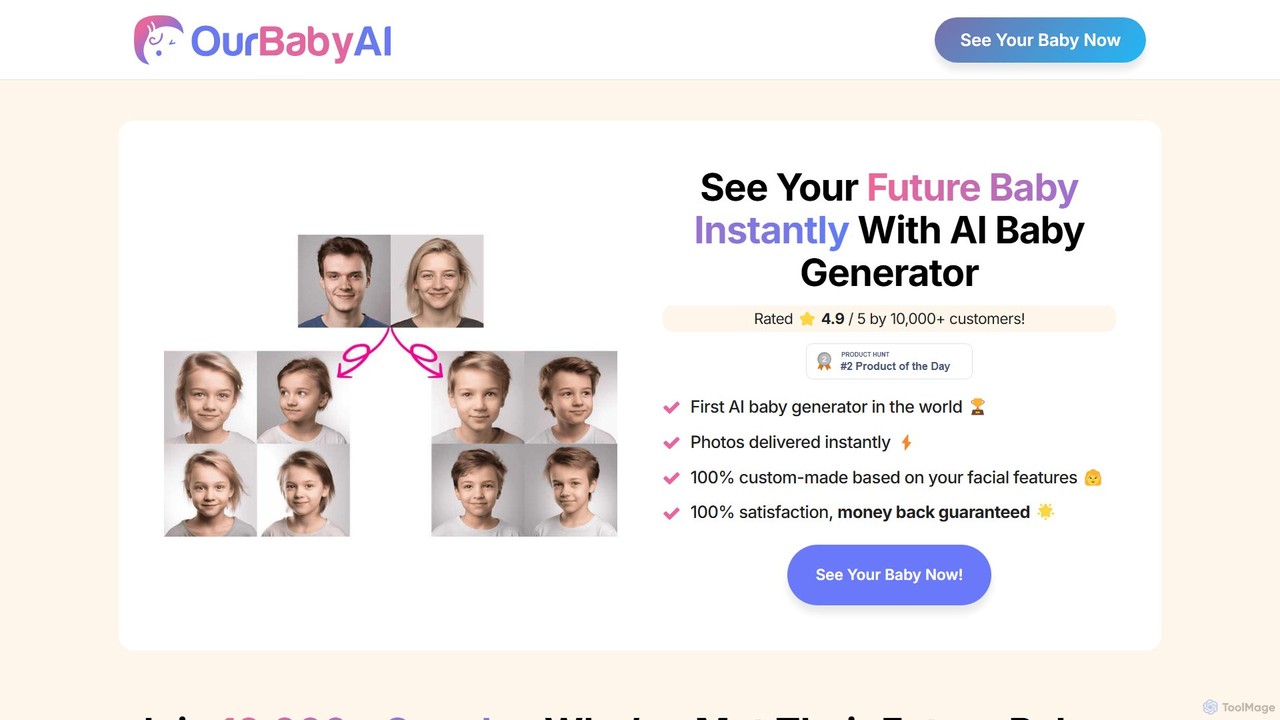
OurBabyAI

OurBabyAI is the #1 AI-powered baby generator that creates hyper-realistic photos of your future child. By analyzing photos of two parents, the tool instantly generates high-resolution images, offering a fun and heartwarming glimpse into your family's future. It's fast, secure, and requires no account creation.

Prediction
Visits 5.6KFavorites 148Likes 141
BabyVisageAI
Freemium

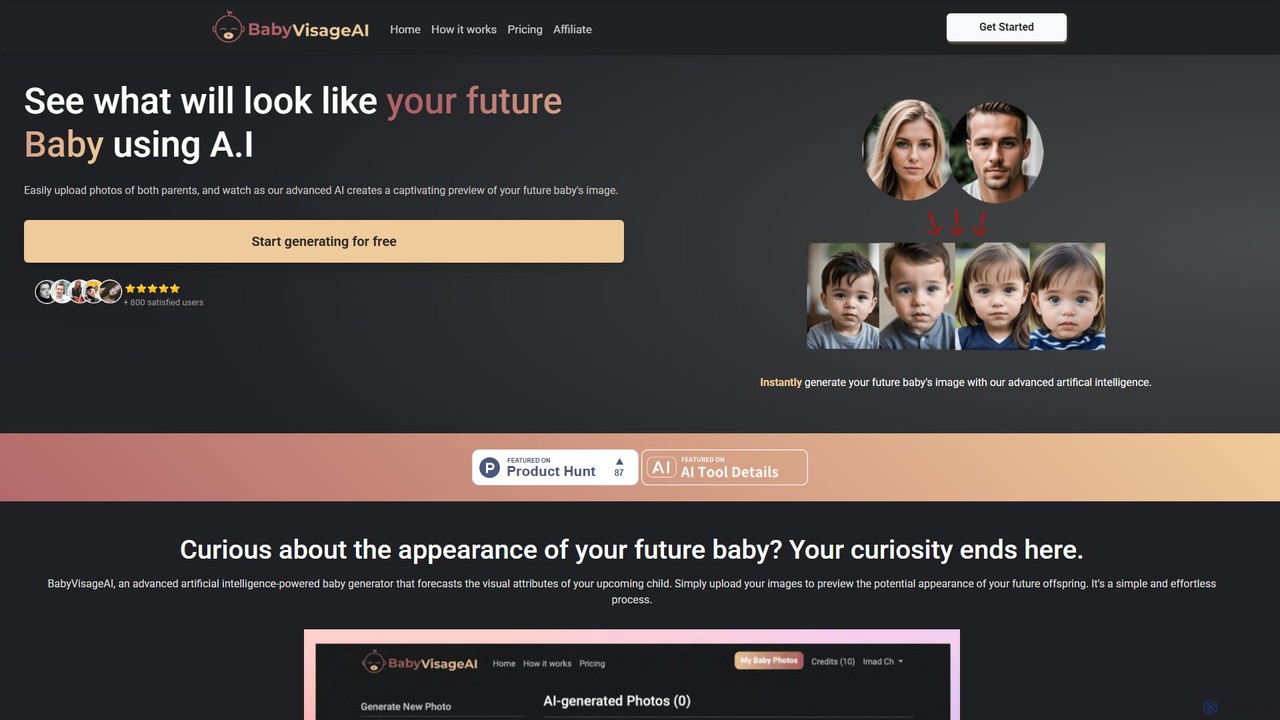
BabyVisageAI

BabyVisageAI is an AI-powered baby generator that predicts your future baby's face. Simply upload photos of both parents, and our advanced AI will instantly create a realistic, high-resolution image of what your child might look like. It's a fun, easy, and exciting way for expecting couples and curious individuals to glimpse into the future.

Prediction
Visits 4.9KFavorites 126Likes 110

About Prediction

Prediction AI tools are specialized platforms that leverage machine learning and data analysis to forecast future outcomes, trends, or behaviors within the entertainment sector. These tools analyze vast datasets, from historical performance to real-time user interactions, to generate probabilistic insights. Their primary value lies in enabling more informed decision-making, enhancing user engagement, and personalizing experiences across various entertainment domains, from media consumption to interactive gaming.

Core Features

  • Event Outcome Forecasting: Predicting results for sports matches, competitive games, or reality show eliminations.
  • Content Trend Analysis: Identifying emerging popular genres, themes, or creator styles in movies, music, or social media.
  • User Behavior Prediction: Forecasting audience preferences, subscription churn, or in-game purchasing patterns.
  • Personalized Recommendation Engines: Suggesting tailored content like films, music, or games based on individual user profiles.
  • Audience Sentiment Analysis: Gauging public reaction and emotional responses to entertainment content or events.

Applicable Scenarios

These tools are crucial for media companies optimizing content strategies, sports analysts seeking an edge in forecasting, and game developers aiming to maximize player retention. They also empower streaming services to personalize user experiences and event organizers to anticipate audience demand.

How to Choose

When selecting a Prediction AI tool, consider the accuracy and transparency of its predictive models, its ability to integrate with existing data sources, and the real-time processing capabilities. Evaluate the ethical implications of its data usage and ensure it offers customization options to fit specific entertainment niches.

Prediction use cases

1

Predicting Sports Match Outcomes

Sports analysts and fantasy league participants utilize AI prediction tools to forecast the results of upcoming sports matches. By analyzing historical team performance, player statistics, injury reports, and even weather conditions, these tools provide probabilistic outcomes, helping users make more informed betting decisions or optimize their fantasy team lineups, potentially increasing their success rate by leveraging data-driven insights.

2

Forecasting Entertainment Content Trends

Content creators, streaming platforms, and media studios employ AI prediction to identify emerging trends in movies, music, and digital content. These tools analyze social media buzz, search queries, and consumption patterns to forecast what genres, themes, or artists will gain popularity. This enables studios to greenlight projects with higher potential, creators to tailor content to future audience demand, and platforms to acquire relevant licenses proactively.

3

Personalized Movie and Music Recommendations

Streaming services like Netflix or Spotify leverage AI prediction to offer highly personalized movie, TV show, or music recommendations to their subscribers. By analyzing individual viewing/listening history, ratings, and similar user behaviors, the AI predicts content a user is most likely to enjoy. This significantly enhances user experience, increases engagement, and reduces churn by ensuring users always find something appealing to consume.

4

Predicting Player Churn in Video Games

Game developers and publishers use AI prediction to identify players at risk of disengaging or leaving a game. The AI analyzes in-game behavior, spending patterns, and interaction frequency to flag potential churners. This allows developers to implement targeted retention strategies, such as offering personalized incentives, sending timely notifications, or adjusting game difficulty, thereby extending player lifecycle and maximizing revenue.

5

Analyzing Audience Sentiment for Live Events

Event organizers, broadcasters, and marketing teams deploy AI prediction tools to gauge real-time audience sentiment during live entertainment events, such as concerts, award shows, or sports broadcasts. By analyzing social media comments, mentions, and engagement rates, the AI predicts public reaction and emotional responses. This helps organizers make on-the-fly adjustments, refine marketing messages, and understand the overall impact of the event.

6

Optimizing Ad Placement in Entertainment

Advertising agencies and entertainment platforms use AI prediction to optimize the placement and targeting of advertisements. By predicting which audience segments are most likely to respond positively to specific ad content based on their viewing habits, demographics, and past interactions, these tools ensure ads are shown to the most receptive viewers. This maximizes ad revenue for platforms and improves campaign effectiveness for advertisers.

Prediction FAQ

What are AI Prediction tools in Entertainment?

AI Prediction tools in entertainment are advanced software solutions that use artificial intelligence, primarily machine learning algorithms, to analyze vast amounts of data and forecast future events, trends, or user behaviors within the entertainment industry. They help stakeholders make data-driven decisions, from predicting box office success and popular music trends to personalizing content recommendations and anticipating audience reactions.

How do AI Prediction tools work in the entertainment sector?

These tools typically work by ingesting and processing diverse datasets, including historical performance data (e.g., past movie revenues, song streams), user demographics, social media activity, and real-time engagement metrics. Machine learning models, such as regression, classification, or time-series analysis, are then trained on this data to identify patterns and correlations, enabling them to generate probabilistic predictions about future outcomes or trends.

What are the key benefits of using AI Prediction in entertainment?

The primary benefits include enhanced decision-making for content creation and acquisition, improved personalization of user experiences on streaming platforms, optimized marketing and advertising strategies, and better risk management in areas like sports betting or game development. These tools can lead to increased audience engagement, higher revenue, and more efficient resource allocation by providing foresight into market dynamics and consumer preferences.

How to choose an effective AI Prediction tool for entertainment applications?

When selecting an AI Prediction tool, prioritize solutions with high predictive accuracy and transparent model explanations. Consider its ability to integrate seamlessly with your existing data infrastructure and its capacity for real-time data processing. Evaluate the tool's customization options for specific entertainment niches, its scalability, and the vendor's commitment to ethical AI practices, especially regarding data privacy and bias mitigation.

What's the difference between AI Prediction and traditional analytics in entertainment?

Traditional analytics primarily focuses on describing past events and understanding "what happened" through historical data reporting and dashboards. In contrast, AI Prediction goes a step further by using advanced algorithms to forecast "what will happen" or "what might happen." While traditional analytics provides insights into past performance, AI Prediction offers forward-looking intelligence, enabling proactive strategies and decision-making based on anticipated future scenarios.