ToolMage
Sign in

Best 2 Quizzes AI tools for Entertainment

Popular Quizzes AI tools in Entertainment include spiritualseek and harrypotterhousequiz.pro, helping you work more efficiently.

spiritualseek
Freemium

spiritualseek

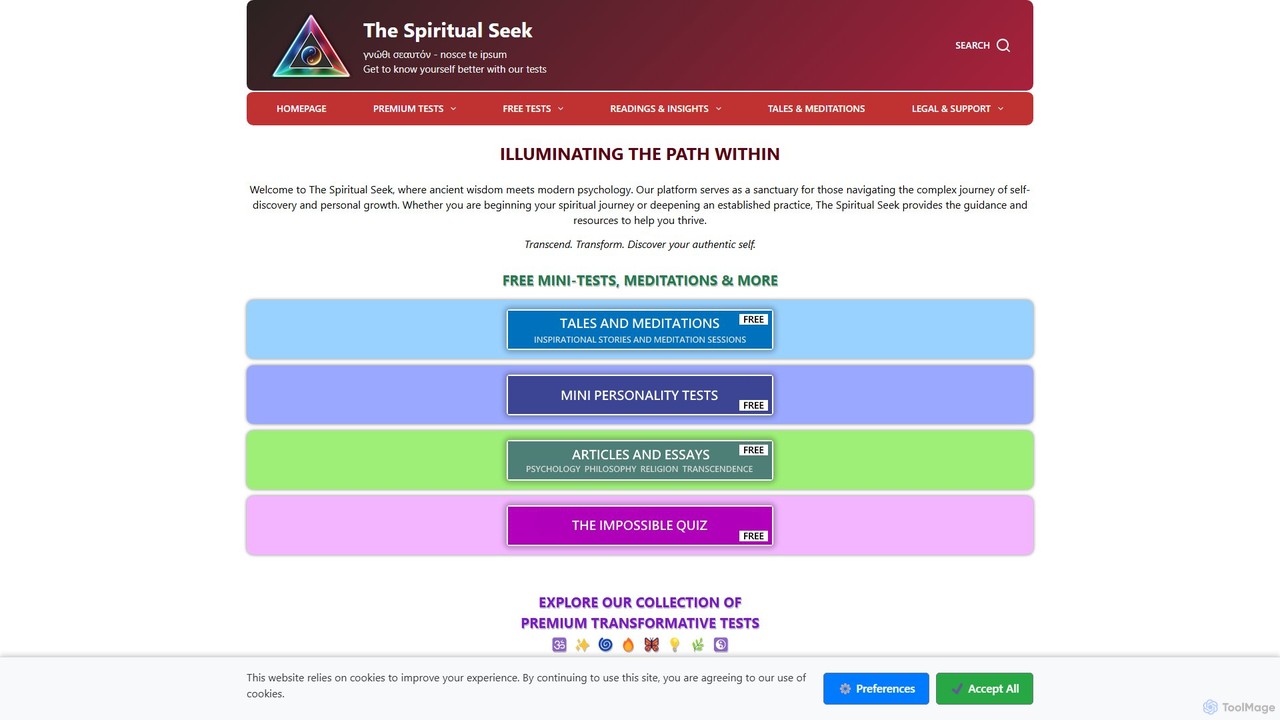
Spiritualseek is a unique platform where ancient wisdom meets modern psychology. It offers a vast collection of AI-powered spiritual and personality tests designed for self-discovery and personal growth. Backed by a team of experts, the tool provides in-depth, personalized reports to help users understand their authentic selves, explore their spiritual path, and unlock their potential.

Psychology
Visits 10.5KFavorites 140Likes 123
harrypotterhousequiz.pro
Free

harrypotterhousequiz.pro

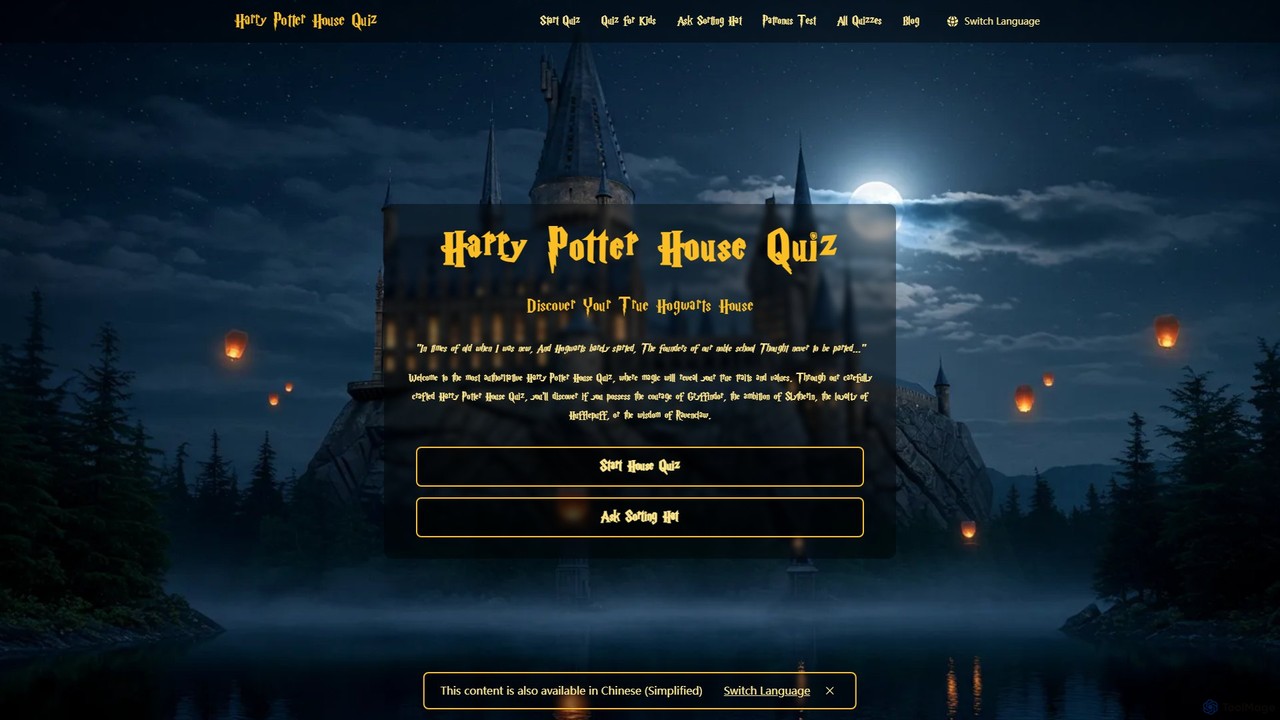
Discover your true Hogwarts House with the Harry Potter House Quiz. This platform offers an accurate sorting experience, combining deep psychological principles with authentic lore. Engage with a comprehensive quiz or have a real conversation with the revolutionary AI Sorting Hat. The tool also features a Patronus quiz and a kid-friendly version, all completely free and accessible on any device. It's the ultimate magical journey for any fan.

Themed Chatbots
Visits 7.9KFavorites 134Likes 147

About Quizzes

AI Quizzes are tools that leverage artificial intelligence to automatically generate, personalize, and analyze interactive tests from existing content or simple prompts. These tools utilize Natural Language Processing (NLP) to understand source materials like documents, articles, or videos, creating relevant questions and answers. Their primary value lies in saving significant time on content creation while offering dynamic, engaging experiences for education, marketing, and training. This technology enables the creation of adaptive tests that adjust in difficulty based on user performance.

Core Features

  • Automated Question Generation: Creates a variety of question types (multiple choice, true/false, fill-in-the-blank) directly from text, URLs, or documents.
  • Adaptive Learning Paths: Adjusts the difficulty and topic of subsequent questions based on the user's previous answers.
  • Personalized Feedback: Provides instant, detailed explanations for both correct and incorrect answers to enhance learning.
  • Performance Analytics: Offers in-depth reports on user or group performance, highlighting knowledge gaps and areas of strength.
  • Content Summarization: Can distill key information from a large body of text to form the basis of the quiz questions.

Use Cases

AI Quiz tools are widely used by educators to quickly create assessments from lesson plans or textbook chapters. Marketers utilize them to build engaging lead-generation quizzes that segment audiences. Corporate trainers also employ these tools to develop compliance and skills-based tests from training materials, ensuring effective knowledge retention.

How to Choose

When selecting an AI Quiz tool, consider the supported input formats (e.g., PDF, DOCX, URL, plain text). Evaluate the variety of question types it can generate and the level of customization available for quiz design. Also, assess the quality of its analytics and reporting features. For professional use, check for integration capabilities with Learning Management Systems (LMS) or Customer Relationship Management (CRM) platforms.

Quizzes use cases

1

Generate Educational Assessments from Textbooks

An educator needs to create a comprehension quiz for a 30-page history chapter. Instead of spending hours manually writing questions, they upload the PDF chapter into an AI Quiz tool. The AI analyzes the text, identifies key concepts, dates, and figures, and generates a 25-question quiz with multiple-choice and true/false options in under five minutes. The teacher can then review, edit, and deploy the quiz to their Learning Management System (LMS), saving over 90% of the preparation time and ensuring comprehensive coverage of the material.

2

Create Engaging Lead Generation Quizzes for Marketing

A digital marketing agency wants to capture qualified leads for a client in the finance industry. They use an AI Quiz tool to create a 'What's Your Financial Personality?' quiz. The tool helps generate engaging, non-technical questions based on provided articles about investment styles. As users complete the quiz, their contact information is collected, and they are segmented into different lead categories (e.g., 'Conservative Investor', 'Aggressive Growth Seeker') based on their answers. This approach increases lead conversion rates by 40% compared to a standard contact form.

3

Automate Corporate Compliance Training Quizzes

An HR department needs to ensure all 500 employees have read and understood the new data privacy policy. They upload the 15-page policy document to an AI Quiz generator. The tool automatically creates a 20-question quiz that covers the most critical points of the policy. The quiz is then distributed via email. The AI tool tracks completion rates and scores, automatically sending reminders to those who haven't completed it and providing a report to HR, simplifying the entire compliance verification process.

4

Convert Blog Posts into Interactive Quizzes

A content creator wants to increase engagement on their popular blog post, '10 Tips for Sustainable Living'. They paste the URL of the blog post into an AI Quiz tool. The AI reads the article and generates an interactive quiz titled 'How Sustainable Are You?'. This quiz is embedded at the end of the article. This not only increases the average time users spend on the page but also provides a fun, shareable piece of content, driving more traffic to the blog through social media shares.

5

Generate Personalized Study Guides for Students

A university student is preparing for a final exam covering multiple subjects. They compile their digital notes and relevant articles into a single document and upload it to an AI Quiz tool. The tool generates a comprehensive practice exam. More importantly, it uses an adaptive questioning feature: when the student answers a question incorrectly, the tool presents more questions on that specific topic. This creates a personalized study session that dynamically focuses on the student's weakest areas, making their study time more efficient and effective.

6

Create Trivia Content for Events and Social Media

An event organizer is planning a weekly trivia night at a local pub. To keep the content fresh and varied, they use an AI Quiz tool. Each week, they simply input topics like '80s Pop Culture', 'World Capitals', or 'Science Discoveries'. The AI generates hundreds of trivia questions with verified answers, saving hours of research. They can also use the tool to create quick, daily trivia questions for the pub's social media channels, boosting online engagement and promoting the event.

Quizzes FAQ

What are AI Quiz tools?

AI Quiz tools are applications that use artificial intelligence, particularly Natural Language Processing (NLP), to automatically generate questions and answers from a given piece of content. Unlike traditional quiz makers where you must write every question manually, AI tools can analyze text from documents, websites, or videos and create a relevant quiz in seconds. Key features often include generating various question formats (multiple-choice, true/false, open-ended), providing personalized feedback, and offering adaptive learning paths that adjust question difficulty based on user performance.

How to choose the right AI Quiz generator?

Choosing the right AI Quiz generator depends on your specific needs. Consider the following factors:

  • Input Sources: Check if the tool supports your content format, such as PDF, DOCX, URL links, YouTube videos, or plain text.
  • Question Quality & Variety: Evaluate the relevance and accuracy of the generated questions. A good tool should offer multiple question types (e.g., multiple-choice, fill-in-the-blank, true/false).
  • Customization and Editing: Ensure you can easily edit the generated questions, add your own, and customize the look and feel of the quiz to match your brand or style.
  • Analytics and Reporting: If you're using it for assessment or marketing, look for tools with robust analytics that track user performance, completion rates, and provide detailed insights.
  • Integrations: For professional use, check if it integrates with other platforms you use, like Learning Management Systems (LMS) or email marketing services.
What's the difference between an AI Quiz generator and a traditional quiz maker?

The primary difference lies in content creation. A traditional quiz maker is a blank canvas; you must manually write every question, answer, and piece of feedback. It provides the structure, but you provide all the content. An AI Quiz generator automates the content creation process. You provide a source material (like a document or URL), and the AI analyzes it to generate the questions and answers for you. This saves a significant amount of time. Additionally, advanced AI tools can offer features like adaptive questioning and deeper performance analytics, which are typically not available in standard quiz makers.

What kind of content can I use to create an AI quiz?

AI Quiz generators are versatile and can typically process a wide range of content sources. The most common formats include:

  • Text Content: You can copy and paste plain text directly into the tool.
  • Documents: Many tools support uploading files like PDFs, Word documents (DOCX), and PowerPoint presentations (PPTX).
  • Website URLs: Simply provide a link to a blog post, news article, or any webpage, and the AI will scan its content.
  • Video/Audio: Some advanced tools can analyze the transcript of a YouTube video or an audio file to generate questions.
  • Topics/Keywords: You can also just provide a topic (e.g., 'The Roman Empire'), and the AI will use its existing knowledge to generate a quiz.

The specific capabilities vary by tool, so it's important to check which input formats are supported by the service you choose.

Who can benefit from using AI Quiz tools?

A wide range of professionals and individuals can benefit from AI Quiz tools. Key user groups include:

  • Educators and Teachers: To quickly create formative assessments, practice tests, and homework assignments from educational materials, saving valuable preparation time.
  • Corporate Trainers and HR: For developing employee training modules, onboarding quizzes, and compliance tests from policy documents and training guides.
  • Marketers and Businesses: To create engaging personality or knowledge quizzes for lead generation, audience segmentation, and brand engagement.
  • Content Creators and Bloggers: To repurpose existing content like articles and videos into interactive quizzes, increasing user engagement and time on site.
  • Students: For creating personalized practice tests from their own notes and study materials to identify and focus on weak areas.