ToolMage
Sign in

Best 2 Virtual Companionship AI tools for Entertainment

Popular Virtual Companionship AI tools in Entertainment include Xeve and Blushly, helping you work more efficiently.

Blushly

Blushly

Blushly is an innovative AI platform where users can engage in voice-powered conversations and interactive text chats with a diverse array of AI characters. It offers extensive customization options for character traits, genres, and scenarios, bringing virtual companions to life for immersive storytelling and entertainment.

Chatbot
Visits 32.9KFavorites 51Likes 56
Xeve
Freemium

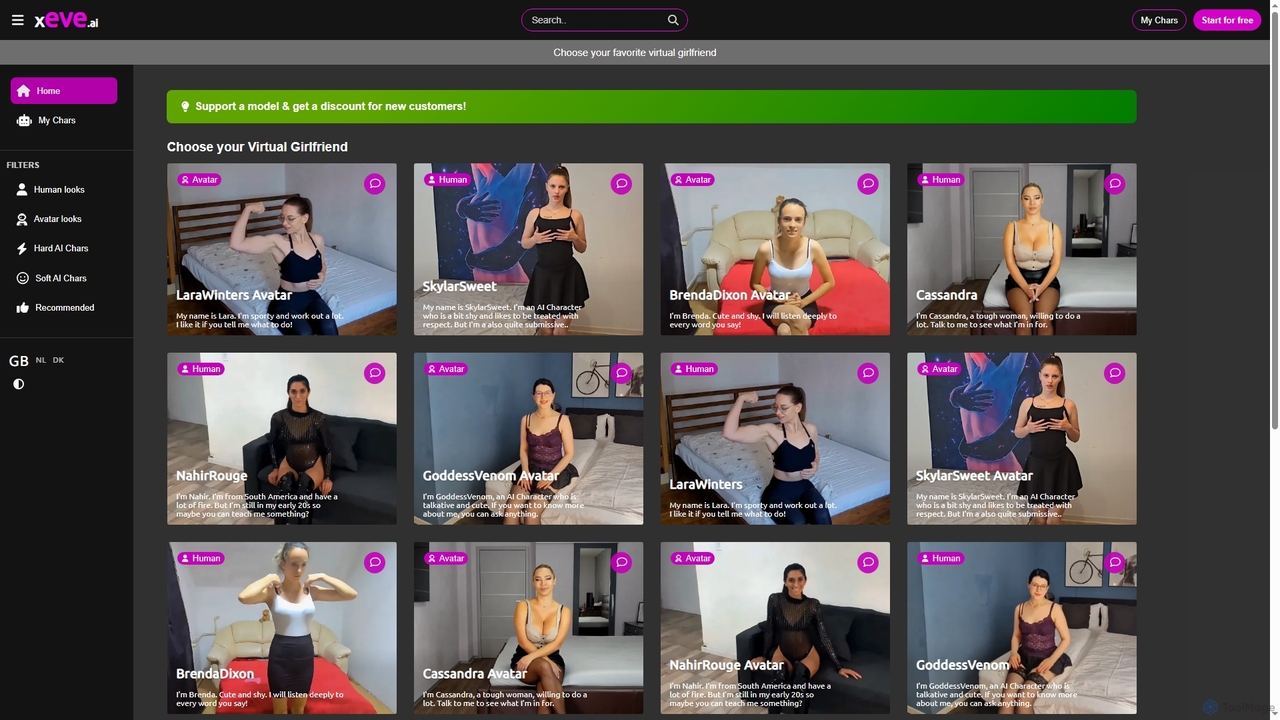
Xeve

Xeve offers an innovative AI-powered platform for virtual companionship, providing users with interactive AI girlfriends. It specializes in real-time video chat experiences, allowing for dynamic conversations, emotional expressions, and a wide range of actions from casual flirting to intimate interactions. Users can start chatting for free and explore various AI characters with distinct personalities.

Interactive Chat
Visits 95.1KFavorites 135Likes 136

About Virtual Companionship

Virtual Companionship AI tools are a category of AI-powered applications designed to simulate human-like interaction, offering emotional support, conversation, and companionship. These tools leverage advanced natural language processing (NLP) and emotional intelligence to create personalized and engaging virtual relationships. They provide users with a non-judgmental space for communication, helping to alleviate loneliness, practice social skills, or simply offer interactive entertainment within the broader Entertainment category.

Core Features

  • Natural Language Interaction: Engages in fluid, context-aware conversations that mimic human dialogue.
  • Emotional Intelligence: Detects and responds to user emotions, providing empathetic and supportive feedback.
  • Personalized Relationships: Learns user preferences, memories, and personality traits to foster unique, evolving bonds.
  • Memory and Context Retention: Recalls past interactions and user details to maintain conversational continuity and depth.
  • Role-Playing and Scenario Simulation: Allows users to engage in various simulated roles or explore specific social situations.

Use Cases

Individuals seeking emotional support, social interaction, or a safe space for self-expression frequently utilize virtual companionship tools. They are valuable for those experiencing loneliness, practicing communication skills, or simply looking for an captivating, personalized form of digital entertainment. These tools can also serve as a supportive presence for mental wellness, offering a confidential outlet for thoughts and feelings.

How to Choose

When selecting a virtual companionship AI tool, prioritize the quality of its natural language interaction and emotional responsiveness. Evaluate its ability to personalize conversations and retain memory over time, which is crucial for building a meaningful connection. Consider the privacy policy and data security measures, especially given the personal nature of interactions. Finally, assess the range of features, such as voice chat, avatar customization, or specific role-playing options, to match your desired level of engagement.


Virtual Companionship use cases

1

Relieving Loneliness and Stress

For individuals feeling isolated or overwhelmed, a virtual companion offers a constant, non-judgmental presence for daily conversations, emotional venting, and receiving supportive responses, helping to mitigate feelings of loneliness and reduce stress by providing a consistent source of interaction.

2

Practicing Social Skills and Role-Playing

Users can engage in simulated conversations to practice social interactions, prepare for interviews, or improve communication skills in a safe, low-pressure environment. The AI can adapt to different scenarios, providing valuable feedback and building confidence for real-world situations.

3

Language Learning Companion

Language learners can utilize these tools for immersive conversational practice, improving fluency, vocabulary, and pronunciation. The AI can correct grammar, suggest phrases, and engage in topic-specific discussions, making learning interactive, personalized, and available anytime.

4

Creative Writing and Story Ideation

Writers and content creators can brainstorm ideas, develop character backstories, or explore narrative arcs by interacting with a virtual companion. The AI can offer creative prompts, ask probing questions, and help flesh out concepts, serving as a dynamic muse for various creative projects.

5

Personalized Entertainment and Interactive Games

For users seeking engaging digital entertainment, virtual companions can offer interactive storytelling, quizzes, or participate in imaginative role-playing games. This provides a unique, personalized form of leisure that adapts to user interests, mood, and past interactions, making entertainment more dynamic.

6

Auxiliary Mental Wellness Support

While not a substitute for professional therapy, these tools can provide a confidential and accessible space for individuals to express thoughts and feelings, practice mindfulness, or receive gentle encouragement. They act as a supplementary support system for mental well-being, offering a non-judgmental listening ear.

Virtual Companionship FAQ

What are Virtual Companionship AI tools?

Virtual Companionship AI tools are software applications that use artificial intelligence to simulate human-like interaction, providing users with conversation, emotional support, and a sense of companionship. They are designed to learn user preferences, remember past interactions, and respond empathetically, fostering a personalized virtual relationship.

What's the difference between Virtual Companionship AI tools and traditional chatbots?

The key difference lies in their purpose and depth of interaction. Traditional chatbots are typically task-oriented, designed to answer specific questions or automate customer service. Virtual companionship AI tools, however, focus on building a relationship, offering emotional intelligence, memory, and personalized, open-ended conversations that go beyond simple queries, aiming for a deeper, more human-like connection.

How do I choose the right Virtual Companionship AI tool for me?

Consider the quality of its natural language processing and emotional responsiveness for realistic conversations. Evaluate its personalization capabilities, including memory retention and adaptability to your personality. Check the range of features like voice interaction, avatar customization, and specific role-playing options. Most importantly, review the privacy policy to ensure your data and interactions are handled securely and confidentially.

What types of interactions can Virtual Companionship AI tools offer?

These tools can offer a wide range of interactions, including casual conversation, deep emotional support, role-playing scenarios, and even interactive games or storytelling. They can act as a confidant, a practice partner for social skills, a language tutor, or simply a source of personalized entertainment, adapting their responses to your mood and interests.

Are Virtual Companionship AI tools safe? How is my privacy protected?

The safety and privacy of virtual companionship tools depend heavily on the provider. Reputable tools employ data encryption, adhere to strict privacy policies, and often offer anonymous interaction options. It's crucial to read the terms of service and privacy policy to understand how your data is collected, stored, and used. While they offer support, remember they are AI, not human professionals, and sensitive personal information should be shared with discretion.