Entertainment Best in category 1 results Voice & Audio AI Tool

Popular AI tools in the Voice & Audio field of Entertainment include CandyCall, etc., helping you quickly improve efficiency.

CandyCall

CandyCall

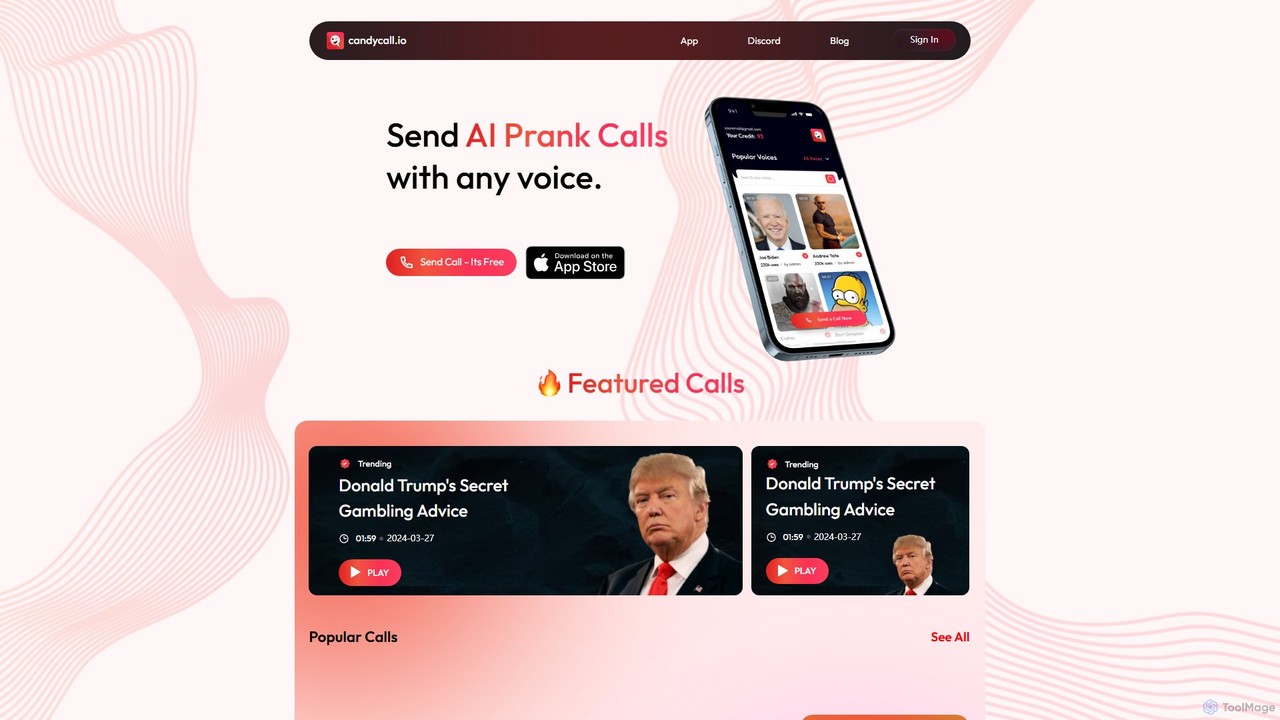
CandyCall is an AI-powered entertainment platform that lets you send hilarious prank calls using a library of over …

16.1K

About Voice & Audio

Voice & Audio AI tools are advanced applications that leverage artificial intelligence to process, generate, and enhance human voice and other sound elements. These tools utilize sophisticated machine learning models, including deep learning for natural language processing and audio signal processing, to transform raw audio or text into high-quality, synthetic speech or refined soundscapes. They are invaluable for content creators, developers, and businesses seeking to automate audio production, improve accessibility, or create immersive auditory experiences, significantly impacting areas like entertainment, education, and digital communication.

Core Features

  • Text-to-Speech (TTS): Converts written text into natural-sounding spoken audio in various voices and languages.
  • Speech-to-Text (STT): Transcribes spoken language into written text with high accuracy, supporting multiple accents and dialects.
  • Voice Cloning/Synthesis: Replicates specific vocal characteristics to generate new speech in a desired voice from text.
  • Audio Enhancement: Uses AI to remove noise, improve clarity, and master audio tracks for professional quality.
  • Music & Sound Effect Generation: Creates original musical compositions or specific sound effects based on prompts or parameters.

Use Cases

These tools are widely adopted across various sectors. For instance, podcasters use them for generating intro/outro voiceovers or transcribing episodes for wider reach. Game developers integrate AI voices for non-player characters, enhancing immersion. Marketing teams create multilingual voiceovers for advertisements, expanding global campaigns.

How to Choose

When selecting Voice & Audio AI tools, consider the accuracy and naturalness of the output, especially for text-to-speech and speech-to-text. Evaluate the range of available voices, languages, and customization options like emotion or speaking style. Assess integration capabilities with existing workflows and platforms, and compare pricing models based on usage volume or feature sets. Finally, check for robust audio enhancement features and the ability to handle diverse audio inputs.

Voice & AudioUse Cases

1

Generate Realistic Voiceovers for Videos

Video content creators and marketers can use AI voice generators to produce professional-quality voiceovers for explainer videos, advertisements, or documentaries. By simply inputting text, they can select from a diverse range of AI voices, languages, and emotional tones, saving significant time and cost compared to hiring voice actors, and enabling rapid iteration and localization for global audiences.

2

Automate Podcast Transcription and Summarization

Podcasters and content managers can leverage AI speech-to-text tools to automatically transcribe audio episodes into searchable text. This not only improves accessibility for hearing-impaired audiences but also boosts SEO by providing text content for search engines. Additionally, some tools can summarize long transcripts, helping listeners quickly grasp key points and facilitating content repurposing.

3

Create Dynamic Voice Interactions for Games

Game developers can employ AI voice synthesis and cloning to generate unique and expressive dialogue for non-player characters (NPCs) or interactive game elements. This allows for vast amounts of dialogue to be produced quickly and consistently, even with specific character voices, enhancing player immersion and enabling more complex narrative branches without extensive voice acting budgets.

4

Enhance Audio Quality for Remote Meetings

Professionals and remote teams can utilize AI audio enhancement tools to automatically remove background noise, echo, and improve speech clarity during online meetings or virtual presentations. This ensures clearer communication, reduces listener fatigue, and results in more professional-sounding recordings, making virtual collaborations more effective and productive.

5

Develop Multilingual Audio Content for E-learning

Educational institutions and e-learning platforms can use AI voice tools to convert course materials into audio lessons in multiple languages. This provides flexible learning options for diverse student populations, catering to different learning styles and improving global accessibility. It significantly reduces the effort and cost of producing localized audio content for educational modules.

6

Synthesize Custom Sound Effects and Music for Media

Filmmakers, animators, and media producers can use AI music and sound effect generators to create unique auditory elements tailored to their projects. By inputting descriptive prompts or parameters, they can generate bespoke background music, ambient sounds, or specific effects, adding depth and atmosphere to their visuals without relying on stock libraries or extensive manual composition.

Voice & AudioFrequently Asked Questions