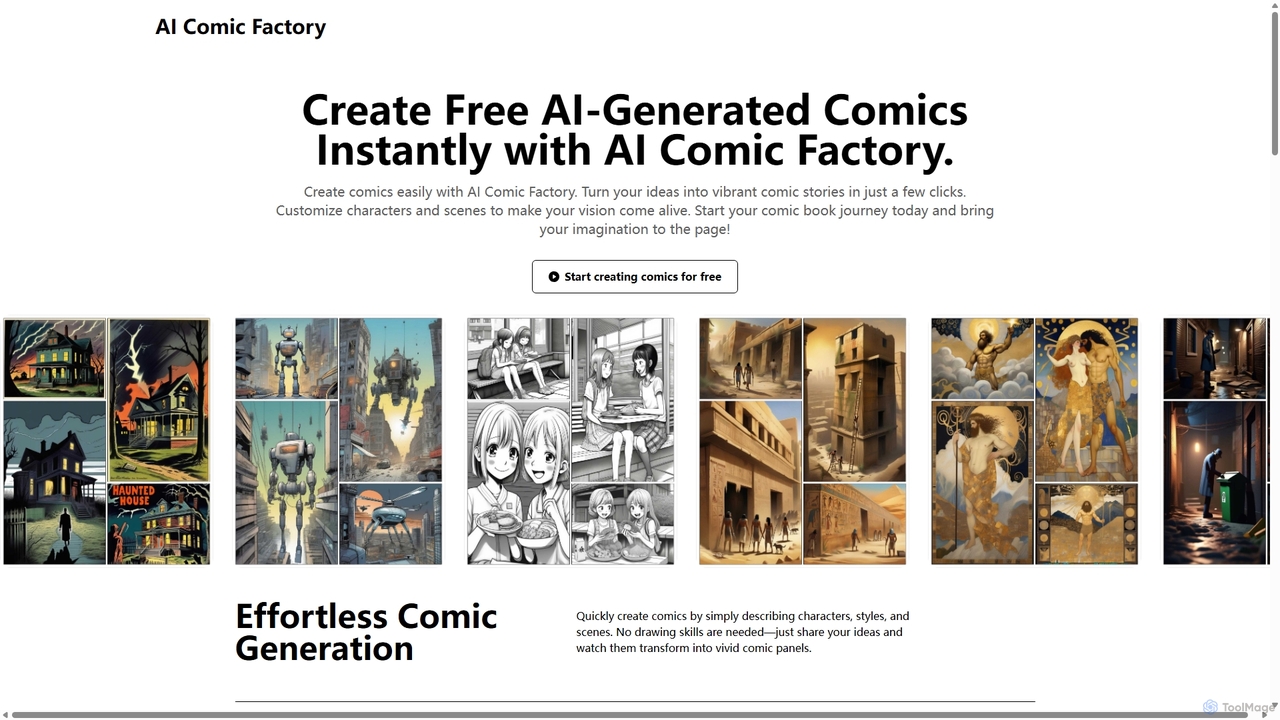
AI Comics tools are specialized applications that leverage artificial intelligence to assist in the creation, generation, and enhancement of comic books and graphic novels. These tools utilize advanced generative AI models, including text-to-image and style transfer technologies, to transform written concepts into compelling visual narratives. They empower artists, writers, and enthusiasts to streamline the entire comic creation process, from initial concept art and character design to panel layouts and dialogue integration, making visual storytelling more accessible and efficient within the broader "Fun Tools" category.
Core Features
- AI Panel Generation: Automatically creates comic panels and scene compositions based on script descriptions or visual prompts.
- Character Design & Variation: Generates unique character designs and offers variations in poses, expressions, and outfits.
- Style Transfer & Customization: Applies diverse artistic styles (e.g., manga, American comic, watercolor) to generated or existing artwork.
- Script-to-Comic Conversion: Transforms written scripts or story outlines into sequential visual comic sequences.
- Dialogue & Speech Bubble Integration: Assists in writing dialogue and automatically places it within customizable speech bubbles.
Applicable Scenarios
AI Comics tools are invaluable for various creative professionals and hobbyists. Independent comic artists can rapidly prototype visual ideas, generate consistent background art, or create extensive character sheets. Storytellers and writers can visualize their narratives without extensive drawing skills, turning scripts into dynamic visual stories. Educators and students can create engaging educational comics or visual aids to simplify complex topics, enhancing learning experiences.
How to Choose
When selecting an AI Comics tool, prioritize its generative capabilities for characters, backgrounds, and panels, ensuring the output quality aligns with your artistic vision. Evaluate the range and flexibility of style customization options. Consider how well the tool integrates with your existing creative workflow, including export formats and compatibility. Finally, assess the user-friendliness of the interface and the learning curve, especially if you are new to AI-powered creative tools.