ToolMage
Sign in

Best 5 Storytelling AI tools for Content Creation

Popular Storytelling AI tools in Content Creation include AI Comic Factory, Stories by AI, SnapStoryAI, Ray3 AI, and narraive, helping you work more efficiently.

Ray3 AI
Paid

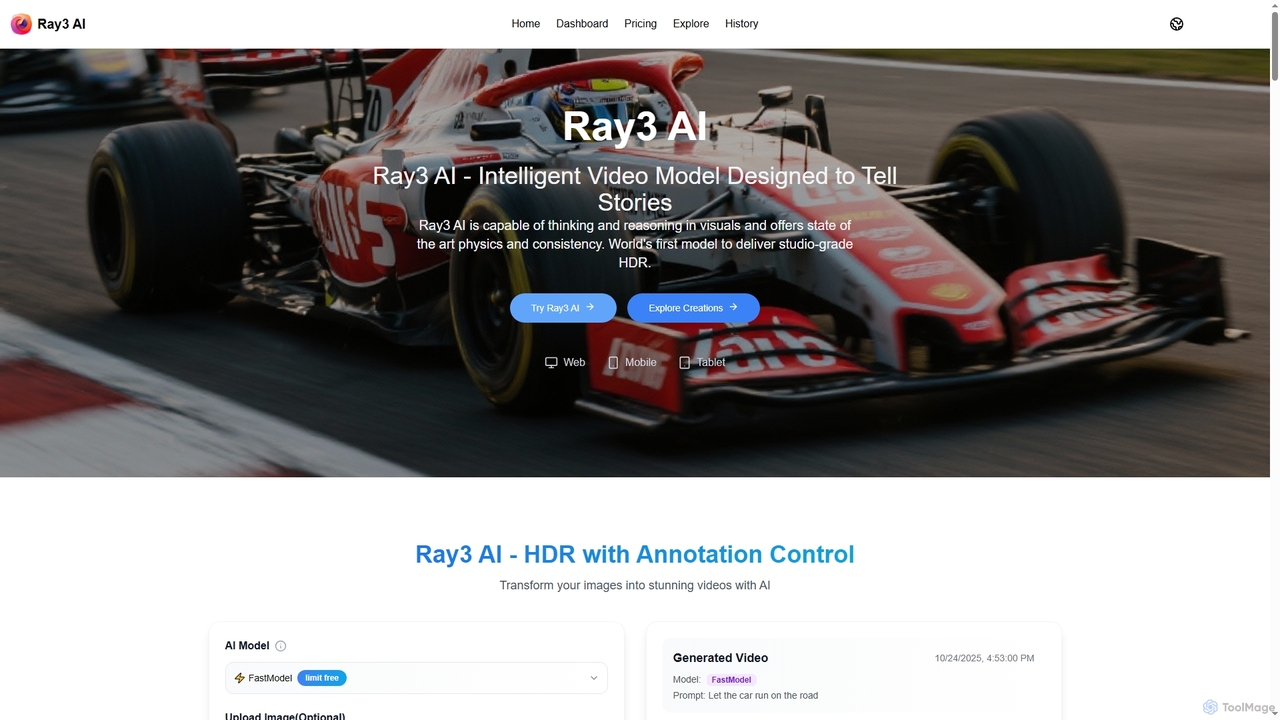
Ray3 AI

Ray3 AI is an intelligent video model designed to transform images into stunning, studio-grade HDR videos. It features advanced visual reasoning, state-of-the-art physics, and consistency, enabling creators to tell compelling stories with exceptional fidelity and precise control.

Storytelling
Visits 5.8KFavorites 105Likes 103
AI Comic Factory
Freemium

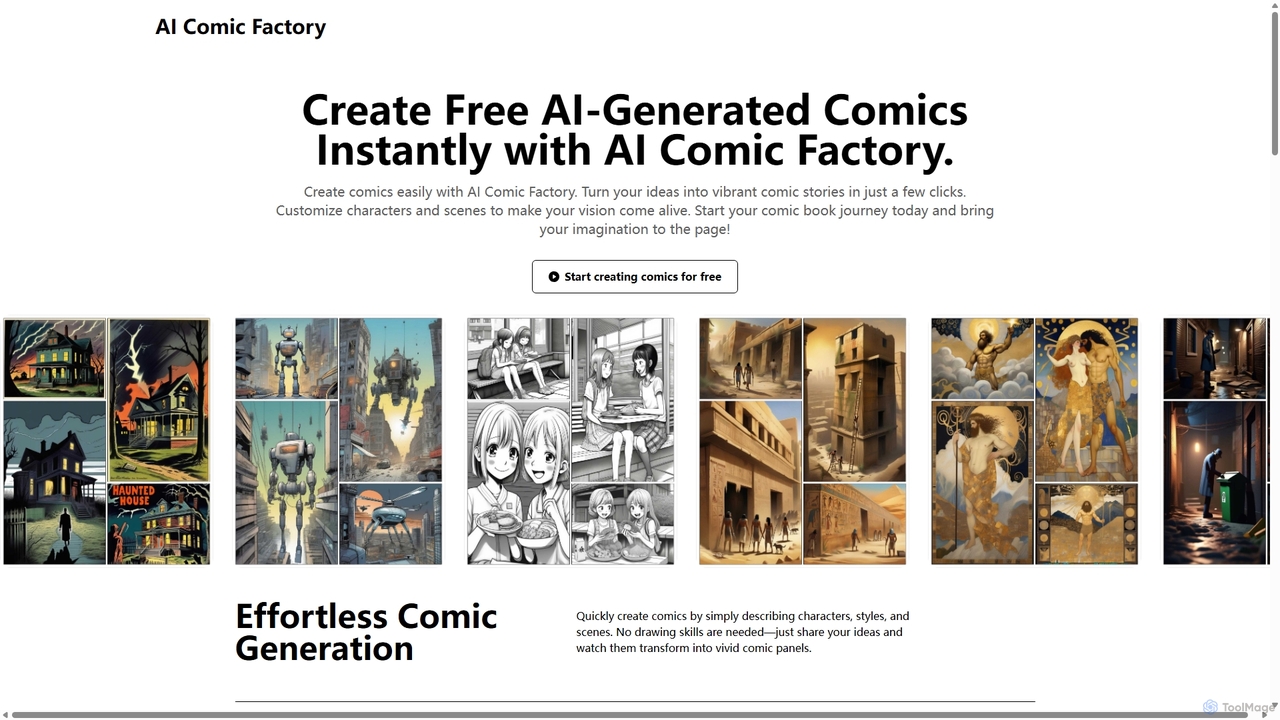
AI Comic Factory

AI Comic Factory is a free, AI-powered online tool that transforms your text descriptions into vibrant comic strips. Without any drawing skills, you can generate comics in various styles like American or Japanese manga, customize layouts, add dialogue, and maintain character consistency. It's an intuitive platform for storytellers, marketers, and hobbyists to bring their ideas to life visually.

Storytelling
Visits 20.2KFavorites 150Likes 145
SnapStoryAI
Freemium

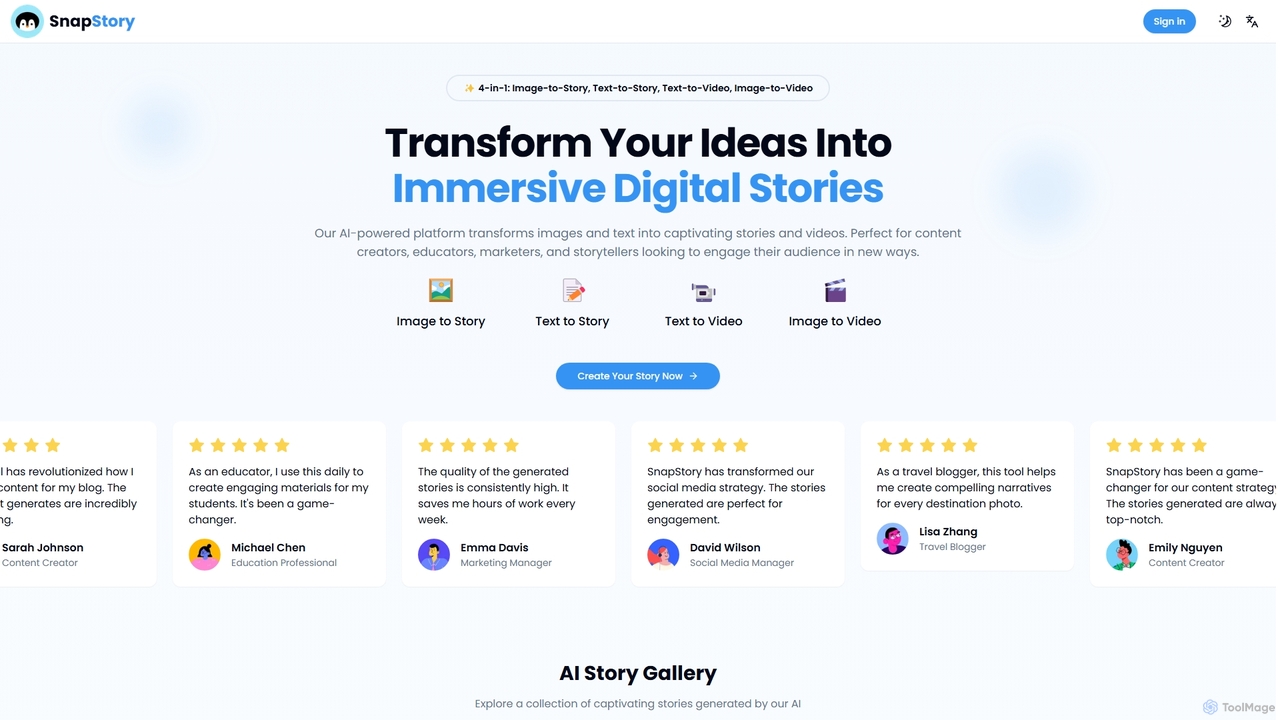
SnapStoryAI

SnapStoryAI is a 4-in-1 AI-powered platform that transforms images and text into captivating stories and dynamic videos. It's designed for content creators, marketers, and educators to effortlessly generate engaging narratives, customize tones and styles, and reach a global audience with multi-language support.

Storytelling
Visits 6KFavorites 143Likes 139
Stories by AI
Free

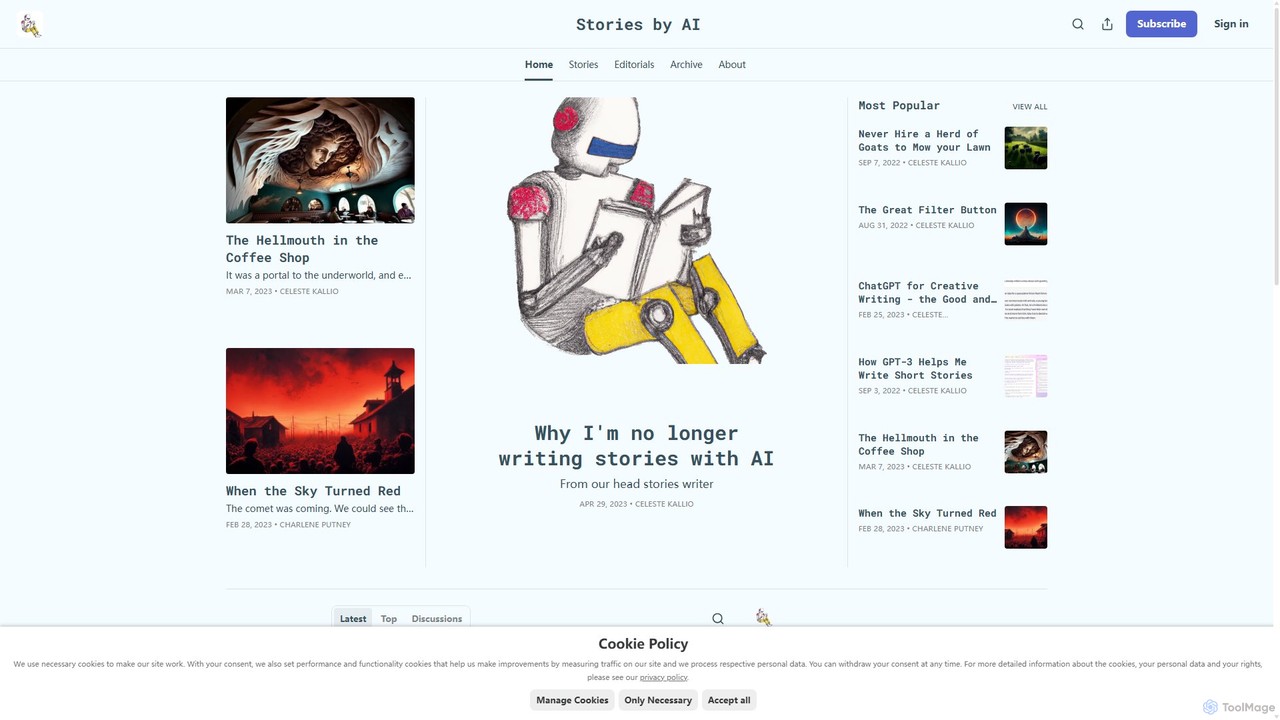
Stories by AI

Stories by AI is a pioneering publication and creative project showcasing short stories, illustrations, and narrations co-created with artificial intelligence. It serves as an archive and inspirational resource for writers, artists, and AI enthusiasts, exploring the intersection of human creativity and generative AI tools.

Storytelling
Visits 9KFavorites 122Likes 133
narraive
Freemium

narraive

narraive is an AI-powered narrative generation platform designed for writers, marketers, and creators. It helps users craft compelling stories, scripts, and brand narratives by generating unique plots, developing deep characters, and writing engaging dialogue. Overcome writer's block and accelerate your creative process with an intelligent storytelling partner.

Storytelling
Visits 5.5KFavorites 105Likes 110

About Storytelling

AI Storytelling tools are a specialized class of content creation software designed to generate, structure, and enhance narrative content. These tools leverage large language models trained on vast libraries of literature, scripts, and narrative structures to help create compelling plots, characters, and dialogue. They serve as creative partners for writers and creators, automating brainstorming, overcoming writer's block, and refining story elements. Unlike general text generators, they focus specifically on the mechanics of storytelling, such as plot progression, character arcs, and thematic development.

Core Features

  • Plot Generation: Creates story outlines, key plot points, and narrative arcs based on genres, themes, or user prompts.
  • Character Development: Generates detailed character profiles, including backstories, motivations, traits, and relationships.
  • Dialogue Crafting: Writes natural-sounding and engaging conversations between characters, often with options for tone and style.
  • Narrative Structure Assistance: Suggests and helps implement established storytelling frameworks like the three-act structure or the Hero's Journey.
  • World-Building Support: Assists in creating fictional settings, histories, cultures, and rules for a story's universe.

Use Cases

AI Storytelling tools are primarily used by novelists, screenwriters, and game developers to accelerate the initial drafting and conceptualization phases. Marketers also use them to craft compelling brand narratives and campaign stories. Educators and content creators can employ these tools to develop engaging educational stories or scripts for video and podcast content.

How to Choose

When selecting an AI Storytelling tool, consider its specialization in your preferred genre (e.g., fantasy, sci-fi, mystery). Evaluate the level of creative control and customization it offers for plot and character generation. Check for specific output formats, such as standard screenplay formatting or export options compatible with writing software. Finally, assess the user interface and its ease of use for brainstorming and organizing story ideas.

Storytelling use cases

1

Accelerating Screenplay Development

A screenwriter working on a new thriller film is facing a tight deadline. They use an AI Storytelling tool to quickly generate multiple plot outlines and potential twists. By inputting key character archetypes and a central theme, the tool suggests several compelling narrative arcs. The writer then uses the dialogue generation feature to draft initial conversations for key scenes, significantly reducing the time spent on the first draft and allowing more time for polishing and revisions.

2

Overcoming Writer's Block for Novelists

A fantasy novelist is stuck in the middle of their book, unsure how to advance the plot. They turn to an AI Storytelling tool for inspiration. By providing a summary of the story so far and the main character's current dilemma, the tool generates several possible next chapters, character interactions, and world-building details. This external input helps the author break through their creative block, select a new direction, and continue writing with renewed momentum.

3

Designing Narrative for Video Games

A narrative designer for an RPG is tasked with creating a rich world with numerous side quests. Using an AI Storytelling tool, they input the game's lore and main plot points. The AI then generates dozens of side quest ideas, complete with unique NPCs, motivations, and dialogue trees. This allows the designer to rapidly populate the game world with engaging content, ensuring a consistent tone and deep integration with the main storyline, saving hundreds of hours of manual brainstorming.

4

Crafting Compelling Brand Stories

A marketing team is developing a new campaign centered around their company's origin story. They use an AI Storytelling tool to explore different narrative angles. By providing key facts about the founders and the company's mission, the tool generates several story versions, each with a different emotional tone (e.g., inspirational, underdog, innovative). The team can then A/B test these narratives in their ad copy and video scripts to see which one resonates most strongly with their target audience, leading to a more effective campaign.

5

Generating Educational Story Content

An educator creating an online history course wants to make the material more engaging for students. They use an AI Storytelling tool to transform dry historical facts into short, narrative-driven stories. By inputting a historical event and key figures, the tool helps script a dialogue between historical characters or write a first-person account of the event. This transforms passive learning material into an active, story-based experience, improving student engagement and retention of information.

6

Scripting for Narrative Podcasts

A creator of a fictional audio drama podcast needs to produce scripts for a new season. They use an AI Storytelling tool to outline the entire season's arc and then generate first drafts for each episode. The tool helps maintain consistency in character voices and plot threads across multiple episodes. It also suggests sound effects and scene transitions appropriate for the audio format, streamlining the entire scriptwriting process from high-level concept to production-ready text.

Storytelling FAQ

What are AI Storytelling tools?

AI Storytelling tools are specialized software that use artificial intelligence to help users generate, structure, and refine narratives. They go beyond simple text generation by focusing on core story elements like plot development, character creation, dialogue, and narrative arcs. These tools act as creative assistants for writers, game designers, and marketers, helping to brainstorm ideas, overcome writer's block, and build compelling stories from the ground up.

How do AI Storytelling tools differ from general AI writers?

The main difference lies in their focus and features. General AI writers are designed for a broad range of content like articles, emails, and marketing copy. AI Storytelling tools are highly specialized for narrative creation. They include specific features that general writers lack, such as:

  • Plot generators that understand story structure (e.g., three-act structure).
  • Character creators with fields for motivations, flaws, and backstories.
  • Dialogue tools that manage conversations between multiple characters.
  • World-building modules to maintain consistency in fictional settings.
In short, while an AI writer creates text, an AI Storytelling tool helps you build a world and a narrative.

Who can benefit from using AI Storytelling tools?

A wide range of creators can benefit from these tools. Key users include:

  • Novelists and Authors: For brainstorming plots, developing characters, and overcoming writer's block.
  • Screenwriters: To quickly outline scripts, write dialogue, and format scenes according to industry standards.
  • Game Developers: For creating branching narratives, writing NPC dialogue, and building rich game lore.
  • Marketers and Advertisers: To craft compelling brand stories and narrative-driven ad campaigns.
  • Educators and Trainers: To develop engaging story-based learning materials and scenarios.
Essentially, anyone who needs to create a structured narrative, not just text, can find significant value in these specialized tools.

How do I choose the right AI Storytelling tool?

Choosing the right tool depends on your specific needs. Consider these factors:

  • Genre Specialization: Some tools are better for specific genres like fantasy or sci-fi, while others are more general. Check if the tool aligns with your project's genre.
  • Level of Control: Determine how much control you want over the output. Some tools offer high-level prompts, while others allow fine-tuning of characters, plot points, and tone.
  • Output Formats: If you're a screenwriter, look for tools that can export in standard script format. Novelists might prefer tools that integrate with writing software like Scrivener or Word.
  • Collaboration Features: If you work in a team, check for features that allow multiple users to collaborate on a single story project.
  • User Interface: A good tool should have an intuitive interface that helps organize ideas, not complicate the creative process.

Can AI completely write a story for me?

While AI Storytelling tools are powerful, they are best used as creative partners rather than fully autonomous authors. They can generate impressive drafts of plots, scenes, and dialogue, but the output often requires human oversight, editing, and refinement to ensure emotional depth, coherence, and a unique voice. The most effective workflow involves a collaboration where the writer provides the core ideas, direction, and creative spark, and the AI assists with brainstorming, structure, and overcoming blocks. The final creative vision and polish still come from the human creator.