
Face Symmetry Test
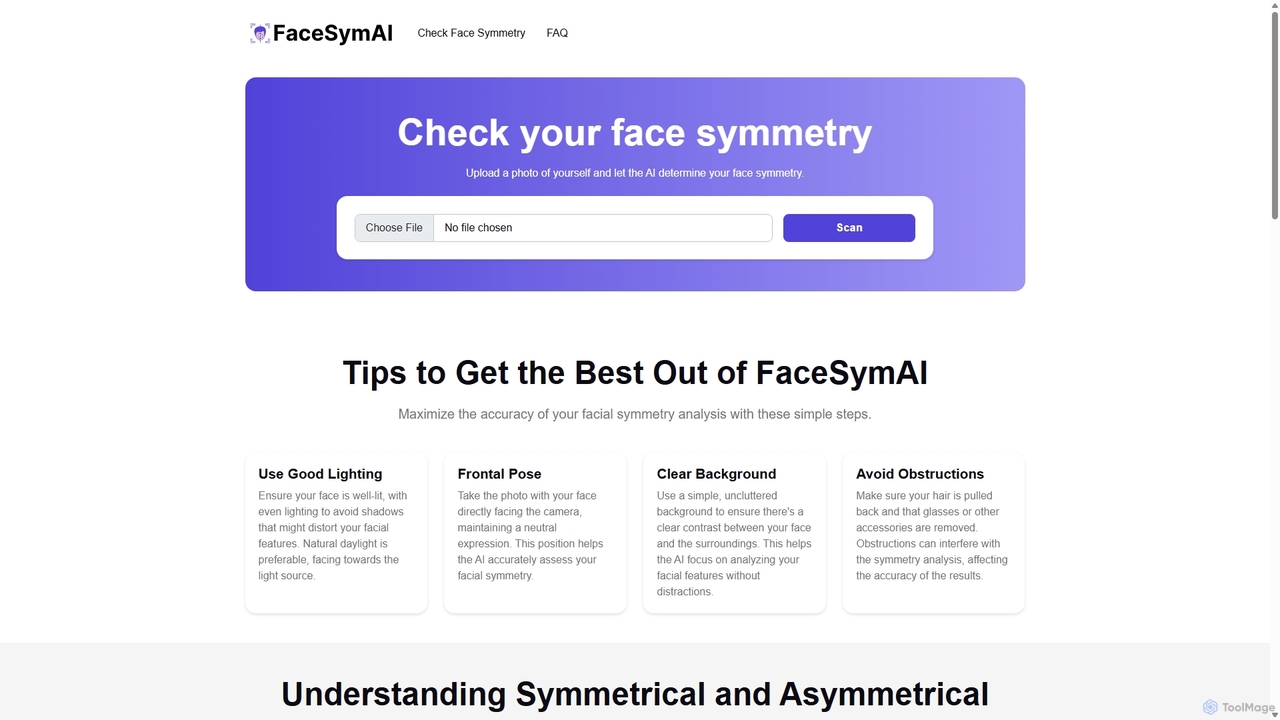
Face Symmetry Test is a free, AI-powered online tool that analyzes your facial symmetry. Simply upload a photo, …
Face Symmetry Test is a free, AI-powered online tool that analyzes your facial symmetry. Simply upload a photo, and the advanced algorithm will map your facial features, compare both sides, and provide an instant, easy-to-understand symmetry assessment. It's a fun and insightful way to learn more about your unique facial structure while ensuring your privacy, as uploaded photos are not stored.
howolddoilook
A free AI tool that analyzes your photo to estimate your apparent age. Part of a suite of …
A free AI tool that analyzes your photo to estimate your apparent age. Part of a suite of facial analysis tools, it offers a fun, private, and insightful way to explore your appearance. Simply upload a picture and get an instant age prediction.
About Facial Analysis
Facial Analysis tools are a class of AI applications designed to detect and interpret human facial features from digital images or video streams. Using advanced computer vision and machine learning algorithms, these tools can identify key facial landmarks, estimate demographic attributes like age and gender, and recognize emotional expressions. They transform visual data into structured insights, offering engaging and informative feedback for various applications. While their interactive nature places them within the Fun Tools category, their capabilities extend to serious market research and user experience analysis.
Core Features
- Emotion Recognition: Identifies and quantifies emotions such as happiness, sadness, anger, and surprise from facial expressions.
- Attribute Estimation: Estimates demographic characteristics including age, gender, and ethnicity based on facial features.
- Facial Landmark Detection: Pinpoints key features on a face, like the corners of the eyes, nose tip, and mouth, for detailed analysis.
- Gaze Tracking: Determines the direction of a person's gaze to understand their focus of attention.
- Head Pose Estimation: Calculates the orientation of the head in three-dimensional space (pitch, yaw, roll).
Applicable Scenarios
These tools are valuable for market researchers analyzing audience reactions to advertisements, UX designers assessing user engagement with software interfaces, and content creators looking to create interactive filters or effects. Retailers can also use this technology to understand customer demographics and satisfaction in physical stores through anonymized analysis.
Selection Criteria
When choosing a Facial Analysis tool, consider the accuracy of its emotion and attribute detection. Evaluate its real-time processing capabilities for live video feeds, the ease of API integration into your existing applications, and its data privacy policies, especially regarding the handling of sensitive biometric information.
Facial AnalysisUse Cases
Gauge Audience Reactions to Video Content
Market researchers and advertising agencies can use Facial Analysis tools to gain objective insights into how audiences emotionally connect with video ads or movie trailers. By processing webcam recordings of test viewers (with consent), the AI can generate a second-by-second emotional timeline, highlighting moments of joy, surprise, confusion, or boredom. This data helps creators pinpoint which scenes resonate most and which parts may need editing, leading to more impactful and engaging final content before a major public release.
Create Interactive Social Media Filters
Developers and social media content creators leverage Facial Analysis APIs to build engaging AR filters and effects. The technology accurately tracks facial landmarks in real-time, allowing digital objects like glasses, hats, or makeup to be perfectly overlaid on a user's face. It can also trigger animations based on expressions, such as spawning hearts when a user smiles or showing storm clouds when they frown. This creates highly shareable and interactive content that can significantly boost brand engagement and user-generated content.
Enhance User Experience in Applications
Software developers can integrate facial analysis to create more adaptive and personalized user experiences. For example, an e-learning platform could monitor a student's facial expressions to detect signs of confusion or frustration, then offer additional help or a different explanation. A video game could adjust its difficulty or narrative in real-time based on the player's emotional state. This application moves beyond simple interaction to create software that is genuinely responsive to the user's implicit feedback, improving engagement and satisfaction.
Anonymized In-Store Customer Analytics
Retail and hospitality businesses can use facial analysis to gather aggregate, anonymized data about their customers. Cameras placed at entrances or key areas can estimate the demographic makeup (age range, gender distribution) of shoppers throughout the day. The system can also gauge overall customer sentiment by analyzing expressions, helping managers understand peak satisfaction times or identify areas causing frustration. This provides valuable data for optimizing store layout, staffing levels, and product placement without identifying or tracking individual customers.
Powering Virtual Try-On Experiences
E-commerce brands in the beauty and eyewear industries use facial analysis to offer virtual try-on services. By accurately mapping a user's facial structure via their device's camera, the technology allows customers to see how different shades of lipstick, foundation, or styles of glasses would look on them in real-time. This interactive experience bridges the gap between online and in-store shopping, increasing user engagement, boosting conversion rates, and reducing product returns by helping customers make more confident purchasing decisions.
Monitor Driver Attentiveness for Safety
In the automotive industry, facial analysis systems are used to enhance driver safety. An in-car camera monitors the driver's face for signs of drowsiness, such as frequent yawning or drooping eyelids, and distraction, like turning their head away from the road for too long. If the system detects these behaviors, it can issue an audible or haptic alert to refocus the driver's attention. This proactive safety feature can help prevent accidents caused by fatigue or inattention, representing a critical application of the technology.