ToolMage
Sign in

Best 1 Personal Assistant for Fun Tools

Popular Personal Assistant in Fun Tools include Giftastic, helping you work more efficiently.

Giftastic
Free

Giftastic

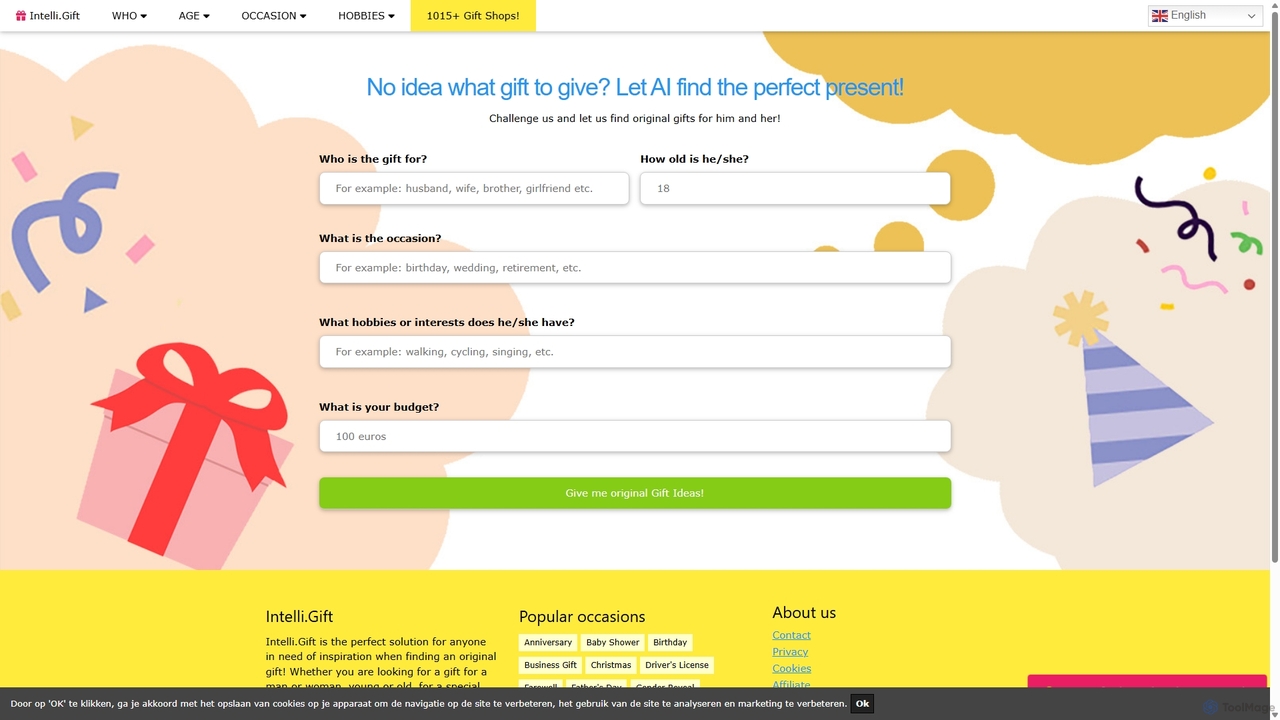
Giftastic.ai is an AI-powered gift finder that helps you discover the perfect present for any person, occasion, and interest. Simply input details about the recipient, and the AI will generate a curated list of personalized gift ideas from over 1000 stores.

Recommendation Engine
Visits 4.6KFavorites 140Likes 142

About Personal Assistant

Personal Assistant AI tools are sophisticated software applications designed to help individuals manage their daily tasks, organize information, and enhance productivity through intelligent automation. Leveraging advanced natural language processing (NLP) and machine learning, these tools can understand user commands, learn preferences, and proactively offer assistance. They streamline routines and free up time, making them a valuable part of the broader Fun Tools category by simplifying complex personal and professional responsibilities.

Core Features

  • Intelligent Scheduling: Manages calendars, sets appointments, and sends reminders based on availability and preferences.
  • Information Retrieval & Summarization: Quickly finds, processes, and summarizes data from various sources, delivering concise answers.
  • Task Automation: Automates repetitive actions like sending emails, organizing files, or updating project statuses.
  • Personalized Recommendations: Offers suggestions for content, services, or actions based on learned user behavior and interests.
  • Communication Assistance: Helps draft emails, messages, or reports, improving clarity and efficiency in written communication.

Use Cases

AI personal assistants are invaluable for busy professionals, students, and anyone seeking to optimize their daily workflow. They can manage complex schedules for executives, help students organize research materials, or assist content creators in brainstorming ideas and drafting initial outlines. These tools excel in environments where information overload is common and time management is critical, providing a digital co-pilot for various personal and professional endeavors.

How to Choose

When selecting an AI personal assistant, consider its integration capabilities with your existing apps (calendar, email, CRM), the breadth and depth of its task automation features, and its natural language understanding accuracy. Evaluate the level of personalization it offers, its data privacy policies, and whether it supports multi-device synchronization for seamless access. User interface intuitiveness and pricing models are also crucial factors for long-term satisfaction.

Personal Assistant use cases

1

Streamlining Daily Schedule and Appointments

For busy professionals, an AI personal assistant can take over the tedious task of managing a dynamic calendar. Users can simply voice or type their meeting requests, and the assistant will find optimal slots, send invitations, and set reminders, integrating seamlessly with existing calendar applications. This frees up significant time, allowing individuals to focus on core responsibilities rather than administrative overhead.

2

Efficient Information Gathering and Summarization

Researchers, students, and content creators often face an overwhelming amount of information. An AI personal assistant can quickly search the web, internal documents, or databases for specific data, then summarize key findings or extract relevant points. This capability drastically reduces the time spent on manual research, providing concise insights for reports, presentations, or articles.

3

Assisting with Email and Message Drafting

Individuals who handle a high volume of communications can leverage AI personal assistants to draft emails, compose messages, or even generate initial responses. By understanding context and user preferences, the assistant can suggest appropriate wording, correct grammar, and ensure a professional tone, significantly speeding up communication workflows and improving message quality.

4

Proactive Reminders and Task Management

For anyone juggling multiple projects or personal commitments, an AI personal assistant acts as a reliable memory aid. It can set context-aware reminders for deadlines, follow-ups, or personal errands, ensuring no important task is missed. Users can delegate task creation and tracking, receiving timely notifications that keep them on schedule and organized throughout the day.

5

Personalized Travel Planning and Logistics

Planning trips, whether for business or leisure, involves numerous details. An AI personal assistant can help by researching flights and accommodations, suggesting itineraries based on preferences, and even booking reservations. It can also provide real-time updates on travel conditions, weather, and local recommendations, simplifying the entire travel logistics process for individuals.

6

Enhancing Creative Brainstorming and Idea Generation

Content creators, marketers, and innovators often need fresh ideas. An AI personal assistant can serve as a brainstorming partner, generating diverse concepts, topics, or outlines based on user prompts. This accelerates the initial creative phase, providing a wide range of starting points and helping to overcome creative blocks, leading to more innovative outputs.

Personal Assistant FAQ

What are AI Personal Assistants?

AI Personal Assistants are intelligent software tools designed to help users manage tasks, organize information, and boost productivity through artificial intelligence. They leverage natural language processing (NLP) to understand commands, machine learning to adapt to user preferences, and automation to streamline daily routines. Unlike traditional digital assistants, they often offer deeper integration with third-party apps and more proactive, personalized assistance, acting as a digital co-pilot for both personal and professional life.

How do AI Personal Assistants differ from traditional digital assistants like Siri or Google Assistant?

While both provide assistance, AI Personal Assistants (like those in this category) typically offer more advanced, proactive, and deeply integrated functionalities compared to traditional digital assistants like Siri or Google Assistant. Traditional assistants are often device-centric and focus on basic commands, web searches, and simple app interactions. AI Personal Assistants, however, are usually platform-agnostic, provide more sophisticated task automation, personalized learning, and can manage complex workflows across multiple applications, often with a greater emphasis on professional productivity and data organization.

What tasks can AI Personal Assistants perform?

AI Personal Assistants can perform a wide range of tasks, significantly enhancing personal and professional efficiency. Key functionalities include:

  • Calendar Management: Scheduling meetings, setting reminders, and managing appointments.
  • Information Synthesis: Retrieving data, summarizing documents, and answering complex queries.
  • Communication Support: Drafting emails, messages, and reports, and managing inboxes.
  • Task Automation: Automating repetitive workflows like file organization or data entry.
  • Personalized Recommendations: Suggesting content, services, or actions based on user behavior.
  • Travel Planning: Assisting with flight/hotel bookings and itinerary creation.

How do I choose the right AI Personal Assistant for my needs?

Choosing the right AI Personal Assistant involves evaluating several factors based on your specific requirements. Consider the following:

  • Integration Capabilities: Ensure it seamlessly connects with your existing tools (e.g., calendar, email, CRM, project management software).
  • Task Scope: Assess if its core features align with the specific tasks you need automated or managed (e.g., scheduling, writing, research).
  • Natural Language Understanding: Look for robust NLP capabilities for accurate command interpretation and fluid interaction.
  • Personalization & Learning: A good assistant should learn your preferences and adapt over time to offer more relevant assistance.
  • Security & Privacy: Verify its data handling policies and security measures, especially if dealing with sensitive information.
  • User Interface: An intuitive and easy-to-use interface is crucial for adoption and long-term satisfaction.

What are the main benefits of using an AI Personal Assistant?

The primary benefits of integrating an AI Personal Assistant into your daily routine are enhanced productivity and improved time management. These tools significantly reduce the mental load of administrative tasks, allowing users to focus on higher-value work. They provide proactive support, minimize errors, and ensure important deadlines and appointments are met. By automating repetitive processes and offering intelligent insights, AI Personal Assistants help individuals achieve better organization, reduce stress, and ultimately free up valuable time for more creative or strategic endeavors.