ToolMage
Sign in

Best 2 Personality Test AI tools for Fun Tools

Popular Personality Test AI tools in Fun Tools include Twitter Personality and harrypotterhousequiz.pro, helping you work more efficiently.

Twitter Personality
Free

Twitter Personality

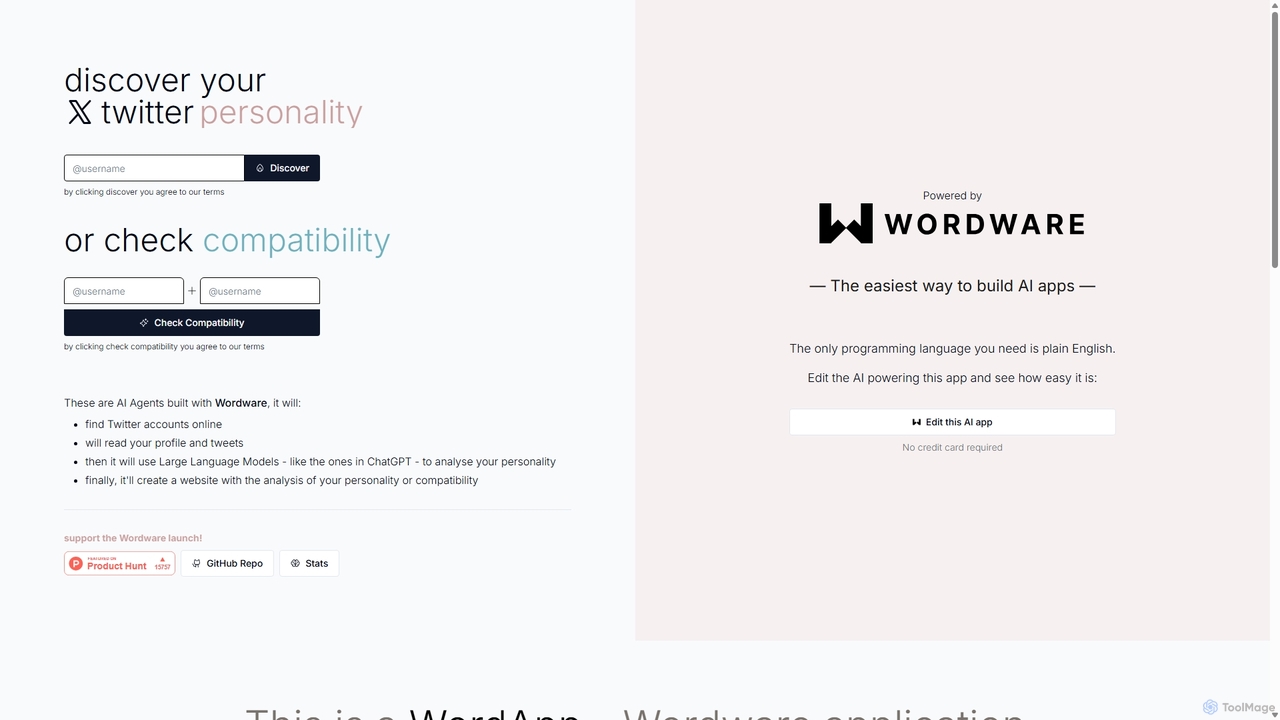
Twitter Personality is a free AI agent that analyzes your Twitter profile and tweets to generate a detailed personality report. Discover your online persona, check compatibility with other users, and see a live example of an AI application built on the Wordware no-code platform.

No Code Platform
Visits 20.6KFavorites 139Likes 133
harrypotterhousequiz.pro
Free

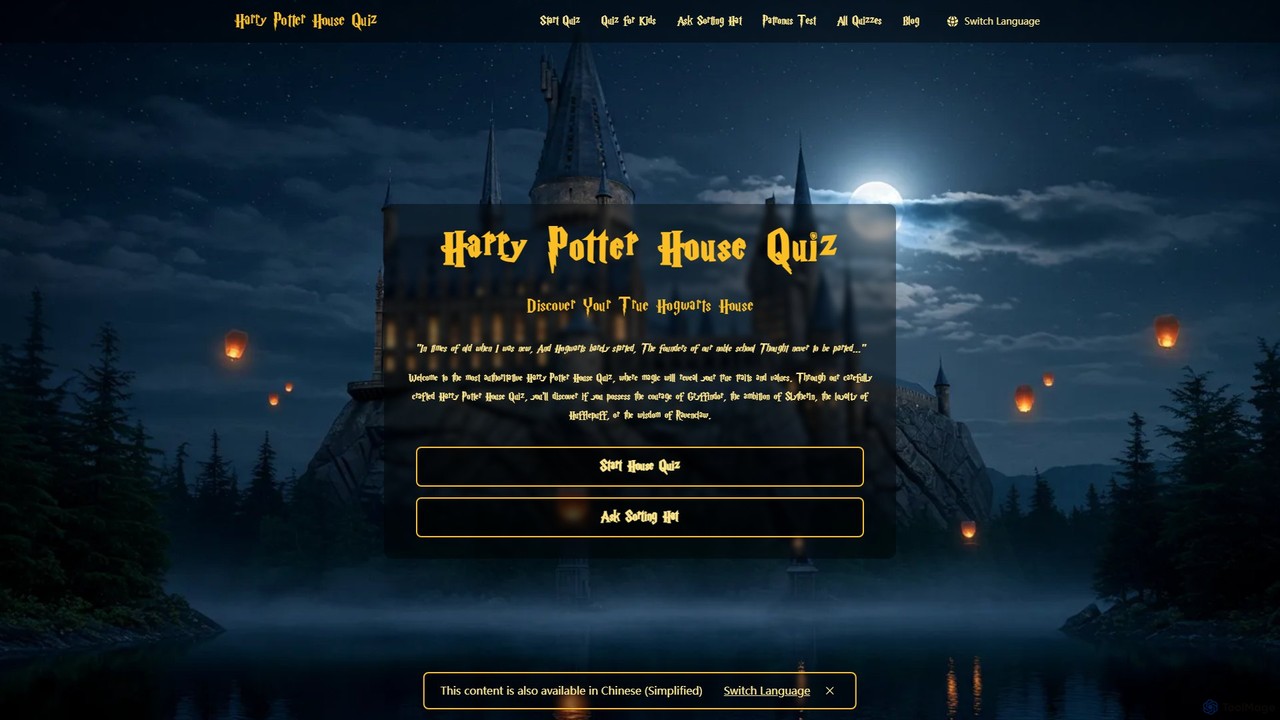
harrypotterhousequiz.pro

Discover your true Hogwarts House with the Harry Potter House Quiz. This platform offers an accurate sorting experience, combining deep psychological principles with authentic lore. Engage with a comprehensive quiz or have a real conversation with the revolutionary AI Sorting Hat. The tool also features a Patronus quiz and a kid-friendly version, all completely free and accessible on any device. It's the ultimate magical journey for any fan.

Themed Chatbots
Visits 6.9KFavorites 120Likes 141

About Personality Test

Personality Test tools are AI-powered applications designed to assess and analyze an individual's psychological traits, preferences, and behavioral patterns. Leveraging advanced algorithms and psychological models, these tools offer personalized insights into various aspects of personality. They provide an interactive and often engaging way for users to gain self-awareness, understand interpersonal dynamics, and explore potential career paths, making self-discovery accessible and insightful within the broader category of Fun Tools.

Core Features

  • AI-Driven Assessment: Utilizes machine learning to analyze responses and provide nuanced personality profiles.
  • Personalized Reports: Generates detailed reports outlining key traits, strengths, weaknesses, and behavioral tendencies.
  • Interactive Questionnaires: Offers engaging and adaptive question formats, often with visual or scenario-based prompts.
  • Trait Mapping: Maps individual traits to established psychological frameworks like Big Five, MBTI, or DISC.
  • Developmental Insights: Provides actionable advice for personal growth, career development, or improving relationships.

Use Cases

These tools are valuable for individuals seeking deeper self-understanding, teams aiming to enhance collaboration, and professionals in fields like HR or coaching. They can help identify communication styles, leadership potential, and areas for personal or professional development, offering a structured approach to exploring one's inner world.

How to Choose

When selecting a personality test tool, consider its psychological basis and validity, ensuring it's grounded in reputable research. Evaluate the depth and actionability of the generated reports, looking for clear insights and practical recommendations. Assess the user experience, including questionnaire design and interface, and prioritize tools with strong privacy and data security policies to protect personal information.

Featured tool rankings

Personality Test use cases

1

Enhancing Self-Awareness for Personal Growth

Individuals seeking to understand their innate strengths, weaknesses, and motivations can use AI personality tests. By answering a series of questions, users receive a detailed report outlining their core personality traits, cognitive styles, and emotional responses. This insight helps them identify areas for personal development, make more informed life choices, and foster a deeper connection with their authentic self, leading to improved well-being and decision-making.

2

Optimizing Team Dynamics and Collaboration

Team leaders and HR managers can deploy AI personality tests to understand the diverse working styles and communication preferences within their teams. By analyzing individual and collective personality profiles, they can identify potential areas of conflict, leverage complementary strengths, and tailor team-building activities. This leads to improved communication, enhanced collaboration, and a more harmonious and productive work environment, fostering stronger team cohesion.

3

Guiding Career Planning and Development

Students, job seekers, and professionals considering a career change can utilize AI personality tests to align their innate traits with suitable career paths. The tests provide insights into preferred work environments, leadership styles, and areas where an individual is likely to excel. This guidance helps users make informed decisions about education, job applications, and professional development, increasing job satisfaction and long-term career success by matching personality with vocational fit.

4

Assessing Candidate Fit in Recruitment

HR departments and recruiters can integrate AI personality tests into their hiring process to gain deeper insights into candidate suitability beyond resumes and interviews. These tools help assess cultural fit, team compatibility, and potential for specific roles by evaluating traits like conscientiousness, openness, and emotional stability. This objective data complements traditional assessments, leading to more informed hiring decisions, reduced turnover, and stronger, more cohesive workforces.

5

Fostering Understanding in Personal Relationships

Individuals in personal relationships, such as couples or close friends, can use AI personality tests to better understand each other's communication styles, conflict resolution approaches, and love languages. By comparing personality profiles, users can gain empathy for their partner's perspective and identify areas where their personalities complement or challenge each other. This leads to improved communication, reduced misunderstandings, and stronger, more resilient personal bonds through mutual understanding.

6

Integrating into Educational and Coaching Programs

Educators, mentors, and life coaches can incorporate AI personality tests into their programs to provide students or clients with personalized learning and development paths. By understanding individual learning styles, motivational drivers, and preferred feedback mechanisms, coaches can tailor their approach for maximum impact. This leads to more effective teaching, targeted coaching strategies, and improved outcomes for individuals striving for academic or personal excellence, enhancing the overall learning experience.

Personality Test FAQ

What are AI Personality Tests?

AI Personality Tests are digital tools that use artificial intelligence to assess an individual's personality traits, preferences, and behavioral patterns. Unlike traditional paper-based tests, they leverage machine learning algorithms to analyze responses, often from interactive questionnaires, and generate detailed, personalized reports. These tools aim to provide deeper self-understanding and insights into how one interacts with the world, making the assessment process more dynamic and data-driven.

How to choose a reliable AI personality test?

To choose a reliable AI personality test, prioritize tools based on established psychological frameworks (e.g., Big Five, MBTI) and validated research. Look for transparency in their methodology and data handling. Evaluate the depth and clarity of the generated reports, ensuring they offer actionable insights rather than vague descriptions. Consider user reviews and the tool's reputation. Finally, verify their privacy policy to ensure your personal data is protected and used ethically, as this is crucial for sensitive personal information.

What insights can AI personality tests provide?

AI personality tests can provide a wide range of insights, including core personality traits (e.g., extraversion, conscientiousness), communication styles, decision-making preferences, and stress coping mechanisms. They can also highlight potential strengths and weaknesses, suggest suitable career paths, and offer advice for improving interpersonal relationships. Some advanced tools even provide insights into emotional intelligence, leadership potential, and team compatibility, offering a holistic view of an individual's psychological makeup.

How do AI personality tests differ from traditional ones?

AI personality tests differ from traditional ones primarily through their use of advanced technology. While traditional tests often rely on fixed questionnaires and manual scoring based on pre-defined scales, AI tests can offer adaptive questioning, where subsequent questions are tailored based on previous responses. They utilize machine learning for more nuanced analysis of complex data patterns, potentially providing deeper, more personalized, and dynamic insights. AI tests can also process larger datasets and integrate various data points for a more comprehensive assessment, often with instant results and interactive reports.

Who can benefit from using AI personality tests?

A wide range of individuals and organizations can benefit from AI personality tests. Individuals seeking self-discovery, personal growth, or career guidance find them valuable for understanding their strengths and preferences. Teams and organizations can use them for improving communication, enhancing collaboration, and optimizing team composition. HR professionals benefit from objective candidate assessment, while educators and coaches can tailor their approaches for more effective learning and development. Essentially, anyone interested in human behavior and self-improvement can find value in these tools.