ToolMage
Sign in

Best 2 Prediction AI tools for Fun Tools

Popular Prediction AI tools in Fun Tools include setlistpredictor and FutureGPT, helping you work more efficiently.

setlistpredictor
Free

setlistpredictor

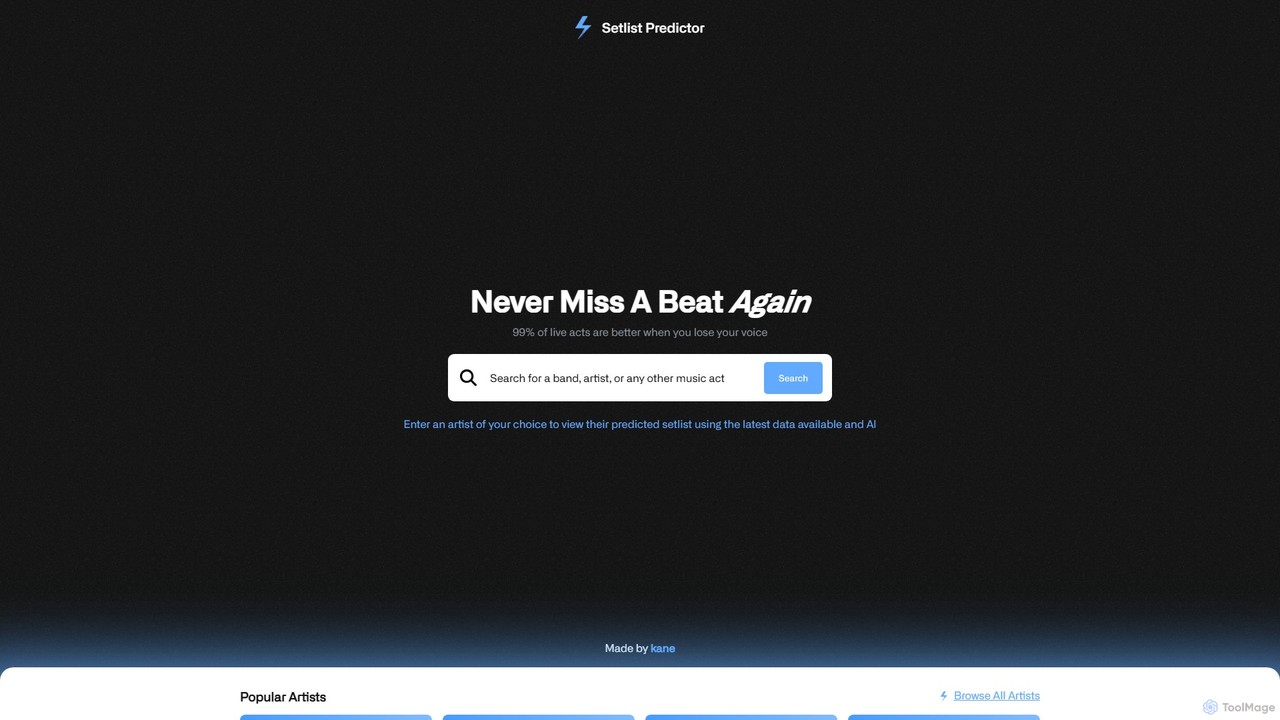
Setlist Predictor is a free AI-powered tool that forecasts the likely setlist for an artist's upcoming concerts. By analyzing the latest tour data and performance patterns, it helps music fans prepare for live shows, ensuring they never miss a beat or feel awkward not knowing the lyrics.

Music
Visits 9.8KFavorites 159Likes 156
FutureGPT
Freemium

FutureGPT

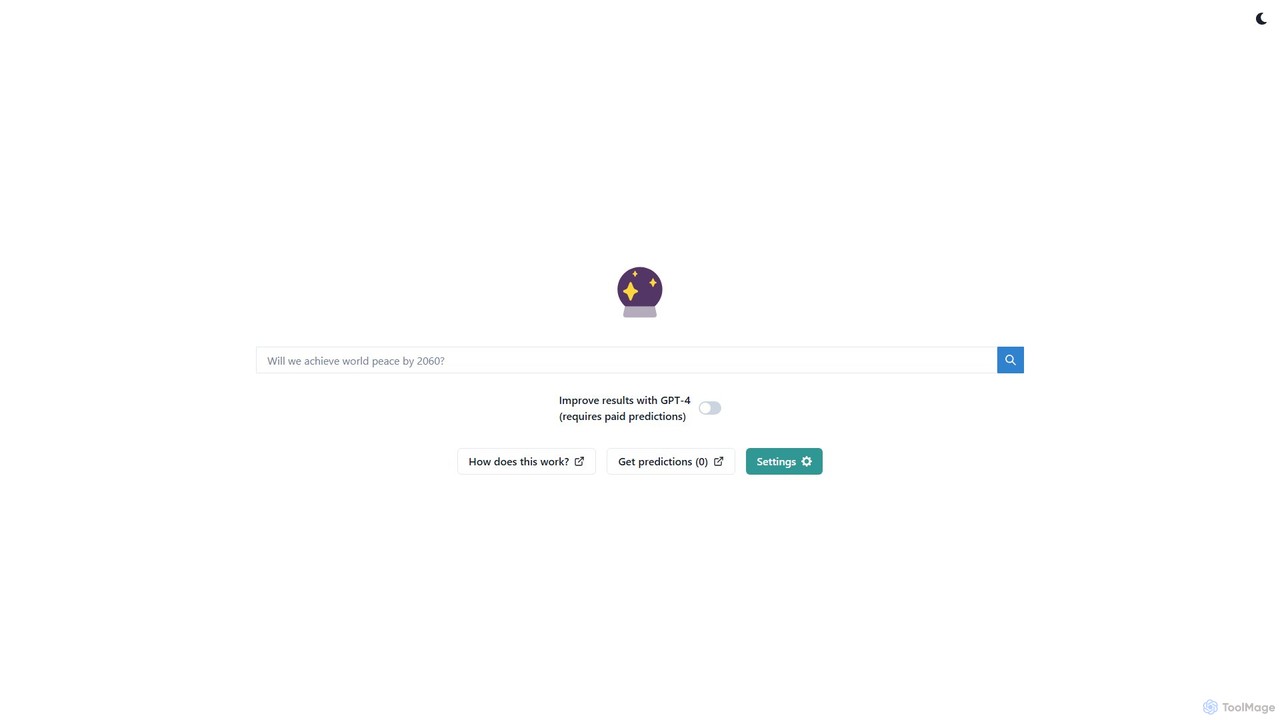
FutureGPT is an AI-powered oracle that leverages the advanced capabilities of GPT-4 to generate insightful predictions and forecasts about future events. Simply ask a question, and the tool provides probabilistic outcomes and detailed analyses, helping you with decision-making, strategy, and creative exploration.

Strategy
Visits 9.6KFavorites 149Likes 153

About Prediction

Prediction tools are AI-powered applications designed to generate speculative outcomes, insights, or scenarios, often for entertainment, curiosity, or creative inspiration. Unlike serious analytical prediction models, these tools leverage AI to explore possibilities, offer whimsical forecasts, or simulate "what-if" situations based on various inputs. They provide a unique blend of technology and imagination, making them a popular choice within the broader category of fun AI tools.

Core Features

  • Scenario Generation: Creates imaginative future scenarios or alternative realities based on user prompts.
  • Trend Forecasting (Fun): Predicts lighthearted trends in pop culture, fashion, or social media for entertainment.
  • Personalized Insights: Offers playful predictions or compatibility analyses based on user-provided personal data.
  • Random Outcome Simulation: Generates unpredictable results or answers to hypothetical questions with an AI twist.

Use Cases

These tools are ideal for individuals seeking a creative spark, a moment of lighthearted diversion, or unique content ideas. They can be used by content creators for brainstorming, by friends for party games, or by anyone curious about speculative futures. From generating a fictional character's destiny to predicting the next viral meme, they offer engaging and often surprising results.

How to Choose

When selecting a prediction AI tool, consider the type of predictions it specializes in (e.g., personal, trend, scenario). Look for intuitive interfaces and the ability to customize inputs for more relevant results. Evaluate the creativity and uniqueness of the generated outputs, and check for community reviews regarding its "fun factor" and ease of use. Ensure it aligns with your purpose, whether for casual entertainment or creative brainstorming.

Prediction use cases

1

Brainstorming Fictional Storylines

A content creator or writer uses an AI prediction tool to generate unexpected plot twists or character destinies for their next novel or script. By inputting initial character traits and a basic premise, the AI can suggest several divergent future paths, sparking new ideas and overcoming writer's block for engaging narratives.

2

Generating Party Game Prompts

Friends at a social gathering utilize a fun prediction AI to create humorous "what if" scenarios or future forecasts about their group. The AI might predict who will win a silly challenge or what outlandish event will happen next year, adding an entertaining and interactive element to the party.

3

Predicting Pop Culture Trends for Social Media

A social media manager or influencer employs a prediction AI to guess the next viral challenge, meme, or fashion trend. This helps them stay ahead of the curve in a lighthearted way, generating timely and engaging content that resonates with their audience, even if the predictions are purely for fun.

4

Personalized "Future Self" Exploration

An individual curious about their potential future inputs personal preferences and aspirations into a prediction AI. The tool then generates a playful narrative or series of insights about their hypothetical future self, offering a unique and entertaining perspective on personal growth and possibilities.

5

Creative Concept Development for Art/Design

A graphic designer or artist uses a prediction AI to generate abstract future concepts or aesthetic trends. By feeding the AI current design elements or themes, it can suggest how these might evolve, providing a fresh perspective and inspiring innovative visual ideas for new projects.

6

Simulating Hypothetical Life Choices

Someone facing a minor, non-critical decision (e.g., "Should I learn guitar or coding next?") uses a prediction AI to explore the humorous or unexpected outcomes of each choice. This light-hearted simulation helps them visualize possibilities and adds an element of fun to decision-making, without serious implications.

Prediction FAQ

What are AI Prediction tools in the "Fun Tools" category?

AI Prediction tools in the "Fun Tools" category are applications that use artificial intelligence to generate speculative outcomes, forecasts, or scenarios primarily for entertainment, curiosity, or creative inspiration. They differ from analytical prediction tools by focusing on imaginative and often whimsical results, rather than data-driven business insights. These tools leverage AI to explore possibilities, offer playful insights, or simulate "what-if" situations based on user inputs.

How do these fun AI Prediction tools work?

Fun AI Prediction tools typically work by processing user inputs (e.g., text prompts, personal details, hypothetical questions) through advanced language models or generative AI algorithms. They don't rely on vast historical data for accurate forecasting like scientific models. Instead, they use their training data to creatively interpret inputs and generate novel, often surprising, and entertaining predictions or scenarios, focusing on imaginative coherence rather than factual accuracy.

What's the difference between "Prediction" tools and other "Fun Tools" like "Generators"?

While both "Prediction" tools and "Generators" fall under "Fun Tools," their primary function differs. "Generators" typically create new content (e.g., text, images, music) based on prompts. "Prediction" tools, however, specifically focus on forecasting or speculating about future outcomes, trends, or scenarios, even if those predictions are imaginative. They aim to answer "what will happen?" or "what if?" rather than simply "create this."

Can I use these AI Prediction tools for serious decision-making?

No, AI Prediction tools within the "Fun Tools" category are explicitly designed for entertainment, creative brainstorming, and curiosity, not for serious decision-making or professional forecasting. Their outputs are speculative and imaginative, lacking the data-driven rigor and accuracy required for critical business, financial, or personal choices. Always use them for lighthearted purposes and consult reliable sources for important decisions.

What kind of inputs do I need to provide for these tools?

The required inputs vary depending on the specific tool and its purpose. Generally, you might provide text prompts describing a scenario, keywords related to a trend, personal details for a compatibility prediction, or hypothetical questions. The more context and detail you provide, the more tailored and interesting the AI's speculative output tends to be, allowing for a more engaging and personalized "fun" prediction experience.