ToolMage
Sign in

Best 1 Question Generator for Fun Tools

Popular Question Generator in Fun Tools include Deeper, helping you work more efficiently.

Deeper
Freemium

Deeper

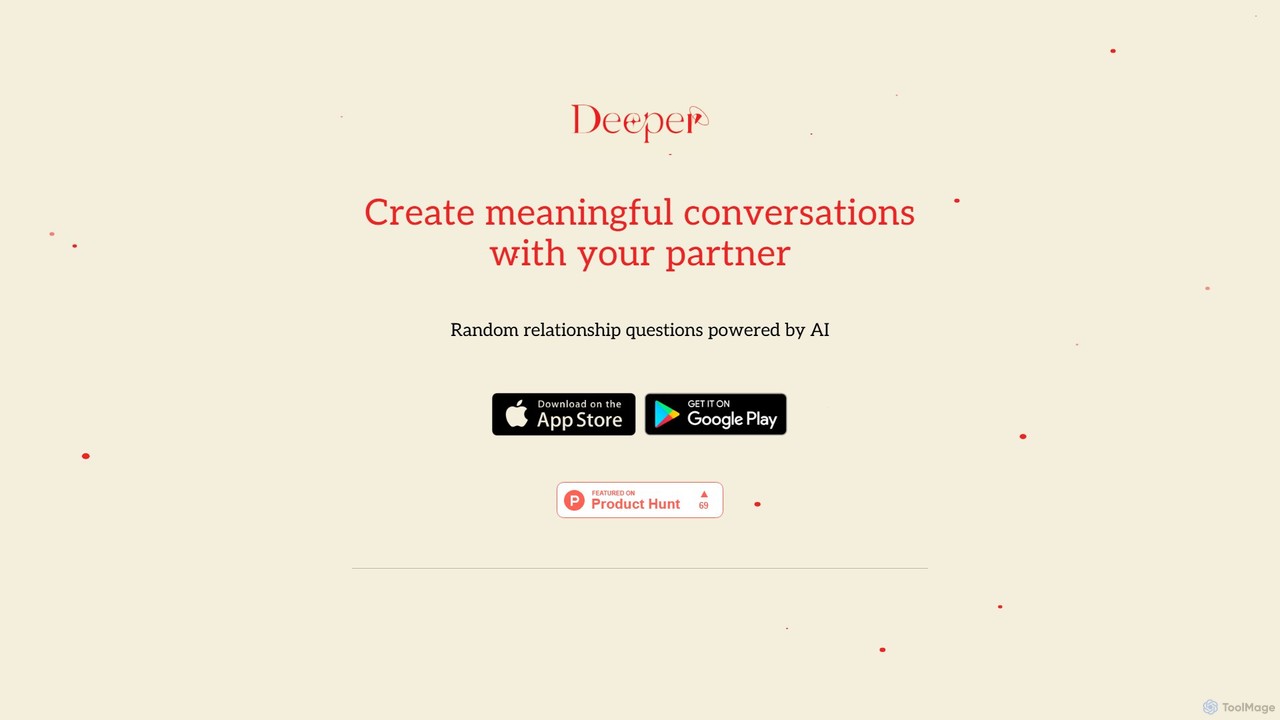
Deeper is an AI-powered tool designed to enhance relationships by generating thoughtful and engaging questions for couples. Using OpenAI's GPT-4, it helps partners move beyond small talk and foster deeper, more meaningful conversations during date nights or any time they want to connect.

Question Generator
Visits 3.5KFavorites 98Likes 92

About Question Generator

Question Generators are AI-powered tools designed to automatically create questions from various inputs like text, topics, or keywords. Leveraging natural language processing (NLP) and machine learning, these tools analyze content to formulate relevant and diverse questions. They significantly streamline the process of content review, learning assessment, and interactive engagement, making them a valuable asset for educators, content creators, and market researchers. As a sub-category of Fun Tools, they also excel at crafting engaging quizzes and interactive challenges.

Core Features

  • Contextual Question Generation: Automatically creates questions directly related to the provided text or topic.
  • Multiple Question Types: Generates various formats including multiple-choice, true/false, open-ended, and fill-in-the-blank questions.
  • Difficulty Level Adjustment: Allows users to specify the desired complexity of generated questions, from beginner to advanced.
  • Keyword-Based Questioning: Formulates questions centered around specific keywords or concepts provided by the user.
  • Answer Key Generation: Often provides corresponding answers or explanations for the generated questions.

Use Cases

Educators can quickly create quizzes and study guides from lecture notes or textbooks. Content creators can generate engaging questions for blog posts, videos, or social media to boost audience interaction. Market researchers can develop diverse survey questions to gather comprehensive feedback efficiently.

How to Choose

When selecting a Question Generator, consider the variety of question types it supports and its ability to handle different input formats (text, URL, audio). Evaluate the accuracy and relevance of the generated questions, as well as options for customizing difficulty and style. Integration capabilities with existing learning management systems or content platforms, alongside pricing and user interface, are also crucial factors.

Featured tool rankings

Question Generator use cases

1

Creating Educational Quizzes

Teachers and trainers can input lesson materials or textbook chapters to instantly generate multiple-choice or open-ended questions for student assessments and study aids. This saves hours of manual question writing, allowing more focus on teaching.

2

Enhancing Content Engagement

Bloggers and social media managers use these tools to craft interactive questions for their articles, videos, or posts. By prompting readers with relevant questions, they encourage comments, discussions, and deeper engagement with the content.

3

Streamlining Market Research Surveys

Market researchers can input product descriptions, customer feedback, or industry trends to generate a diverse set of survey questions. This helps in quickly designing comprehensive questionnaires to gather targeted insights and opinions.

4

Developing Interview Questions

HR professionals and hiring managers utilize Question Generators to create structured interview questions based on job descriptions and desired skill sets. This ensures consistency in candidate evaluation and helps uncover specific competencies.

5

Generating Study Guide Questions

Students can paste lecture notes or research papers into the tool to automatically receive a list of questions. This self-assessment method helps reinforce learning, identify knowledge gaps, and prepare more effectively for exams.

6

Facilitating Brainstorming Sessions

Teams can use a Question Generator to spark creativity during brainstorming. By inputting a problem statement or topic, the tool can generate thought-provoking questions that lead to new ideas and innovative solutions.

Question Generator FAQ

What are AI Question Generators?

AI Question Generators are tools that use artificial intelligence, primarily natural language processing (NLP), to automatically create questions from provided text, topics, or data. They analyze the input content to understand its context and extract key information, then formulate various types of questions, such as multiple-choice, true/false, or open-ended, to assess understanding or stimulate discussion.

How do AI Question Generators work?

These tools typically employ advanced NLP models to read and comprehend input text. They identify key entities, concepts, and relationships within the content. Based on this understanding, algorithms are used to construct grammatically correct and contextually relevant questions. Some tools also use machine learning to learn from existing question-answer pairs and improve their generation quality over time.

What types of questions can these tools generate?

AI Question Generators can typically produce a wide range of question types. Common formats include multiple-choice questions (MCQs) with distractors, true/false statements, open-ended questions requiring detailed answers, fill-in-the-blank questions, and short-answer prompts. The specific types available depend on the tool's capabilities and the complexity of its underlying AI models.

Who can benefit from using a Question Generator?

A diverse range of users can benefit. Educators can create quizzes and study materials efficiently. Content creators can boost audience engagement with interactive questions. Market researchers can design surveys quickly. HR professionals can develop interview questions, and students can generate self-assessment tools. Anyone needing to extract information or stimulate thought from text can find value.

How do Question Generators differ from general AI writing assistants?

While both use AI, Question Generators are specialized for question formulation. General AI writing assistants focus on generating various forms of text, like articles, emails, or summaries. Question Generators, however, are specifically trained and optimized to analyze content for question-worthy information and structure questions effectively, often including options for difficulty and question type, which general writing assistants typically lack.