ToolMage
Sign in

Best 1 Satire AI tools for Fun Tools

Popular Satire AI tools in Fun Tools include The Generative Press, helping you work more efficiently.

The Generative Press
Free

The Generative Press

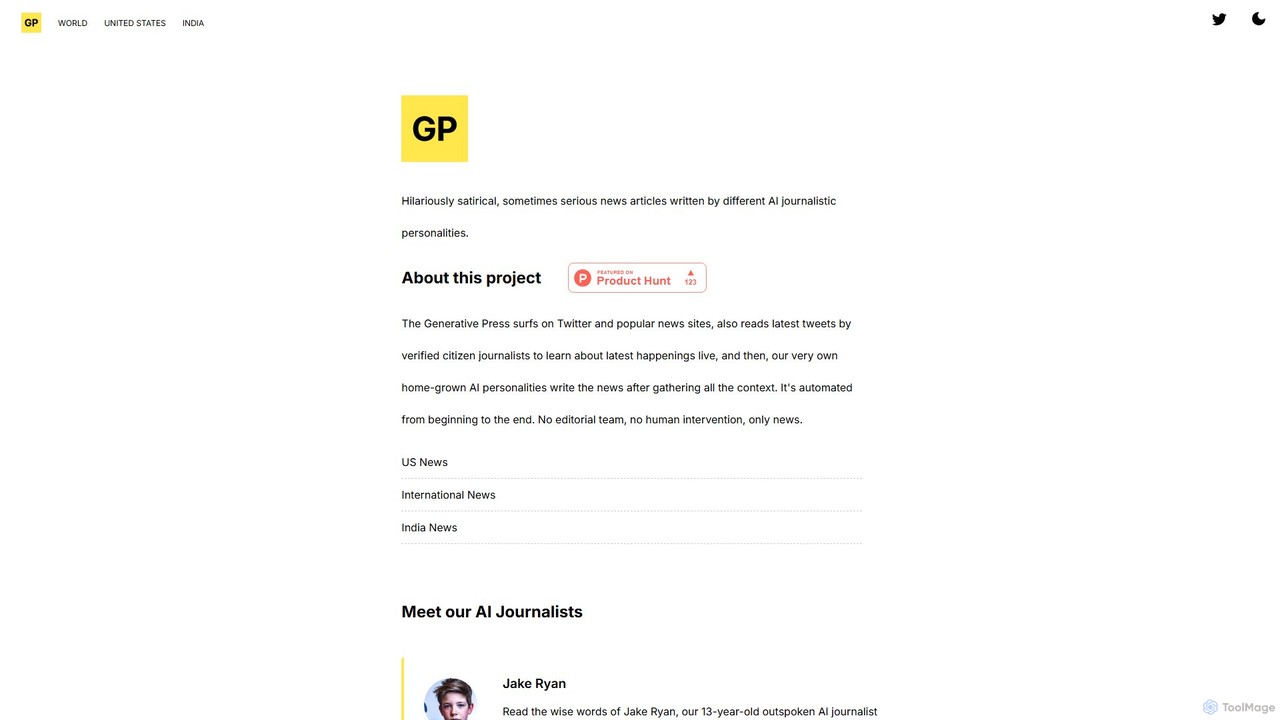
The Generative Press is a unique AI-powered news website that automatically generates satirical and serious articles. It uses distinct AI journalist personalities to report on real-time global events, offering a novel, fully automated perspective on the news without any human intervention.

Satire
Visits 4.9KFavorites 122Likes 119

About Satire

AI Satire tools are a specialized category of fun tools that use generative AI to create humorous, ironic, or critical content in a satirical style. These tools leverage large language models (LLMs) trained on vast datasets of satirical writing and comedy to mimic specific tones and formats. They are valuable for content creators, social media managers, and humorists looking to quickly generate witty commentary, parody articles, or funny scripts. AI Satire tools excel at exaggerating current events or common situations to produce sharp, entertaining social critique.

Core Features

  • Parody Generation: Creates content that mimics the style of a specific person, publication, or genre for humorous effect.
  • Tone Exaggeration: Amplifies specific emotional or stylistic tones, such as sarcasm, cynicism, or absurdity.
  • Ironic Commentary: Generates text that says the opposite of what is meant, often to critique a subject.
  • Satirical News Writing: Produces articles in the format of news reports but with fictional, humorous, or critical content.

Use Cases

These tools are primarily used in content creation and entertainment. Social media managers use them to craft engaging, humorous posts that stand out. Bloggers and writers generate parody articles or satirical opinion pieces. Comedians and scriptwriters can use them as a brainstorming aid for sketches, jokes, or monologues.

How to Choose

When selecting an AI Satire tool, consider the range of satirical styles it can produce. Evaluate the level of control you have over the output, such as adjusting the intensity of sarcasm or irony. Check for customization options, like training the AI on a specific author's style. Finally, assess the user interface for ease of use, especially for generating and refining content quickly.

Featured tool rankings

Satire use cases

1

Creating Parody News Articles

A content creator or blogger aiming to engage their audience with timely humor can use an AI Satire tool to generate parody news articles. By providing a real news headline or a topic, the tool can produce a complete article in the style of publications like 'The Onion'. This process allows for the rapid creation of shareable content that comments on current events, saving hours of creative writing and brainstorming while maintaining a consistent, humorous tone.

2

Generating Witty Social Media Captions

A social media manager needs to create daily posts that are engaging and stand out. Using an AI Satire tool, they can input a serious topic, a product feature, or a common industry problem and receive multiple sarcastic or ironic caption options. This helps in maintaining a unique brand voice, increases engagement through humor, and significantly reduces the time spent on crafting clever copy from scratch for platforms like Twitter, Instagram, or LinkedIn.

3

Brainstorming Comedic Scripts and Monologues

A comedy writer or performer can face writer's block when developing new material. An AI Satire tool can act as a creative partner. By providing a premise, character trait, or a current event, the AI can generate a series of jokes, dialogue snippets, or monologue outlines. This output serves as a starting point, helping the writer explore different humorous angles, punchlines, and narrative structures, ultimately accelerating the script development process for sketches or stand-up routines.

4

Producing Satirical Product Reviews

A YouTuber or content creator specializing in humor can generate satirical reviews for mundane or fictional products. They can input the product's name and basic features, and the AI tool will craft an over-the-top, absurd, or overly critical review. This provides a solid script foundation for a video or blog post, allowing the creator to focus on performance and production rather than spending extensive time on writing humorous content from scratch.

5

Developing Dialogue for Sarcastic Characters

Authors, game developers, or screenwriters often need to write for characters with a distinctly sarcastic or cynical personality. An AI Satire tool can help craft dialogue that fits this persona. By defining the character's traits and the context of a scene, the AI can generate lines of dialogue that are witty, cutting, and consistent with the character's voice. This saves time in character development and ensures the dialogue remains sharp and authentic throughout the narrative.

6

Crafting Ironic Corporate Memos for Internal Humor

For internal communications or team-building activities, a manager can use an AI Satire tool to create a humorous memo about a common office issue, like 'the mysterious case of the disappearing coffee mugs'. This lighthearted approach can boost morale and communicate a message in a memorable way. The tool helps generate content that is funny without being inappropriate for a professional setting, turning mundane announcements into an enjoyable experience for the team.

Satire FAQ

What are AI Satire tools?

AI Satire tools are specialized applications that use artificial intelligence, particularly large language models, to generate text in a satirical, ironic, or parody style. Unlike general AI writers, they are specifically trained on comedic and satirical content to understand and replicate the nuances of humor, exaggeration, and social critique. They are used to create content like fake news articles, witty social media posts, and comedic scripts.

How do AI Satire tools differ from general AI writers?

The main difference lies in their training data and intended output. General AI writers are trained on a broad range of text to be versatile for tasks like writing emails, reports, and articles. AI Satire tools are fine-tuned on a specific corpus of humor, comedy, and satirical works. This specialization allows them to:

  • Understand Contextual Humor: They are better at grasping irony and sarcasm.
  • Mimic Specific Styles: They can more accurately replicate the tone of a specific comedian or satirical publication.
  • Prioritize Wittiness: Their primary goal is to be funny or critical, not just factually accurate or grammatically correct.

Who can benefit from using AI Satire tools?

A wide range of users can benefit from these tools. Content Creators and Bloggers can quickly generate humorous articles and posts. Social Media Managers can create engaging, witty captions that capture attention. Comedy Writers and Scriptwriters can use them as a brainstorming partner to overcome writer's block. Even Marketers can use them to craft clever and memorable ad copy with a humorous twist.

How to choose the right AI Satire tool?

When selecting an AI Satire tool, consider the following factors:

  • Style Variety: Does the tool offer a range of satirical styles, such as parody, sarcasm, or absurdity?
  • Customization and Control: Can you adjust the intensity of the humor or guide the output with specific instructions?
  • Ease of Use: Is the interface intuitive, allowing you to generate and refine content quickly?
  • Output Quality: Does the generated content consistently sound natural and genuinely funny, or does it often feel generic and forced?

Can AI truly understand and create complex satire?

While AI has made significant progress, its understanding of satire is based on pattern recognition from its training data, not genuine comprehension of social context or human emotion. It can effectively mimic styles and structures of satire it has seen before. However, it may struggle with highly nuanced, culturally specific, or completely novel forms of humor. The best results are often achieved when a human user provides a strong creative prompt and then refines the AI's output, using the tool as a creative assistant rather than a fully autonomous satirist.