Fun Tools Best in category 1 results Simulators AI Tool

Popular AI tools in the Simulators field of Fun Tools include Automated Combat, etc., helping you quickly improve efficiency.

Free
Automated Combat

Automated Combat

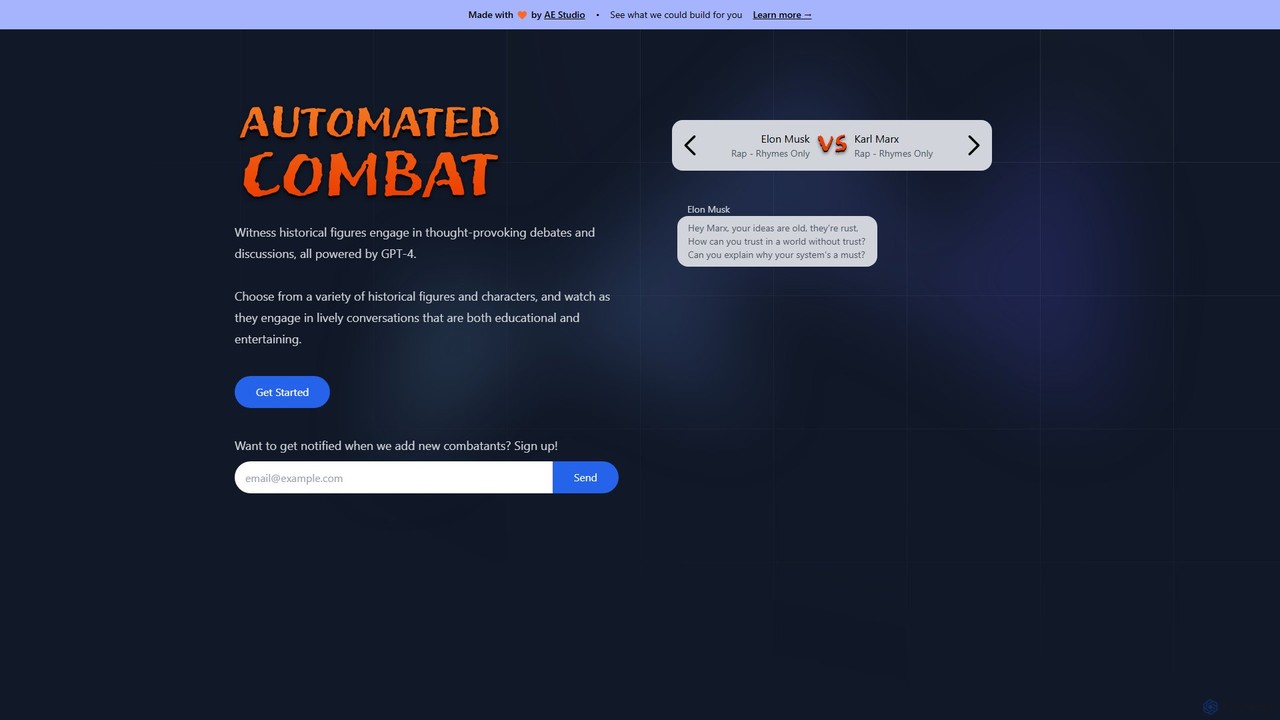
An AI-powered platform by AE Studio that simulates thought-provoking and entertaining debates between historical figures using GPT-4. Choose …

2.3K

About Simulators

AI Simulators are tools that leverage artificial intelligence to create dynamic, interactive virtual environments and scenarios. They use machine learning models, such as generative algorithms and language models, to produce realistic behaviors, emergent events, and adaptive dialogues that go beyond pre-programmed scripts. This allows users to explore hypothetical situations, interact with intelligent AI agents, or experiment with complex systems in a controlled setting, making them powerful assets for entertainment, creative development, and learning within the Fun Tools category.

Core Features

  • Dynamic Scenario Generation: Creates unique and evolving situations based on user input and internal AI logic, ensuring high replayability.
  • AI-Driven Agent Behavior: Populates simulations with entities that exhibit intelligent, adaptive, and often unpredictable actions and decisions.
  • Natural Language Interaction: Enables users to communicate with simulated characters or systems using conversational language for immersive experiences.
  • Procedural World Building: Algorithmically generates vast and detailed environments, characters, or narratives for exploration.

Use Cases

AI Simulators are widely used in game development for creating intelligent NPCs, in creative writing for exploring plotlines with dynamic characters, and in education for building interactive learning modules. They also serve as a popular form of entertainment, allowing users to create and observe complex social or physical simulations in a sandbox environment.

How to Choose

When selecting an AI Simulator, consider the simulation's primary focus (e.g., social dynamics, world-building, narrative). Evaluate the level of user control and customization available, the sophistication of the underlying AI models, and the platform's community features for sharing creations and mods. Also, assess the technical requirements and ease of use for your skill level.

SimulatorsUse Cases

1

Develop Realistic Game NPCs

A game developer uses an AI simulator to create non-player characters (NPCs) for an open-world RPG. Instead of writing rigid dialogue trees, they define AI personalities, goals, and relationships. The simulator then generates dynamic behaviors where NPCs react realistically to player actions, form alliances, remember past interactions, and communicate with each other organically. This process saves hundreds of scripting hours and results in a more immersive and unpredictable game world that players find more engaging.

2

Prototype Interactive Storylines

A fiction writer wants to test different plot developments for their novel. They use an AI simulator to create their main characters as AI agents. By interacting with these agents through natural language, the writer can explore how characters would realistically react to various plot twists. They can introduce a sudden conflict and observe the emergent dialogue and actions, helping them identify the most compelling narrative paths and ensuring character consistency without needing to write dozens of draft scenes.

3

Simulate Historical Conversations for Learning

An educator designs an interactive history lesson using an AI simulator. They create AI personas of historical figures like Cleopatra or Leonardo da Vinci, trained on their known writings and historical context. Students can then engage in open-ended conversations, asking questions like "What was your greatest challenge?" or "How did you discover that?" The AI provides plausible, in-character responses, transforming a passive learning experience into an immersive dialogue that fosters curiosity and deeper understanding of historical perspectives.

4

Generate Worlds for Tabletop RPG Campaigns

A Dungeon Master preparing for a Dungeons & Dragons campaign uses an AI simulator to procedurally generate a new fantasy world. They input parameters like 'high magic,' 'feudal society,' and 'mountainous terrain.' The tool generates a detailed map, major cities with AI-generated histories, political factions with dynamic goals, and even interesting NPCs with unique backstories. This automates the most time-consuming parts of world-building, allowing the DM to focus on crafting the main adventure and reacting to the players' choices within a rich, living world.

5

Observe Emergent Social Dynamics

A hobbyist interested in sociology uses an AI simulator to create a virtual community of 50 AI agents. Each agent is given a simple personality (e.g., cooperative, selfish, cautious) and a basic need for resources. The user sets the simulation in motion and observes. Over time, they witness the spontaneous formation of social groups, the emergence of leaders, conflicts over resources, and the development of simple trade behaviors, all without explicit programming. This provides a fascinating, accessible way to explore complex systems theory for personal interest.

6

Create Sandbox 'What-If' Scenarios

For pure entertainment, a user sets up a sandbox simulation. They create AI agents based on their favorite fictional characters from different universes and place them together in a simulated environment, like a space station. They then introduce a problem, such as a power failure, and watch how these disparate personalities interact to solve it. The fun comes from the unpredictability: Would a stoic warrior cooperate with a witty scientist? The simulator generates unique dialogues and outcomes, creating a personal, endlessly variable form of fan fiction.

SimulatorsFrequently Asked Questions