Fun Tools Best in category 3 results Story Generator AI Tool

Popular AI tools in the Story Generator field of Fun Tools include Book by Anyone、DeepStory、Storiado, etc., helping you quickly improve efficiency.

Storiado

Storiado

Storiado is an AI-powered mobile party game that transforms social gatherings into hilarious storytelling sessions. Players collaboratively create …

3.3K
Book by Anyone

Book by Anyone

An AI-powered service that lets you create a hilarious, personalized book about anyone in just minutes. Answer a …

230.0K
DeepStory

DeepStory

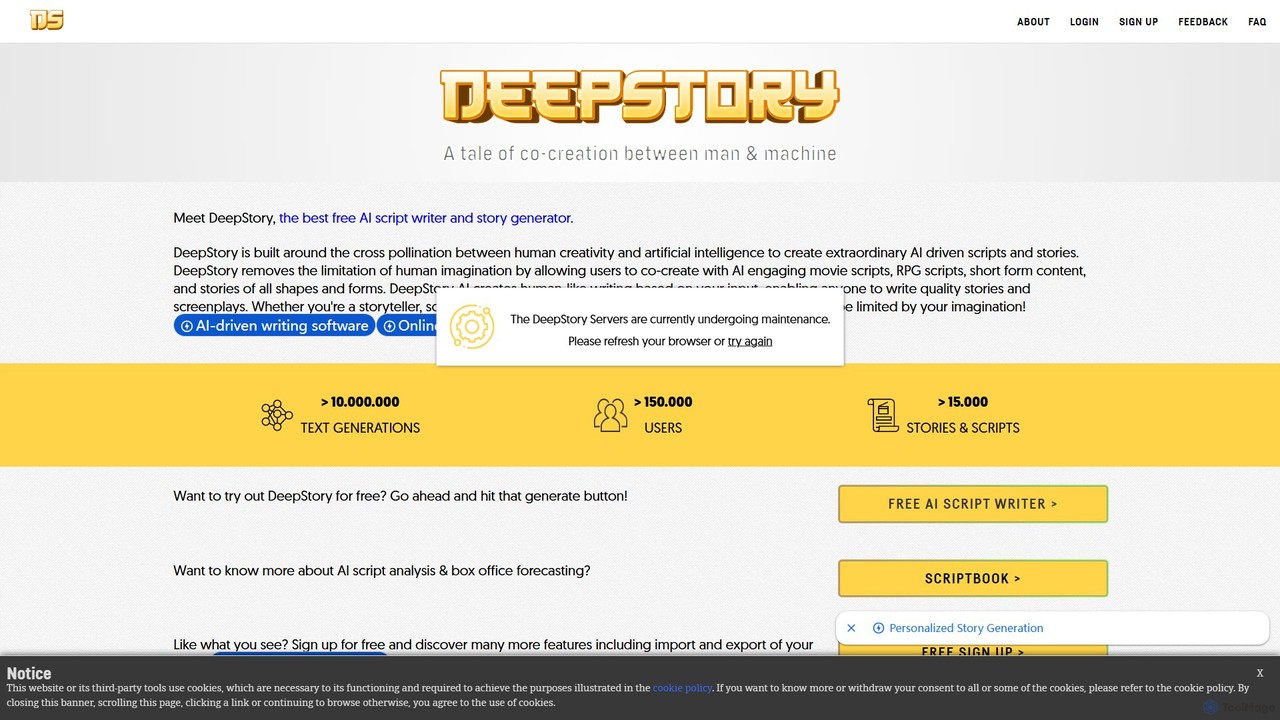
DeepStory is an AI-powered script and story generator designed for co-creation between humans and machines. It helps screenwriters, …

5.5K

About Story Generator

Story Generators are AI-powered tools that automatically create narrative content, from short plots to detailed scenes, based on user prompts. These tools leverage large language models (LLMs) trained on vast libraries of literature to understand plot structure, character development, and genre conventions. They serve as creative partners for writers, game developers, and marketers, helping to overcome writer's block, brainstorm ideas, and rapidly generate draft content. Their ability to adapt to different styles and tones makes them a versatile asset in any creative toolkit.

Core Features

  • Prompt-Based Narrative Generation: Users provide a premise, characters, or a simple idea, and the AI constructs a corresponding story or scene.
  • Plot and Outline Creation: Generates structured plot points, chapter outlines, or story arcs to provide a narrative framework.
  • Character Development: Creates character backstories, personality traits, motivations, and dialogue based on descriptions.
  • Genre and Style Adaptation: Capable of writing in various literary genres such as fantasy, sci-fi, mystery, or romance, and mimicking specific authorial styles.
  • Interactive Storytelling: Allows users to guide the narrative's direction by making choices at key plot points, co-creating the story with the AI.

Use Cases

Story Generators are primarily used by fiction writers and novelists for brainstorming and drafting. Game developers utilize them to create rich lore, questlines, and NPC dialogues. Screenwriters and content creators also employ these tools to outline scripts and develop narrative concepts for videos or social media campaigns.

How to Choose

When selecting a Story Generator, consider the level of creative control it offers—can you steer the plot or just accept the output? Evaluate its strength in your preferred genre and the coherence of its long-form content generation. Also, assess the user interface for ease of use and the pricing model, whether it's subscription-based or pay-per-word, to ensure it aligns with your project's needs and budget.

Story GeneratorUse Cases

1

Brainstorming Plot Twists for a Novel

A fiction author is experiencing writer's block while working on a mystery novel. They input their main character's profile, the current scene, and the central conflict into a Story Generator. The tool provides five different potential plot twists, including an unexpected betrayal by a trusted ally and the discovery of a hidden clue. This process helps the author break through their creative impasse and choose a compelling new direction for the narrative, saving hours of unproductive brainstorming.

2

Generating Questlines for an RPG

An indie game developer is building the world for a new role-playing game (RPG). To populate the world with engaging content, they use a Story Generator to create side quests. By providing prompts like 'a haunted village needs help' or 'a merchant's rare cargo is stolen', the AI generates complete quest outlines, including key non-player characters (NPCs), potential locations, and reward ideas. This accelerates the content creation process, allowing a small team to build a richer game world.

3

Drafting Short Video Scripts

A social media content creator wants to produce a short, narrative-driven video for TikTok. They have a theme—'a magical library book'—but need a simple story structure. Using a Story Generator, they input the theme and request a three-act structure. The AI outputs a basic script outline: an introduction to the character finding the book, a rising action where the book's magic causes humorous trouble, and a resolution where the character learns to control it. This provides a solid foundation for filming.

4

Creating Custom Bedtime Stories

A parent wants to create a unique bedtime story for their child. They use a Story Generator and input prompts like: 'Main character: a brave squirrel named Squeaky. Setting: a magical forest. Moral of the story: sharing is important.' The AI generates a short, age-appropriate story incorporating all these elements. The parent can then read this personalized tale to their child, making story time more engaging and special. They can even generate a new story every night with different characters and lessons.

5

Developing Brand Storytelling Campaigns

A marketing team is tasked with creating a new ad campaign based on brand storytelling. They use a Story Generator to explore different narrative angles. By inputting their product's key features and target audience demographics, the tool generates short story concepts. For example, for a durable outdoor watch, it might create a story about a hiker relying on the watch during an unexpected adventure. This allows the team to quickly prototype and test multiple narrative ideas before committing to a full production budget.

6

Designing Dungeons & Dragons Campaigns

A Dungeon Master (DM) is preparing a new campaign for their Dungeons & Dragons group. To add depth and unpredictability, they use a Story Generator to create side plots and NPC backstories. They input a simple prompt like 'a mysterious cult in the city of Silverhaven' and receive several story hooks, including the cult's secret leader, their ultimate goal, and a few sample encounters. This saves the DM significant preparation time and provides fresh, creative ideas to challenge their players.

Story GeneratorFrequently Asked Questions