ToolMage
Sign in

Best 1 Toys AI tools for Fun Tools

Popular Toys AI tools in Fun Tools include BrickCenter, helping you work more efficiently.

BrickCenter
Freemium

BrickCenter

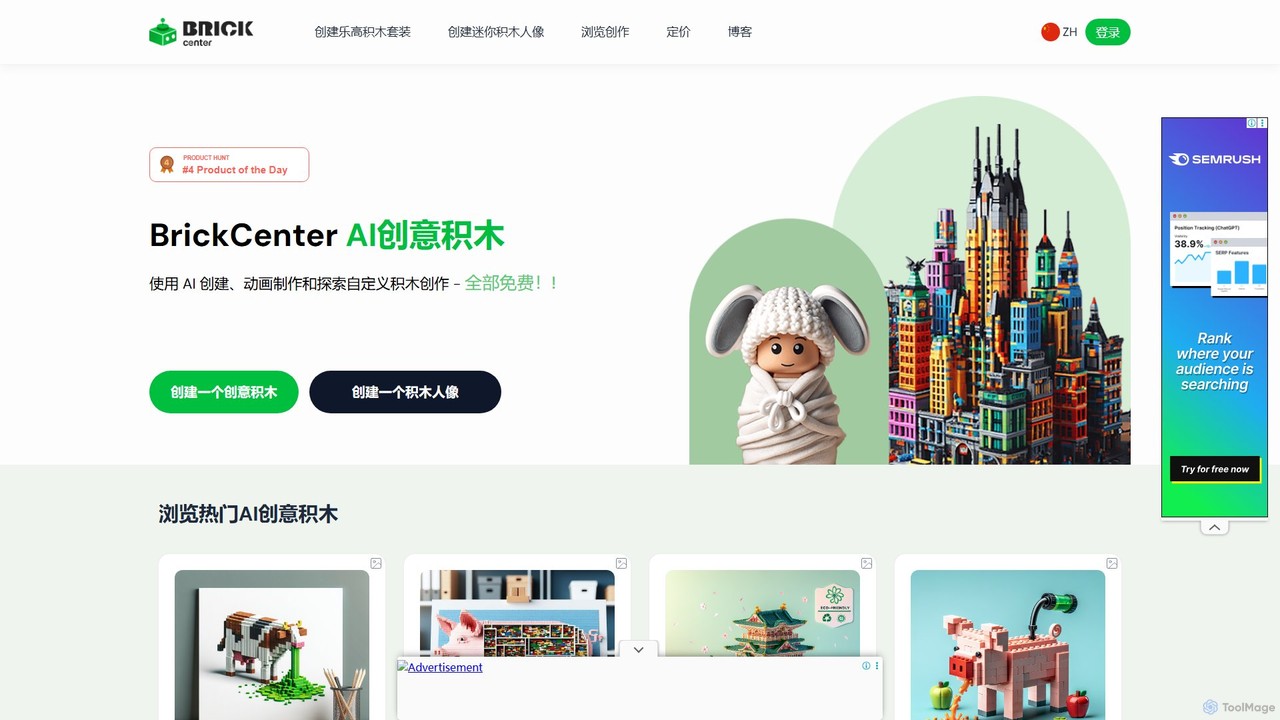
BrickCenter is an innovative AI-powered platform that allows users to generate custom brick sets, minifigures, and animations from simple text descriptions or images. Unleash your creativity and bring your imaginative ideas to life in the form of detailed, buildable brick models and share them with a vibrant community.

3D
Visits 8.5KFavorites 126Likes 128

About Toys

AI Toys are a category of AI-powered tools designed to provide interactive entertainment, companionship, and learning through advanced artificial intelligence. These innovative tools leverage sophisticated AI algorithms to enable dynamic interaction, adaptive learning, and autonomous behavior, transforming traditional play into more engaging and personalized experiences. As a specialized segment within the broader Fun Tools category, AI Toys offer unique forms of leisure, cognitive engagement, and creative expression for users of all ages, from educational robots to interactive virtual companions.

Core Features

  • Intelligent Interaction: Responds to voice commands, touch, and gestures, creating a lifelike engagement.
  • Adaptive Learning: Personalizes play patterns and responses based on user behavior and preferences over time.
  • Autonomous Behavior: Exhibits independent movement, speech, or actions, fostering a sense of companionship.
  • Content Generation: Creates dynamic stories, music, or visual elements, enhancing creative play.
  • Emotional Simulation: Mimics or responds to human emotions, deepening the interactive bond.

Applicable Scenarios

AI Toys are ideal for personal entertainment, offering companionship through interactive robots or virtual pets. They serve as innovative educational tools for children, teaching STEM concepts or fostering creativity through engaging play. Additionally, these tools provide unique interactive experiences for adults seeking novel forms of leisure and mental stimulation.

How to Choose

When selecting AI Toys, consider the primary interaction type (voice, touch, visual recognition) and its responsiveness. Evaluate the toy's adaptive learning capabilities and how it personalizes the experience. Prioritize safety features and data privacy, especially for products intended for children. Finally, assess the content's age-appropriateness and the toy's overall durability and connectivity options.

Toys use cases

1

Personalized AI Companion for Children

Parents seeking engaging and educational play for their children can utilize AI-powered companion robots. These robots learn a child's preferences, adapt their responses, and offer personalized stories or games, fostering social skills and cognitive development while providing a unique playmate that grows with the child.

2

Interactive Storytelling and Creative Play

Content creators and children alike can use AI Toys that generate dynamic narratives or creative prompts. By interacting with the AI, users can co-create unique stories, music, or art pieces, pushing the boundaries of imagination and offering endless possibilities for personalized creative expression and entertainment.

3

AI-Enhanced Board Games and Puzzles

Game enthusiasts can experience traditional board games or puzzles reimagined with AI. These toys can adapt difficulty levels, offer strategic advice, or even generate new game scenarios on the fly, providing a constantly fresh and challenging experience that keeps players engaged and sharpens their problem-solving skills.

4

Educational Robotics for STEM Learning

Educators and students can employ AI-powered educational robots to teach fundamental STEM concepts like coding, engineering, and robotics in a hands-on, playful manner. These robots often come with programming interfaces that allow users to control their actions, making abstract concepts tangible and fostering critical thinking.

5

Virtual AI Playmates for Social Interaction

Individuals seeking digital companionship or social interaction can engage with virtual AI playmates. These software-based toys offer conversational capabilities, emotional responses, and personalized interactions, providing a sense of connection and entertainment, especially for those who enjoy digital experiences.

6

AI-Powered Musical Instrument Learning

Aspiring musicians can leverage AI Toys designed to assist with learning musical instruments. These tools can provide real-time feedback on pitch and rhythm, adapt lessons to the user's progress, and even generate accompanying music, making the learning process more engaging, personalized, and effective for all skill levels.

Toys FAQ

What are AI Toys?

AI Toys are interactive playthings or digital companions that integrate artificial intelligence to offer dynamic and personalized experiences. Unlike traditional toys, they can learn from user interactions, adapt their behavior, and respond intelligently to stimuli like voice or touch. They fall under the broader category of Fun Tools, specifically focusing on leisure and engagement enhanced by AI technology.

How do AI Toys differ from traditional toys?

The primary difference lies in their intelligence and adaptability. Traditional toys offer static play patterns, whereas AI Toys possess processing power and algorithms that enable them to interact dynamically, learn user preferences, and even simulate emotions. This allows for more personalized, evolving, and engaging play experiences that can change over time based on interaction.

What should I consider when buying an AI Toy?

Key considerations include the toy's intended age group, ensuring it's age-appropriate and safe. Evaluate its interactive capabilities, such as voice recognition accuracy and responsiveness. Check for data privacy policies and security features, especially if it collects personal information. Also, consider battery life, durability, and any subscription models for advanced features or content updates.

Can AI Toys be educational?

Absolutely. Many AI Toys are specifically designed with educational goals in mind. They can teach children coding, robotics, problem-solving, and even social-emotional skills through interactive play. By adapting to a child's learning pace and offering personalized challenges, AI Toys can make learning more engaging and effective than traditional methods.

Are there privacy concerns with AI Toys?

Yes, privacy is a significant concern, particularly for AI Toys that collect data through microphones, cameras, or sensors. It's crucial to review the manufacturer's privacy policy to understand what data is collected, how it's stored, and whether it's shared. Look for toys with strong encryption, parental controls, and clear data deletion options to protect personal information.