ToolMage
Sign in

Best 6 Smart Devices AI tools for Hardware

Popular Smart Devices AI tools in Hardware include Apple, Plaud, Flowtica Scribe, XNote, ShapeScale, and Lushair, helping you work more efficiently.

Lushair
Paid

Lushair

Lushair is an AI-powered hair and scalp analysis system that uses a smart dermascope and a mobile app to provide clinic-grade diagnostics at home. It analyzes 16 vital signs to generate personalized care plans, including product, lifestyle, and professional recommendations, helping users proactively manage their hair health.

Diagnostics
Visits 7.2KFavorites 157Likes 159
Plaud
Paid

Plaud

Plaud is an innovative AI note-taking solution combining a sleek hardware voice recorder with a powerful AI app. It captures conversations, transcribes them with high accuracy, and generates structured summaries, mind maps, and action items. Designed for professionals, students, and creators, Plaud streamlines the documentation of meetings, lectures, and interviews, saving hours of manual work and ensuring no critical detail is missed.

Transcription
Visits 4.8MFavorites 171Likes 197
Flowtica Scribe
Paid

Flowtica Scribe

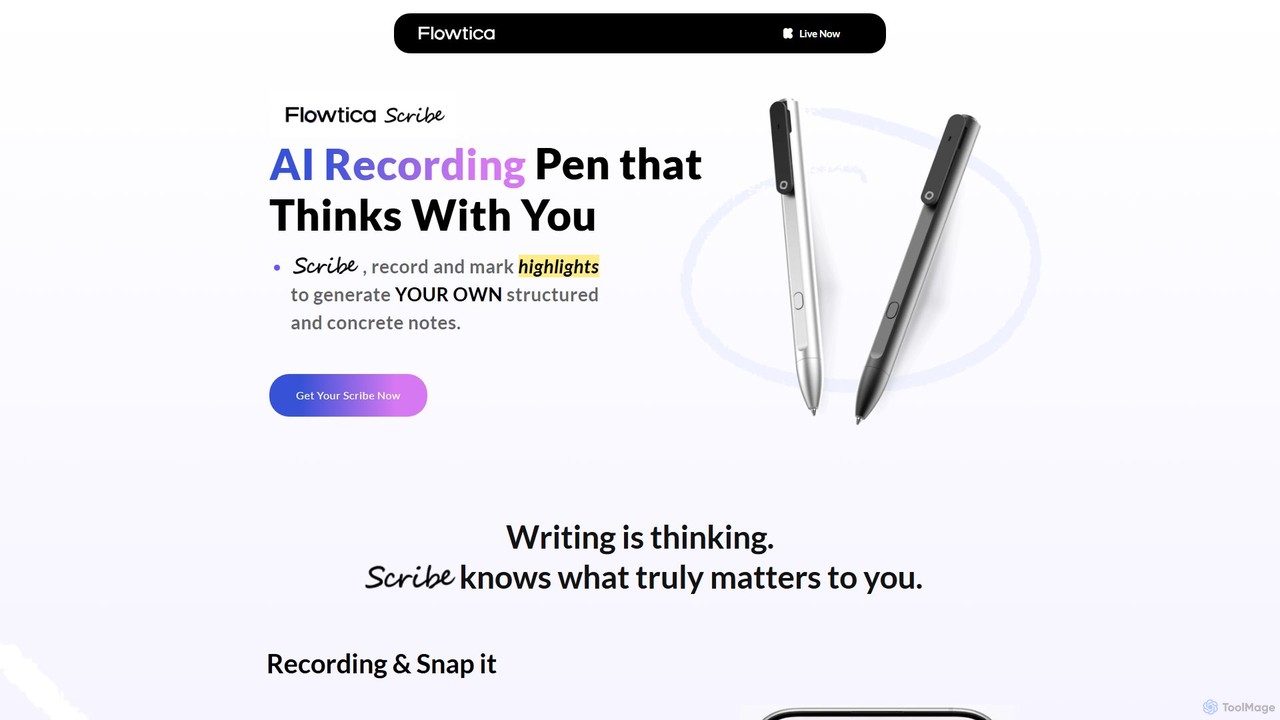
Flowtica Scribe is a revolutionary AI-powered recording pen designed to capture audio and generate personalized, structured notes. By combining audio recording with user-marked highlights and snapped handwritten notes, it creates insightful summaries that reflect your priorities, moving beyond generic bullet points for meetings, interviews, and lectures.

Transcription
Visits 60.6KFavorites 160Likes 143
XNote
Paid

XNote

XNote is an AI-powered smart writing set that combines a traditional pen and paper notebook with advanced digital technology. It captures your handwriting in real-time, converts it into editable digital text, and uses AI to help you search, summarize, and organize your notes. It's designed for anyone who loves the feel of writing on paper but needs the power and convenience of digital tools.

Study Tools
Visits 36.7KFavorites 156Likes 149
Apple
Paid

Apple

Apple integrates 'Apple Intelligence,' a personal intelligence system, across its ecosystem. It enhances user experience on iPhone, iPad, and Mac with powerful AI features like advanced Writing Tools, Image Playground, and a more capable Siri, all designed with a primary focus on privacy and seamless integration.

Smart Devices
Visits 541.1MFavorites 175Likes 191
ShapeScale
Paid

ShapeScale

ShapeScale is a revolutionary 3D body scanner and smart scale that creates a photorealistic 3D avatar of your body. It goes beyond traditional scales by visually tracking changes in muscle gain and fat loss with millimetric precision, providing heatmaps and detailed body composition analysis to keep you motivated on your fitness journey.

3D
Visits 19KFavorites 181Likes 181

About Smart Devices

Smart Devices are AI-powered hardware that seamlessly integrate computing capabilities and connectivity into everyday objects, transforming them into intelligent assistants and environmental responders. These advanced devices leverage artificial intelligence for sophisticated interaction, predictive automation, and real-time data analysis, fundamentally changing how we live, work, and interact with our surroundings. They enhance daily life by offering proactive assistance, deeply personalized experiences, and comprehensive remote control, making homes and personal environments significantly more responsive, efficient, and secure.

Core Features

  • AI-driven Interaction: Enable intuitive natural language processing for voice commands, gesture recognition, and intelligent, context-aware responses, making human-device interaction more fluid.
  • Environmental Sensing: Collect diverse data from surroundings, such as temperature, humidity, motion, light levels, and air quality, allowing devices to adapt their functionality proactively.
  • Personalized Automation: Learn user habits, preferences, and routines through machine learning to automate tasks, optimize settings, and anticipate needs without explicit commands.
  • Remote Management: Provide users with the ability to control and monitor their devices from anywhere in the world via dedicated mobile applications, offering convenience and peace of mind.
  • Interconnectivity (IoT): Facilitate seamless communication and cooperation with other smart devices, platforms, and services, creating integrated, cohesive smart ecosystems that work in harmony.

Applicable Scenarios

Smart Devices are widely adopted in modern smart homes, enhancing security through intelligent cameras and locks, optimizing energy management with smart thermostats, and providing immersive entertainment experiences. Beyond the home, they are crucial in personal health monitoring through advanced wearables, offering real-time insights and alerts. Furthermore, smart assistants and displays streamline tasks in various professional settings, improving accessibility and productivity for individuals and teams alike.

Key Selection Criteria

When selecting Smart Devices, it is crucial to consider their compatibility with your existing smart home ecosystem, such as Amazon Alexa, Google Home, or Apple HomeKit, to ensure seamless integration. Evaluate the device's privacy and security features, including data encryption protocols, user control over personal information, and regular software updates. Assess the specific functionalities offered, ensuring they align with your needs, whether for advanced automation, detailed monitoring, or specific accessibility features. Finally, consider the ease of setup, daily operation, and the manufacturer's reputation for long-term support and reliability.


Smart Devices use cases

1

Smart Home Security & Surveillance

Homeowners can deploy AI-powered smart cameras and doorbells to monitor their property in real-time. These devices use AI for facial recognition, anomaly detection, and motion sensing, sending instant alerts for unusual activity. This enables proactive security management, allowing users to view live feeds, communicate with visitors remotely, and deter intruders, significantly enhancing home safety and peace of mind.

2

Personalized Health & Fitness Monitoring

Individuals utilize smartwatches and fitness trackers equipped with AI to continuously monitor vital signs like heart rate, sleep patterns, and activity levels. AI algorithms analyze this data to provide personalized insights into health trends, detect potential anomalies, and offer tailored recommendations for exercise and rest. This empowers users to make informed decisions about their well-being and achieve fitness goals more effectively.

3

Energy Optimization & Climate Control

Smart thermostats and lighting systems leverage AI to learn household occupancy patterns and preferences, automatically adjusting temperatures and light settings. These devices can integrate with local weather data to optimize energy consumption, reducing utility bills and environmental impact. For instance, a smart thermostat can pre-cool a home before arrival or turn off lights in empty rooms, ensuring comfort with maximum efficiency.

4

Elderly Care & Assisted Living

Smart devices play a vital role in supporting independent living for the elderly and providing reassurance for caregivers. AI-powered fall detection sensors, smart speakers for voice-activated calls, and medication reminders help monitor well-being and provide immediate assistance when needed. Family members can remotely check on loved ones, ensuring their safety and facilitating timely intervention in emergencies.

5

Enhanced Productivity with Voice Assistants

Professionals and busy individuals use smart speakers and displays as AI-powered voice assistants to manage their daily tasks hands-free. These devices can set reminders, schedule appointments, answer queries, and control other smart home devices through natural language commands. This frees up time, streamlines workflow, and allows for efficient multitasking, boosting overall personal and professional productivity.

6

Immersive Entertainment & Media Management

Smart TVs, soundbars, and lighting systems integrate AI to create personalized and immersive entertainment experiences. AI algorithms recommend content based on viewing history, optimize audio settings for different media types, and synchronize smart lighting with on-screen action or music. Users can control their entire media setup with voice commands, transforming their living room into a dynamic and responsive entertainment hub.

Smart Devices FAQ

What are Smart Devices?

Smart Devices are everyday electronic gadgets, like smartwatches, speakers, and home appliances, that are enhanced with AI and internet connectivity. They can collect data, communicate with other devices, and perform intelligent functions such as voice control, automation, and personalized recommendations, making them responsive to user needs and environmental changes.

How do Smart Devices utilize Artificial Intelligence?

Smart Devices utilize AI in several key ways. AI enables natural language processing for voice assistants to understand commands, computer vision for smart cameras to recognize faces or objects, and machine learning for devices to learn user preferences and automate tasks proactively. This allows for personalized experiences, predictive actions, and intelligent decision-making without constant human input.

What are the main benefits of integrating Smart Devices into daily life?

Integrating Smart Devices offers numerous benefits, including enhanced convenience through automation of routine tasks, improved security with intelligent monitoring systems, and greater energy efficiency via optimized climate control. They also provide personalized experiences, from tailored health insights to customized entertainment, and enable remote management, giving users control from anywhere.

What factors should I consider when choosing a Smart Device?

When choosing a Smart Device, consider its compatibility with your existing smart home ecosystem (e.g., Google Home, Apple HomeKit, Amazon Alexa) to ensure seamless integration. Evaluate the device's privacy and security features, including data encryption and user control over personal data. Assess the specific functionalities it offers, its ease of use, and the manufacturer's reputation for reliability and ongoing software support.

Are Smart Devices secure, and how can I protect my privacy?

While Smart Devices offer convenience, security and privacy are valid concerns. To protect yourself, choose reputable brands with strong security track records, understand their data privacy policies, and use strong, unique passwords. Enable two-factor authentication where available, regularly update device firmware, and review privacy settings to control what data is collected and shared. Disconnect devices when not in use if concerned.