Healthcare Best in category 4 results Medical Coding AI Tool

Popular AI tools in the Medical Coding field of Healthcare include ICDcodes.ai、MarianaAI、Synic AI、Medicodio, etc., helping you quickly improve efficiency.

Synic AI

Synic AI

Synic AI is a premier medical AI platform designed for clinicians, offering real-time AI assistance, comprehensive clinical documentation, …

5.9K
MarianaAI

MarianaAI

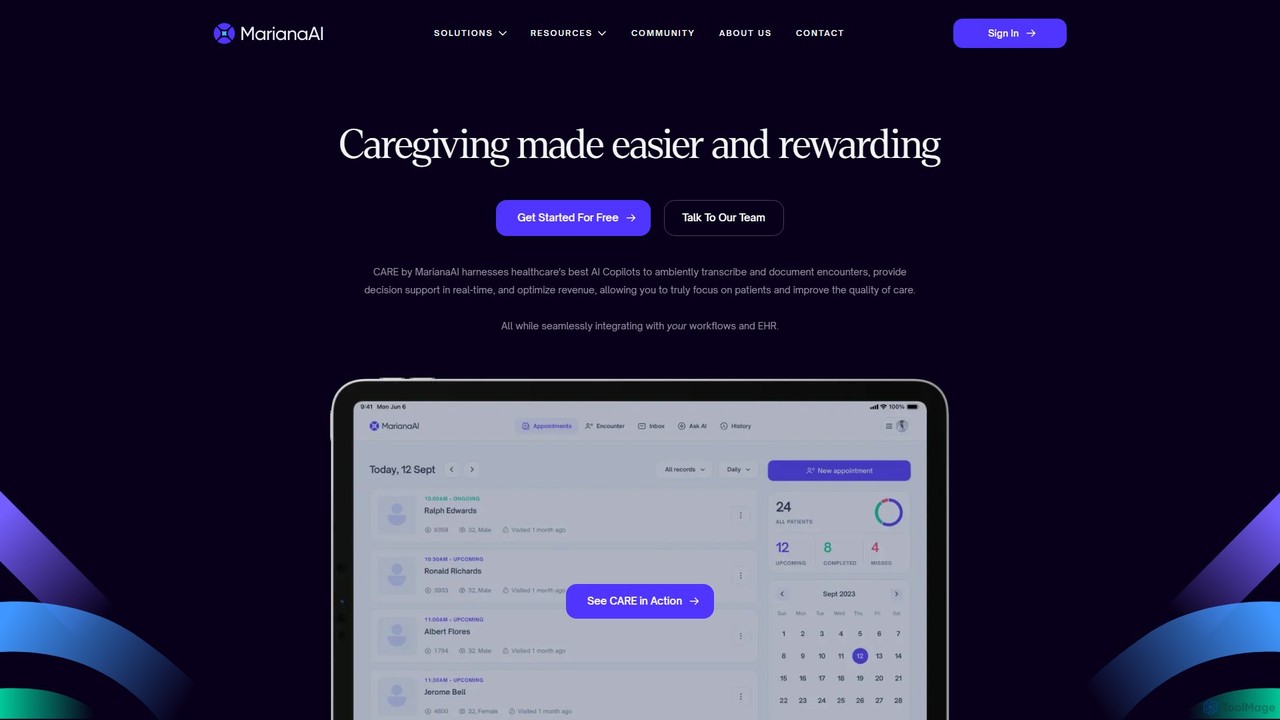
MarianaAI is an all-in-one AI-powered clinical automation platform designed for healthcare providers. It features a multilingual medical scribe, …

6.4K
Free
ICDcodes.ai

ICDcodes.ai

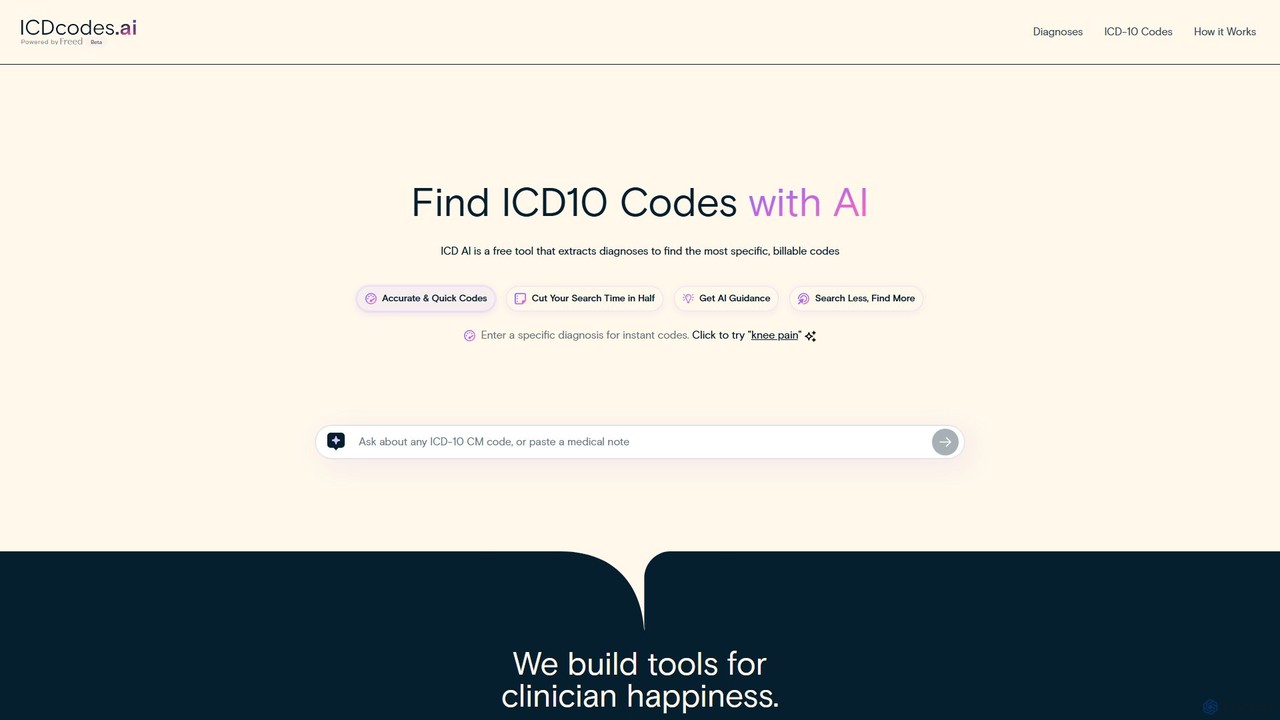
ICDcodes.ai is a free, AI-powered tool designed for healthcare professionals to quickly and accurately find ICD-10-CM diagnosis codes. …

100.3K
Medicodio

Medicodio

Medicodio is an AI-powered medical coding assistant designed to enhance revenue cycle management. It utilizes advanced AI, ML, …

4.4K

About Medical Coding

AI Medical Coding tools are specialized software that automates the translation of medical diagnoses, procedures, and services into universal alphanumeric codes. These tools use Natural Language Processing (NLP) and machine learning to analyze clinical documentation, such as physician notes and lab reports, to suggest the most accurate codes (e.g., ICD-10, CPT). This process significantly accelerates the revenue cycle, minimizes costly coding errors, and helps healthcare providers maintain regulatory compliance. By understanding clinical context, these AI systems offer a level of precision and efficiency that surpasses manual coding methods.

Core Features

  • Automated Code Suggestion: Analyzes unstructured clinical text to recommend relevant ICD-10, CPT, and HCPCS codes with confidence scores.
  • Clinical Documentation Improvement (CDI) Queries: Identifies ambiguous or incomplete information in patient records and flags it for clarification by clinicians.
  • Real-time Compliance Auditing: Continuously checks suggested codes against current regulations and payer-specific rules to prevent claim denials.
  • Predictive Analytics for Coding Trends: Provides insights into common coding patterns, error rates, and areas for operational improvement.

Use Cases

These tools are primarily used in hospitals, clinics, and third-party medical billing companies. Medical coders, billing specialists, and health information managers leverage them to streamline the coding workflow, from patient encounter to claim submission. They are also valuable for compliance officers conducting internal audits and for healthcare administrators seeking to optimize revenue cycle management.

How to Choose

When selecting an AI Medical Coding tool, consider its accuracy rates and the clinical specialties it covers. Evaluate its integration capabilities with your existing Electronic Health Record (EHR) system. Assess the quality of its CDI query features and the user-friendliness of the interface for your coding team. Finally, examine the vendor's update frequency for coding standards and regulatory changes.

Medical CodingUse Cases

1

Automating Inpatient Chart Coding

A certified inpatient coder at a large hospital is responsible for assigning accurate codes to complex patient charts. They use an AI Medical Coding tool to process a lengthy discharge summary. The AI scans the document, identifies diagnoses like 'acute myocardial infarction' and procedures like 'coronary artery bypass graft,' and suggests the corresponding ICD-10-CM and PCS codes. It also flags a potential documentation gap where the physician mentioned 'pneumonia' without specifying the type, prompting a CDI query. This reduces the average coding time per chart by 40% and improves coding accuracy, leading to faster and cleaner claim submissions.

2

Pre-submission Claim Auditing for Denial Prevention

A revenue cycle manager at a multi-specialty clinic aims to reduce claim denial rates. They implement an AI Medical Coding tool to perform automated audits before claims are submitted to payers. The system cross-references the assigned CPT and ICD-10 codes against a database of payer-specific rules and National Correct Coding Initiative (NCCI) edits. It flags a claim where a procedure code is not medically supported by the diagnosis code. The coder is alerted, corrects the error, and resubmits a compliant claim, preventing a likely denial and the associated rework, which improves the first-pass acceptance rate by 15%.

3

Training and Onboarding New Medical Coders

A health information management (HIM) director needs to train a new cohort of junior coders. They use an AI Medical Coding platform as a primary training tool. The platform provides a sandboxed environment where trainees can practice coding on real, anonymized clinical notes. The AI provides instant feedback, showing the codes it would have suggested and explaining the clinical evidence for its choices. This interactive learning process accelerates the trainee's proficiency, reduces the training time required from senior coders, and ensures consistent application of coding guidelines across the team from day one.

4

Analyzing Coding Patterns for Population Health Insights

A data analyst at a public health organization uses aggregated, anonymized coding data generated by AI tools from multiple hospitals. They analyze trends in ICD-10 codes to monitor disease prevalence in a specific region, such as a spike in codes for respiratory illnesses during flu season. The structured and accurate data from AI coding systems allows for more reliable epidemiological analysis than data from error-prone manual coding. These insights help the organization allocate resources more effectively, plan public health campaigns, and report accurate statistics to government bodies.

5

Streamlining Emergency Department (ED) Coding

An ED coding specialist faces a high volume of fast-paced, often brief, clinical encounters. They use an AI coding tool integrated directly into the EHR. As the physician completes the patient's chart, the AI engine processes the information in near real-time. It suggests appropriate E/M (Evaluation and Management) levels, procedure codes for services like sutures or X-rays, and diagnosis codes. This immediate feedback loop allows for rapid coding and billing, reducing the lag time between patient discharge and claim submission, which is critical for managing the financial health of a busy emergency department.

6

Supporting Risk Adjustment (HCC) Coding

A coder specializing in Hierarchical Condition Category (HCC) coding for Medicare Advantage plans uses an AI tool to ensure all chronic conditions are accurately captured. The tool scans a year's worth of patient records, identifying documented chronic conditions like diabetes with complications or chronic obstructive pulmonary disease. It then suggests the appropriate HCC codes that might have been missed in previous encounters. This ensures a more accurate risk adjustment factor (RAF) score for the patient population, leading to appropriate reimbursement and better resource planning for managing patients with complex health needs.

Medical CodingFrequently Asked Questions