ToolMage
Sign in

Best 1 Travel AI tools for Hobbies

Popular Travel AI tools in Hobbies include Airgeek, helping you work more efficiently.

Airgeek
Freemium

Airgeek

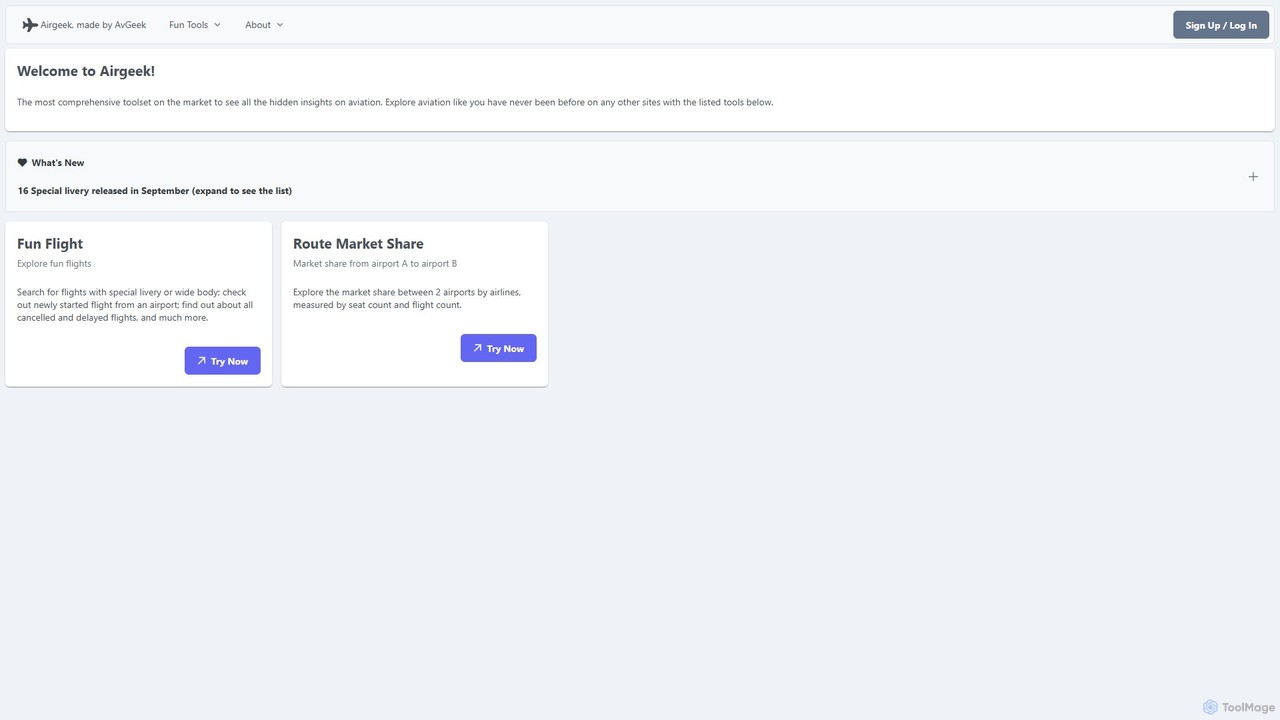
Airgeek is a comprehensive data analysis platform for aviation enthusiasts and professionals. It provides deep insights into the world of aviation, allowing users to explore flights with special liveries, analyze route market share, track flight delays and cancellations, and discover new routes. Designed by AvGeeks for AvGeeks, it's the ultimate toolset for uncovering hidden trends and data in the airline industry.

Specialized Search
Visits 5.6KFavorites 159Likes 150

About Travel

AI Travel tools are applications that use artificial intelligence to streamline and personalize trip planning and execution. They leverage machine learning to analyze vast datasets, providing tailored recommendations, predictive pricing, and automated itinerary creation. This helps travelers save time, reduce costs, and discover unique experiences suited to their preferences. These tools represent a significant shift in travel preparation, moving from manual research to intelligent, data-driven assistance.

Core Features

  • Intelligent Itinerary Planning: Automatically generates optimized travel schedules based on interests, budget, and time constraints.
  • Predictive Price Analysis: Forecasts flight and hotel price fluctuations to recommend the best times to book.
  • Personalized Recommendations: Suggests attractions, restaurants, and activities based on user profiles and past behavior.
  • Real-time Assistance: Offers on-the-go language translation, context-aware navigation, and dynamic plan adjustments.

Use Cases

These tools are ideal for individual tourists, families, and business travelers seeking efficient and customized planning. Digital nomads and frequent flyers also benefit from features that optimize complex travel arrangements and identify cost-effective options, simplifying the logistics of a mobile lifestyle.

How to Choose

When selecting an AI Travel tool, consider the scope of its planning capabilities (all-in-one vs. specialized), the data sources for its recommendations, its offline functionality for use without an internet connection, and its integration with booking platforms for seamless reservations.

Travel use cases

1

Automated Vacation Itinerary Planning

A family planning a 10-day trip to Japan inputs their interests (history, food, anime), budget, and preferred travel pace into an AI travel planner. The tool processes these inputs and instantly generates a day-by-day itinerary. It optimizes travel routes between Tokyo, Kyoto, and Osaka, suggests family-friendly restaurants, and pre-selects attraction tickets to avoid queues. This automated process saves them dozens of hours of manual research and coordination, providing a structured yet flexible plan.

2

Finding the Cheapest Flight with Price Prediction

A budget-conscious student wants to fly to Europe in three months. Instead of checking prices daily, they use an AI travel tool that analyzes historical pricing data and market trends. The tool predicts that prices for their desired route will likely drop in two weeks. It sets an automatic alert and notifies the student when the price hits the predicted low point. By booking at the optimal time suggested by the AI, the student saves over 20% on their airfare compared to the initial price.

3

Discovering Local Hidden Gems

A solo traveler in Rome wants to avoid tourist traps and experience the city like a local. They use an AI travel app that analyzes their preferences for artisan coffee, independent bookstores, and vintage shops. Based on this profile, the app recommends non-mainstream spots and neighborhoods loved by locals. It provides walking directions to a small, family-run trattoria and a quiet courtyard cafe, enabling an authentic cultural experience that standard guidebooks would likely miss.

4

Real-time Language Assistance Abroad

A business traveler in Seoul needs to communicate with a taxi driver who doesn't speak English. Instead of fumbling with a phrasebook, they use an AI travel app with a real-time voice translation feature. They speak their destination into the phone in English, and the app instantly plays the translation aloud in Korean for the driver. This seamless communication ensures they get to their meeting on time and removes the stress of navigating a language barrier in a critical situation.

5

Organizing Complex Multi-City Business Trips

A corporate travel manager is arranging a trip for a team of five to three different cities in one week. Using an AI travel tool, they input all traveler profiles, meeting schedules, and budget constraints. The AI platform automatically finds the most logical flight sequences, books hotels near each meeting venue for all team members, and consolidates all bookings into a single, shareable itinerary. This reduces the planning time from a full day to under an hour and minimizes the risk of logistical errors.

6

Adapting Travel Plans Spontaneously

A couple on a road trip encounters an unexpected highway closure due to bad weather. Instead of manually searching for detours and new accommodations on multiple apps, they use their all-in-one AI travel assistant. They mark their current plan as disrupted, and the AI instantly recalculates a new route, finds a highly-rated hotel available for that night along the new path, and suggests a nearby restaurant for dinner. This allows them to adapt to unforeseen circumstances in minutes, turning a potential travel disaster into a minor inconvenience.

Travel FAQ

What are AI Travel tools?

AI Travel tools are software applications that use artificial intelligence to act as a smart travel assistant. Unlike traditional booking sites that require manual searches, these tools understand user preferences to automate planning, predict price changes, and offer personalized recommendations. They essentially streamline the entire travel process, from initial inspiration to on-the-ground navigation and adjustments.

How do I choose the right AI Travel tool?

To choose the right tool, first identify your primary need. Are you looking for comprehensive itinerary planning, the best flight deals, or on-the-go local recommendations? Consider these factors:

  • Scope: Do you need an all-in-one planner or a specialized tool for flights or hotels?
  • Personalization: How well does the tool learn your preferences and tailor suggestions?
  • Offline Access: Is the itinerary and map data available without an internet connection?
  • User Interface: Is the app intuitive and easy to use while traveling?
What's the difference between an AI Travel Planner and a standard booking site?

The key difference is intent and integration. A standard booking site (like Expedia or Kayak) is a search engine for individual components like flights or hotels; you must piece the trip together yourself. An AI Travel Planner understands a holistic trip concept (e.g., 'a relaxing 5-day beach trip') and builds an entire, optimized itinerary around it. It focuses on creating a cohesive experience, not just selling separate services.

Are AI Travel tools reliable for booking?

Reliability varies by tool. Many reputable AI travel planners partner directly with major booking platforms and aggregators, ensuring that the prices and availability shown are accurate and that bookings are secure. However, it's always a good practice to check user reviews regarding the tool's booking process. Some tools focus purely on planning and will redirect you to the airline or hotel's official site to complete the booking, which is often a very reliable method.

Are AI Travel tools suitable for spontaneous travelers?

Yes, they are exceptionally useful for spontaneous travelers. While they excel at advance planning, their real strength for spontaneous trips lies in real-time adaptation. If you decide to change destinations on a whim, an AI tool can instantly find new routes, last-minute accommodation, and nearby points of interest based on your current location. This removes the friction of on-the-fly research and allows for more fluid and flexible travel.