AI Revive
AI Revive is an intuitive online tool designed for easy photo restoration. It helps users bring old, damaged …
AI Revive is an intuitive online tool designed for easy photo restoration. It helps users bring old, damaged family photos back to life by fixing scratches, sharpening blurry faces, and adding color to black and white images, all without requiring technical expertise.
MenuKit
MenuKit is an AI-powered tool designed for restaurants to effortlessly translate and design their menus. It uses smart …
MenuKit is an AI-powered tool designed for restaurants to effortlessly translate and design their menus. It uses smart OCR to detect menu items, prices, and descriptions from uploaded images, then translates them into multiple languages with culturally relevant context, and automatically generates beautiful layouts for instant preview and download.
Locally AI
Locally AI enables users to run powerful AI models directly on their iPhone, iPad, and Mac devices. It …
Locally AI enables users to run powerful AI models directly on their iPhone, iPad, and Mac devices. It prioritizes privacy and offers features like offline voice mode, Siri integration, and customizable prompts for text and image processing, all seamlessly integrated within the Apple ecosystem.
Slaice
Slaice provides a powerful and intuitive API for seamless integration of the Segment Anything Model (SAM) into any …
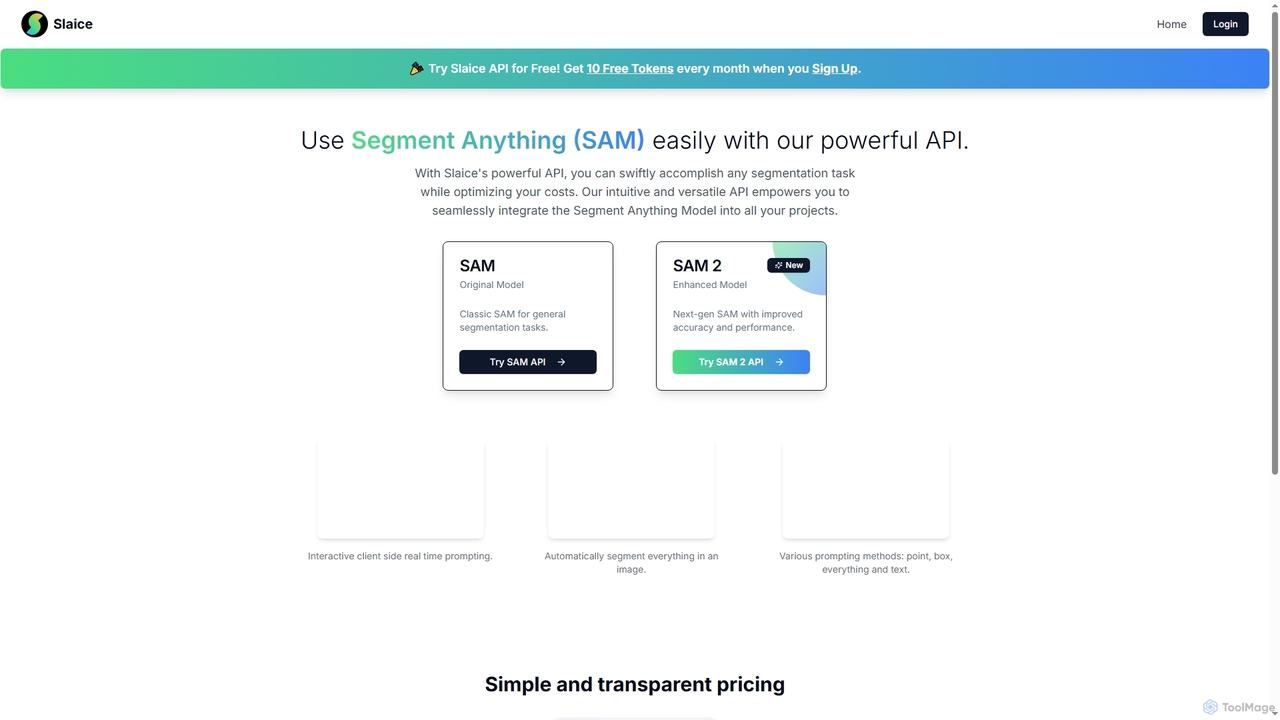
Slaice provides a powerful and intuitive API for seamless integration of the Segment Anything Model (SAM) into any project. It offers both the classic SAM and the enhanced SAM 2, enabling efficient and cost-optimized image segmentation tasks. Users can leverage various prompting methods like point, box, everything, and text for precise object isolation.
Face Shape Detector
An AI-powered tool that analyzes your photo to instantly determine your face shape. Simply upload a picture to …
An AI-powered tool that analyzes your photo to instantly determine your face shape. Simply upload a picture to discover if you have an oval, round, square, heart, diamond, or long face. This free, privacy-focused tool helps you choose the best hairstyles, glasses, and makeup styles.
True Harmony AI
True Harmony AI is an advanced AI-powered facial analysis tool that provides an objective, data-driven assessment of your …
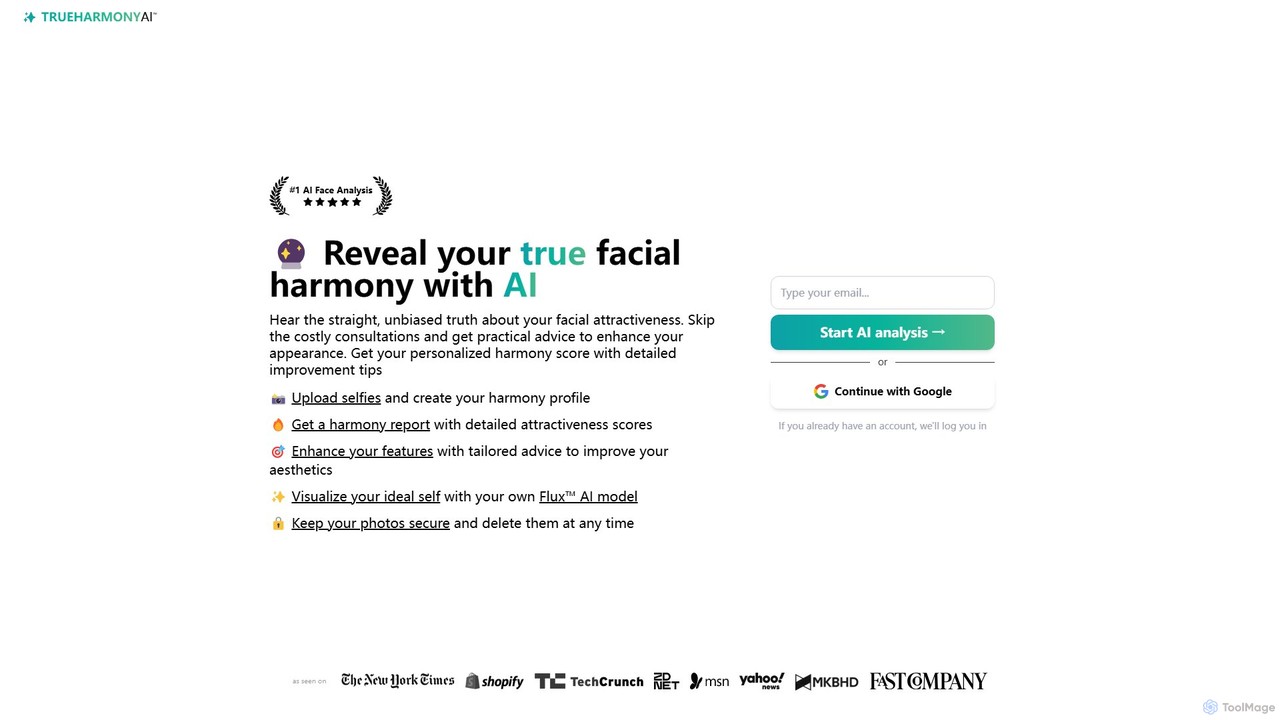
True Harmony AI is an advanced AI-powered facial analysis tool that provides an objective, data-driven assessment of your facial harmony. By uploading your photos, you receive a detailed harmony score, personalized reports, and actionable advice to enhance your aesthetic appeal. It combines computer vision and scientific aesthetic principles to offer insights previously available only through costly consultations.
About Image Processing
AI Image Processing tools are a class of software that leverage artificial intelligence to analyze, manipulate, and enhance digital images automatically. These tools utilize deep learning models, such as convolutional neural networks (CNNs), to perform complex tasks like object recognition, background removal, and quality improvement with high precision. They are widely used across e-commerce, marketing, and photography to automate editing workflows, restore old photos, and extract valuable visual data. Unlike traditional editors, AI-powered tools understand image context, enabling them to perform intelligent adjustments that save significant time and effort.
Core Features
- Image Enhancement & Restoration: Automatically improves brightness, contrast, and sharpness, while also repairing scratches, removing noise, and colorizing old photos.
- Object Recognition & Segmentation: Identifies and isolates specific elements within an image, such as people, products, or text, for tagging or manipulation.
- Background Removal & Replacement: Precisely cuts out the main subject from its background, allowing for transparent backgrounds or new scene compositions.
- AI Upscaling & Sharpening: Intelligently increases image resolution and enhances details without introducing common artifacts like pixelation.
- Style Transfer & Filtering: Applies the artistic style of one image to another or uses advanced AI filters to create unique visual effects.
Use Cases
AI Image Processing tools are essential for e-commerce businesses to create clean, consistent product photos through batch background removal and color correction. Digital marketers use them to quickly enhance visuals for social media campaigns, while photographers can accelerate their retouching process. These tools also find applications in fields like real estate for virtual staging and in historical archives for restoring damaged photographs.
How to Choose
When selecting an AI Image Processing tool, first consider its core functionality—whether you need a specialized tool (e.g., for upscaling) or a comprehensive suite. Evaluate its batch processing capabilities and speed if you handle large volumes of images. For integration into custom workflows, check for API availability and documentation. Finally, assess the output quality and the level of control you have over the final adjustments to ensure it meets your standards.
Image ProcessingUse Cases
E-commerce Product Image Optimization
An e-commerce manager needs to prepare hundreds of new product photos for a website launch. Using an AI Image Processing tool, they can upload the entire batch of images at once. The tool automatically detects the product in each photo, removes the background cleanly, and replaces it with a pure white one. It also auto-corrects colors for consistency and resizes all images to standard web dimensions. This process reduces manual editing time from hours to minutes, ensuring a professional and uniform look across the entire online store.
Restoring Old Family Photographs
An individual wants to digitize and restore their collection of old, faded family photos. They scan the photographs, many of which have scratches, creases, and color degradation. Using an AI Image Processing tool, they apply a restoration filter. The AI analyzes each image, intelligently removes imperfections like dust and scratches, sharpens blurry details, and applies realistic colorization to black-and-white photos. The result is a vibrant, restored digital archive that preserves family memories for future generations without requiring professional photo editing skills.
Enhancing Real Estate Photography
A real estate agent needs to make property listings more appealing. They take photos of a property on an overcast day, resulting in dull images with poor lighting. Using an AI Image Processing tool, they can perform several enhancements with a few clicks. The tool's 'Sky Replacement' feature instantly swaps the grey sky with a bright, sunny one. Another function automatically adjusts brightness, contrast, and color balance to make interiors look warm and inviting. This significantly improves the visual appeal of the listings, attracting more potential buyers without the cost of a professional reshoot.
Upscaling Graphics for Print and Web
A graphic designer receives a low-resolution logo from a client to be used on a large banner. Simply enlarging the image would result in pixelation and blurriness. The designer uses an AI upscaling tool, which analyzes the logo and intelligently adds new pixels that match the original patterns and edges. It can increase the resolution by 4x or more while maintaining sharp lines and clean details. The final high-resolution graphic is suitable for both large-format printing and high-density web displays, saving the designer from having to recreate the logo from scratch.
Automated Data Annotation for AI Training
A machine learning engineer is building a computer vision model to detect defects in manufacturing. They need to annotate thousands of images by drawing bounding boxes around faulty parts. This manual process is slow and tedious. By using an AI Image Processing tool with auto-annotation features, the engineer can speed up the process significantly. They annotate a few examples, and the AI learns to automatically identify and box similar defects in the rest of the dataset. This semi-automated approach reduces annotation time by over 70%, accelerating the model development lifecycle.
Creating Artistic Effects and Style Transfers
A digital artist wants to create a unique series of portraits by blending photography with famous painting styles. Instead of manually trying to replicate a style like Van Gogh's Starry Night, they use an AI Image Processing tool with a style transfer feature. They upload a portrait and select the famous artwork as the style source. The AI analyzes the stylistic elements of the painting—such as brushstrokes, color palette, and texture—and applies them to the portrait. This allows the artist to rapidly experiment with dozens of artistic styles and generate unique, complex visuals in minutes.