
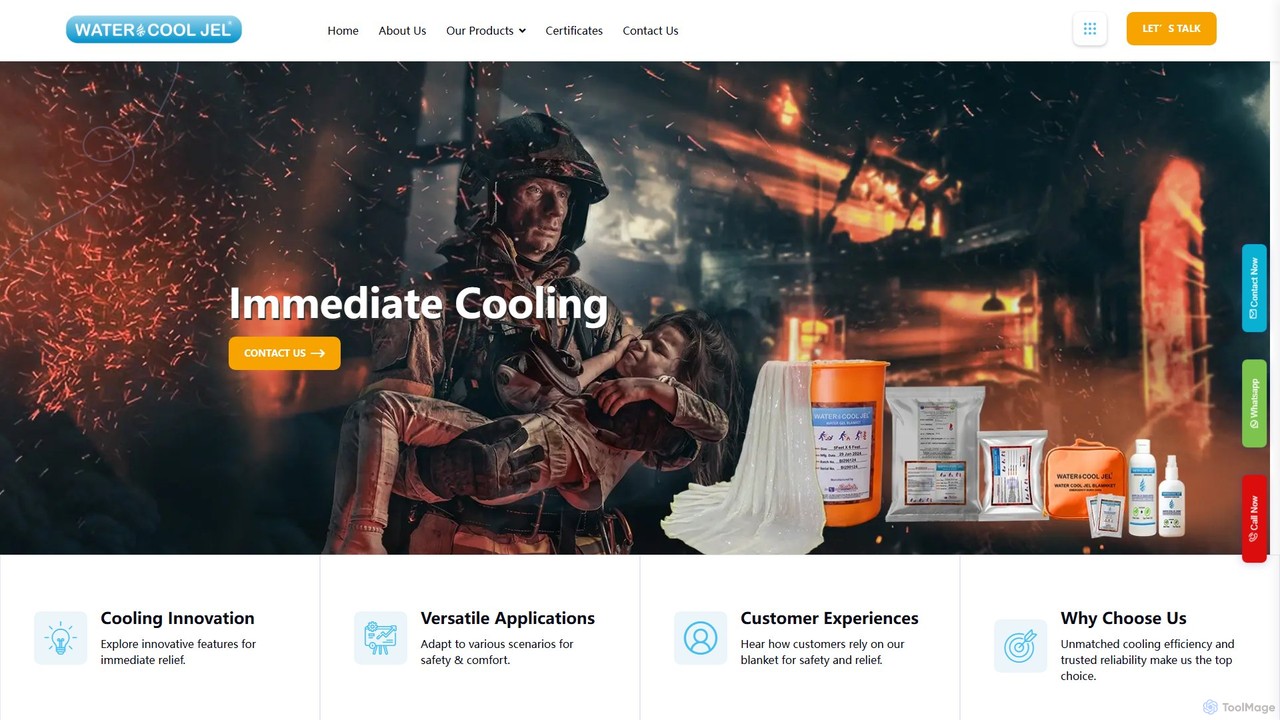
Water-Jel Blanket
Water-Jel Blanket by Balaji Industries is a professional-grade emergency burn care product. This water-based gel-soaked blanket provides immediate …
Water-Jel Blanket by Balaji Industries is a professional-grade emergency burn care product. This water-based gel-soaked blanket provides immediate cooling and pain relief for thermal burns. Designed to be non-adherent, it stops the burning process, protects against contamination, and is essential for first responders, industrial safety, and home first aid kits. Available in various sizes for versatile application.
About Workplace Safety
AI Workplace Safety tools are a class of solutions using artificial intelligence, particularly computer vision and predictive analytics, to proactively identify and mitigate risks in physical work environments. These systems analyze real-time video feeds and sensor data to detect unsafe conditions, non-compliant behavior, and potential hazards before they lead to accidents. Their primary value lies in transforming reactive safety measures into a predictive and preventive safety culture, significantly reducing incident rates. This specialized application of industrial AI focuses specifically on protecting human assets and ensuring regulatory compliance.
Core Features
- Real-time Hazard Detection: Identifies spills, obstacles, and unsafe operation of machinery through continuous video analysis.
- PPE Compliance Monitoring: Automatically verifies if workers are wearing required gear like helmets, vests, and gloves in designated zones.
- Predictive Risk Analysis: Analyzes historical incident data and operational patterns to forecast high-risk areas, tasks, and times.
- Ergonomic Assessment: Monitors worker posture and movements to identify and flag risks of musculoskeletal injuries from repetitive tasks.
- Behavioral Analysis: Detects unsafe actions such as improper lifting techniques, entering restricted zones, or proximity to moving equipment.
Applicable Scenarios
These tools are crucial in high-risk industries such as construction, manufacturing, logistics, and energy. For example, they can monitor a construction site for fall hazards, ensure forklift operators in a warehouse maintain safe speeds, or detect gas leaks in an energy plant before they become critical.
Selection Criteria
When selecting a tool, evaluate its detection accuracy and the rate of false alerts. Consider its ability to integrate with your existing camera infrastructure and EHS management software. Also, assess the scalability for your specific site size and the vendor's data privacy and security policies to ensure employee confidentiality.
Workplace SafetyUse Cases
Automated PPE Compliance Checks on Construction Sites
A construction site manager uses an AI safety system connected to existing CCTV cameras. The AI continuously scans the site, automatically detecting workers who are not wearing hard hats or high-visibility vests in designated zones. When a violation is detected, the system sends an instant alert to the safety officer's mobile device with a time-stamped image. This allows for immediate correction, reinforces safety protocols, and creates a digital log for safety audits, reducing the risk of head injuries by ensuring consistent compliance.
Preventing Forklift Collisions in Warehouses
In a busy logistics warehouse, an AI system analyzes video feeds from cameras mounted near intersections and high-traffic aisles. It tracks the movement of forklifts and pedestrians in real-time. The system can predict potential collision paths and trigger audible alarms or flashing lights to warn drivers and workers. This proactive alert system helps prevent costly accidents, equipment damage, and serious injuries in dynamic and crowded environments, improving overall warehouse safety without disrupting workflow.
Ergonomic Risk Assessment on Assembly Lines
A manufacturing plant manager implements an AI-powered ergonomic analysis tool to reduce repetitive strain injuries. The system uses computer vision to analyze workers' movements on the assembly line, identifying awkward postures, excessive reaching, or repetitive motions that pose an injury risk. It generates detailed reports highlighting high-risk tasks and individuals, enabling ergonomists to redesign workstations and workflows to be safer and more efficient, ultimately lowering worker compensation claims and improving employee well-being.
Real-time Spill and Obstacle Detection in Factories
A factory floor supervisor relies on an AI safety platform to maintain a safe and clear workspace. The system monitors camera feeds 24/7, instantly identifying liquid spills, fallen objects, or equipment blocking emergency exits and walkways. Upon detection, it automatically creates a work order for the cleaning or maintenance crew and notifies the area supervisor via a mobile app. This rapid response minimizes slip-and-fall hazards and ensures clear evacuation routes, significantly improving compliance with safety regulations.
Monitoring Restricted Zone Access in Energy Plants
In a power generation facility, security and safety are paramount. An AI workplace safety tool is used to enforce access control to hazardous or restricted areas. The system can distinguish between authorized and unauthorized personnel based on their uniform or virtual geofencing. If an unauthorized individual enters a restricted zone, the system immediately alerts the central control room with video evidence, enabling a swift security response and preventing potential accidents or security breaches involving high-voltage equipment or sensitive materials.
Driver Fatigue Monitoring for Commercial Fleets
A logistics company installs AI-powered cameras in its fleet of trucks to monitor driver fatigue. The system analyzes the driver's facial expressions, eye movements (e.g., blink rate), and head position to detect signs of drowsiness or distraction. If fatigue is detected, it triggers an in-cab audio alert to rouse the driver and sends a notification with a short video clip to the fleet manager. This proactive intervention helps prevent road accidents caused by driver fatigue, protecting the driver, the public, and valuable company assets.